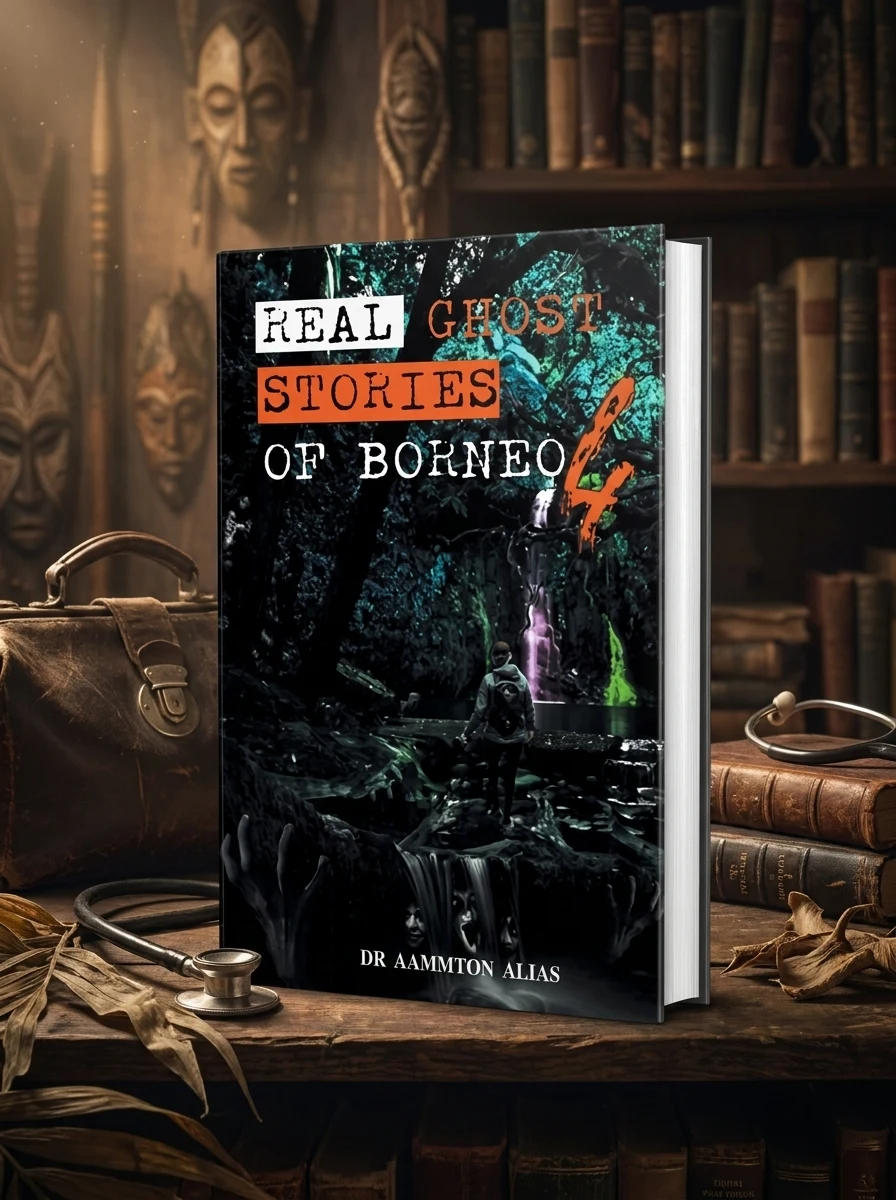

Real Ghost Stories of Borneo 4
A physician compiles real supernatural encounters from his Borneo patients.
This fourth installment focuses on actual ghost stories collected by a medical professional working in Borneo. Alias shares accounts revealed by his patients and neighbors, highlighting the specific fears and spiritual beliefs of the area. The text does not invent scenarios but records what locals claim to have experienced. This approach offers a unique perspective on how supernatural events affect daily life and health in the region. Readers get a raw look at local folklore through the eyes of someone who treats the people affected by these phenomena.
The book is set in Borneo, drawing on the local population's spiritual traditions and fears. It reflects the cultural context where supernatural encounters are reported to family physicians and shared among community members as real events affecting their well-being.


📝 Description: Real Ghost Stories of Borneo 4
💎 Our verdict on Real Ghost Stories of Borneo 4
📖 Why choose it
Why this book is worth reading
Readers interested in the intersection of medicine and the supernatural will find this book valuable for its unique perspective on how spiritual anxieties impact daily life in Borneo. It is ideal for enthusiasts of ethnographic horror who prefer documented folklore over sensationalized fiction. Those seeking a raw look at local beliefs through the eyes of a healthcare provider will appreciate the credibility offered by the author's profession. This collection avoids polished literary flair, instead offering straightforward clinical accounts that ground supernatural events in reality. It serves as a resource for understanding specific regional fears and spiritual practices without inventing scenarios.
⭐ Reader reviews
Reader rating
Aammton Alias delivers a compelling collection of real supernatural encounters gathered from Borneo patients and neighbors. The book excels by blending medical observation with folklore, providing an authentic glimpse into the region's spiritual anxieties. Its strength lies in its reliance on reported events rather than invented plots, offering a grounded view of local culture. This approach suits readers who appreciate ethnographic horror and documented accounts over fictionalized tales. While it may lack the polish of literary fiction, its clinical tone adds credibility to the narratives. It is best for those interested in Southeast Asian contexts and the impact of the supernatural on health.