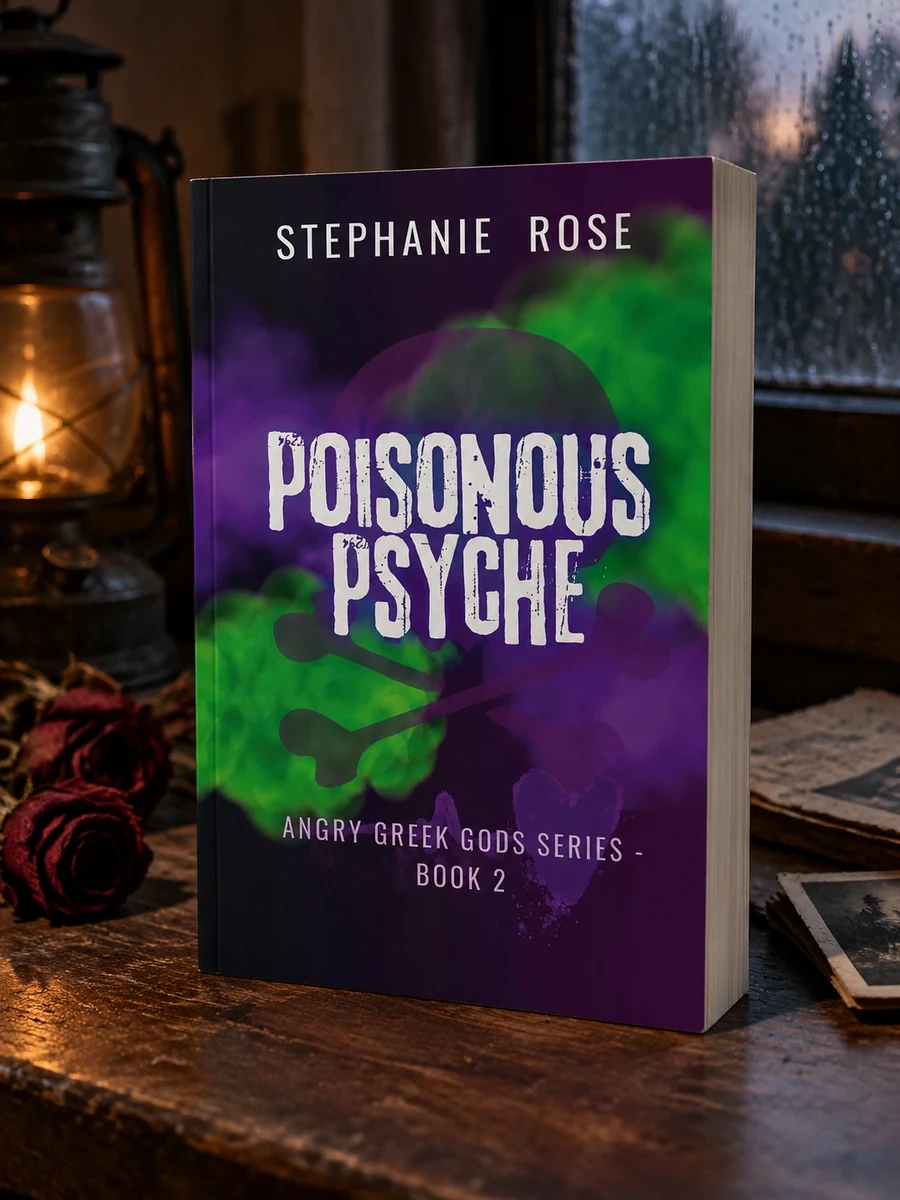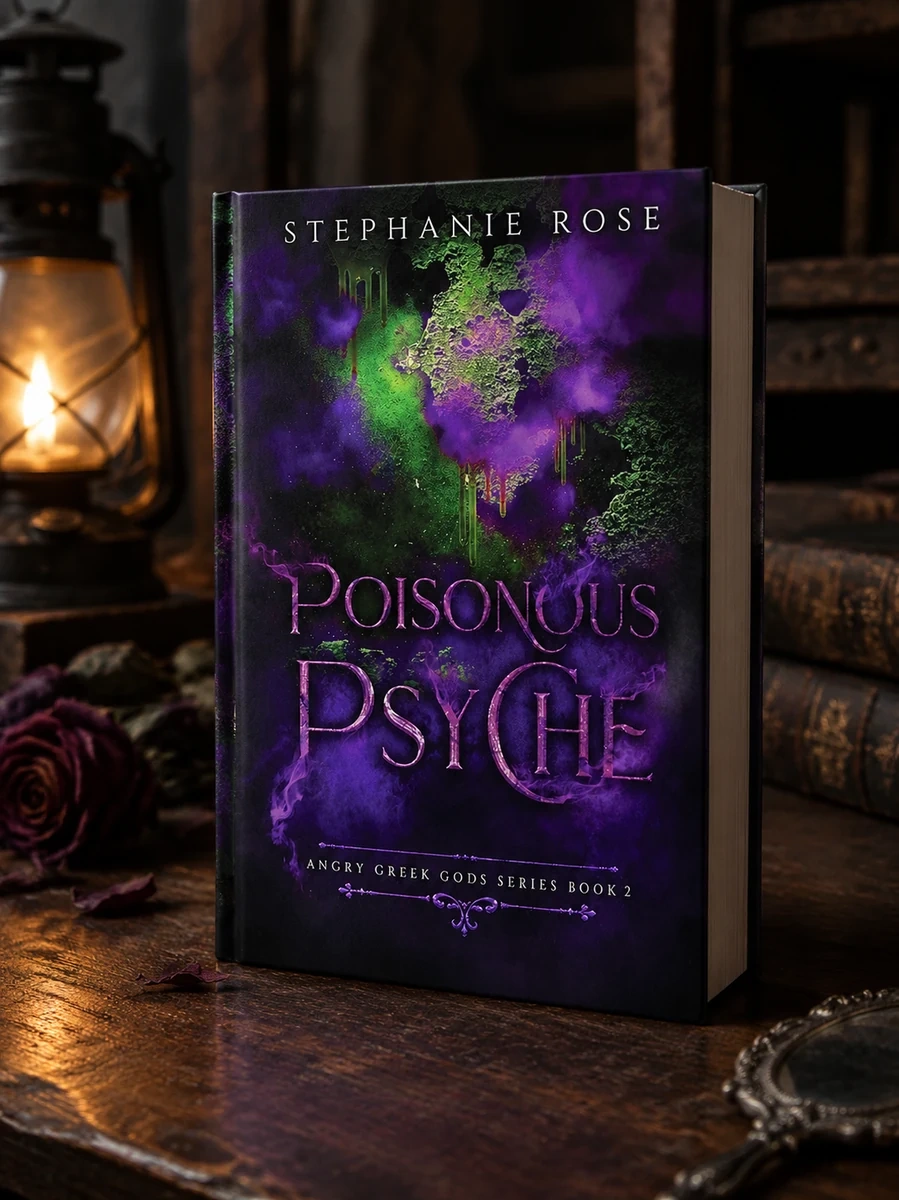
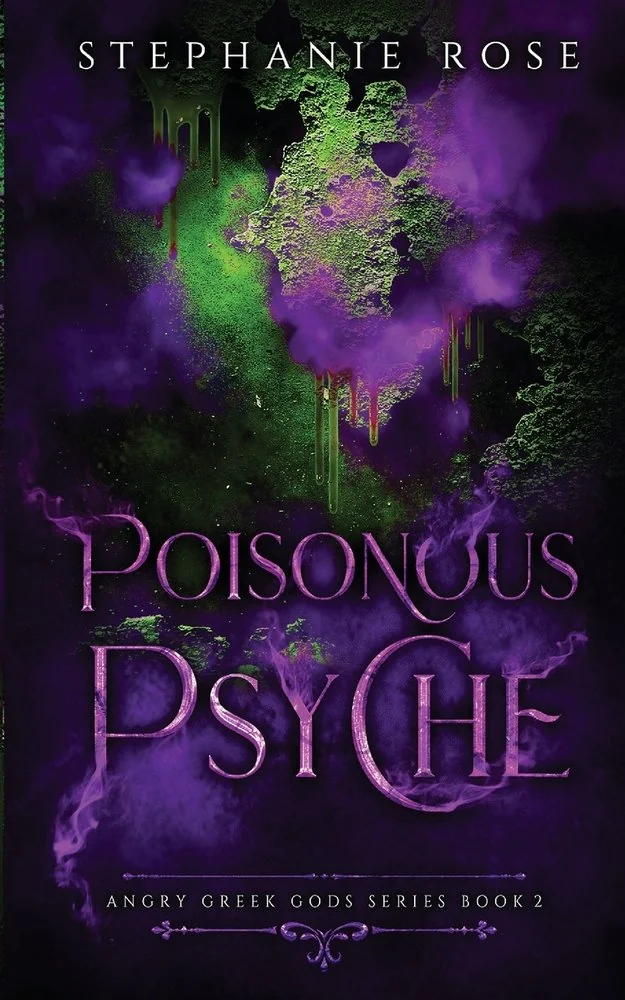
Poisonous Psyche
A mythological horror novel about a goddess's disappearance and its toxic consequences.
This work examines the psychological state of Psyche after she leaves Olympus. It focuses on the immediate aftermath of her vanishing act, which includes the mysterious emission of poisonous gases into the world below. The narrative does not rely on action sequences but rather on the tension created by uncertainty and the physical dangers posed by her condition. Rose uses the mythological backdrop to explore themes of mental health and isolation. The story asks how loved ones can intervene when the cause is internal and invisible. It provides a close look at the relationship between mother and daughter, Hedone, and the impact their absence has on the divine community. The text remains grounded in the specific events of disappearance and the resulting atmospheric changes.
The book engages with classical Greek mythology, specifically the myths of Eros and Psyche. It reinterprets these ancient traditions through the lens of modern horror and supernatural fiction, placing divine characters in a context of psychological distress and physical danger.


📝 Description: Poisonous Psyche
💎 Our verdict on Poisonous Psyche
📖 Why choose it
Why this book is worth reading
Readers seeking character-driven horror that prioritizes mental unraveling over action will find this title compelling. It offers a unique exploration of maternal bonds and divine pride under extreme duress, appealing to those interested in the psychological toll of isolation. The narrative provides a tense atmosphere where uncertainty creates more dread than physical combat. Fans of mythological reinterpretations that delve into mental health and familial ties within a supernatural setting will appreciate the focus on invisible threats. This book is ideal for audiences who enjoy heavy tones and complex emotional landscapes rather than lighthearted fantasy or traditional adventure plots.
⭐ Reader reviews
Reader rating
Stephanie Rose delivers a dark, atmospheric reimagining of classical myth that focuses intensely on psychological horror rather than external conflict. The narrative effectively utilizes the tension of uncertainty, mapping the toxic consequences of Psyche’s disappearance through poisonous gases and internal whispers. By grounding the story in the specific events of vanishing and the resulting divine crisis, Rose creates a compelling study of loyalty and pride. The text excels in examining how loved ones intervene when causes are internal, offering a nuanced look at the mother-daughter relationship with Hedone. This approach suits readers who prefer character-driven horror and thematic depth over action sequences. It is a heavy, unresolved investigation into the fragility of family connections amidst unseen divine threats.