Pigeons Splat London
A tale of pigeons in Kent seeking revenge on London through acid attacks.
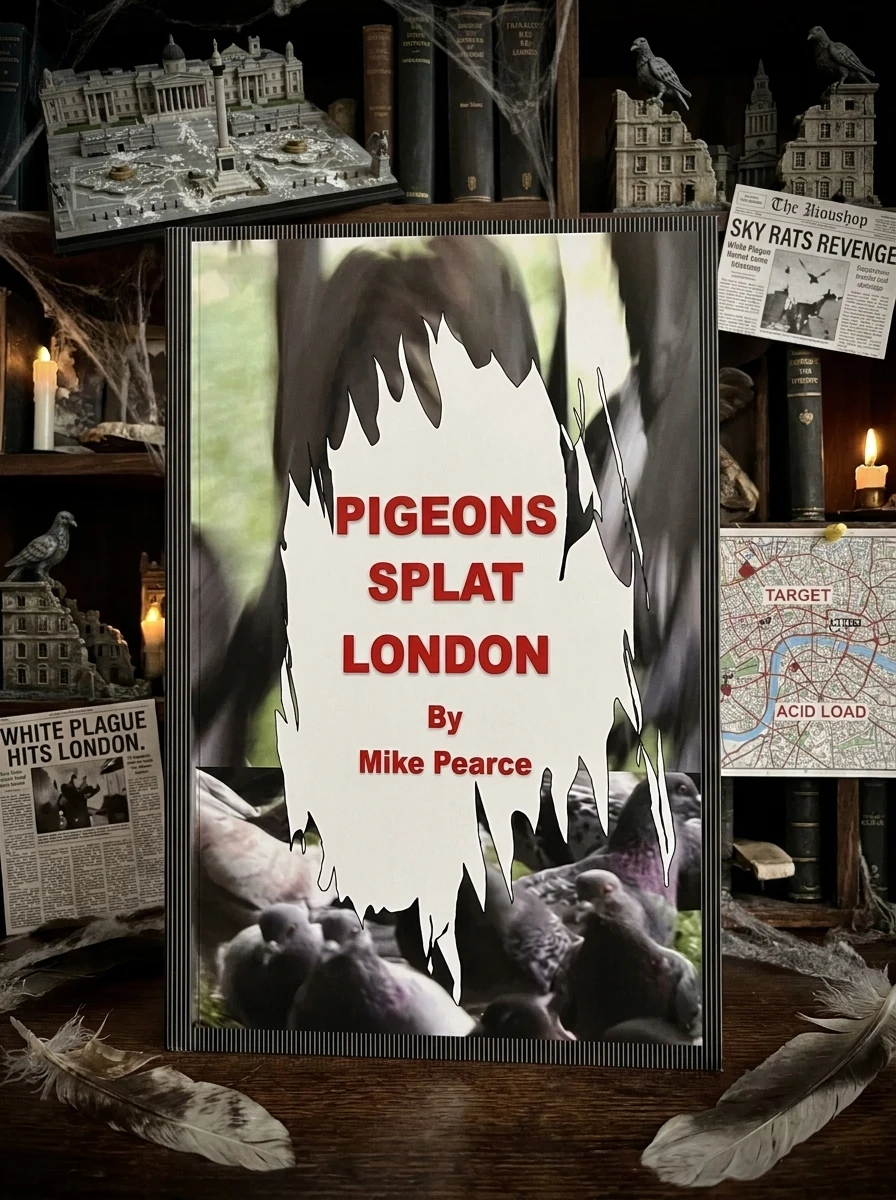
The narrative begins with a stirring in Thanet, Kent, where pigeons prepare to attack London. These sky rats transform into weapons of devastation driven by anger over feeding bans. The city council clampdowns affected everyone, including celebrities and children. Now the birds unleash an acid load that destroys city structures. Trafalgar Square becomes the focal point of this splatter-filled campaign. The story examines how tourism collapses under the weight of biological warfare. Pearce uses the specific location of Kent to ground the supernatural elements in a recognizable reality. The plot moves from the preparation in Kent to the execution of revenge in London.
The work engages with contemporary anxieties about urban management and public space regulation in the United Kingdom. It reflects a period where city councils enforced strict rules against feeding pigeons to maintain civic order. The setting contrasts the rural preparation in Kent with the iconic landmarks of London, highlighting tensions between nature and urban development.


📝 Description: Pigeons Splat London
💎 Our verdict on Pigeons Splat London
📖 Why choose it
Why this book is worth reading
Readers who appreciate grotesque body horror and tales of urban decay will find this narrative compelling. It appeals specifically to those interested in stories where nature fights back against human interference, offering a visceral take on environmental retribution. The book is ideal for fans of dark fantasy who enjoy seeing familiar landmarks like Trafalgar Square turned into scenes of biological warfare. Those curious about the consequences of civic regulations on wildlife populations will also engage with its premise. It provides a unique perspective on tourism collapse and structural destruction, grounding supernatural elements in recognizable reality through its Kent-to-London trajectory.
⭐ Reader reviews
Reader rating
Mike Pearce delivers a visceral exploration of urban decay where pigeons transform into weapons of devastation. The narrative effectively grounds supernatural horror in the recognizable reality of Thanet and London, creating a compelling sense of place. The focus on acid attacks and structural destruction offers a fresh, albeit grotesque, twist on the nature-revenge trope. While the premise relies heavily on biological warfare imagery, it succeeds in examining how tourism collapses under such weight. The book suits readers seeking intense, physical horror rather than gentle pastoral fiction. Its strength lies in its specific geographical grounding and the sheer scale of the splatter-filled campaign against city structures.