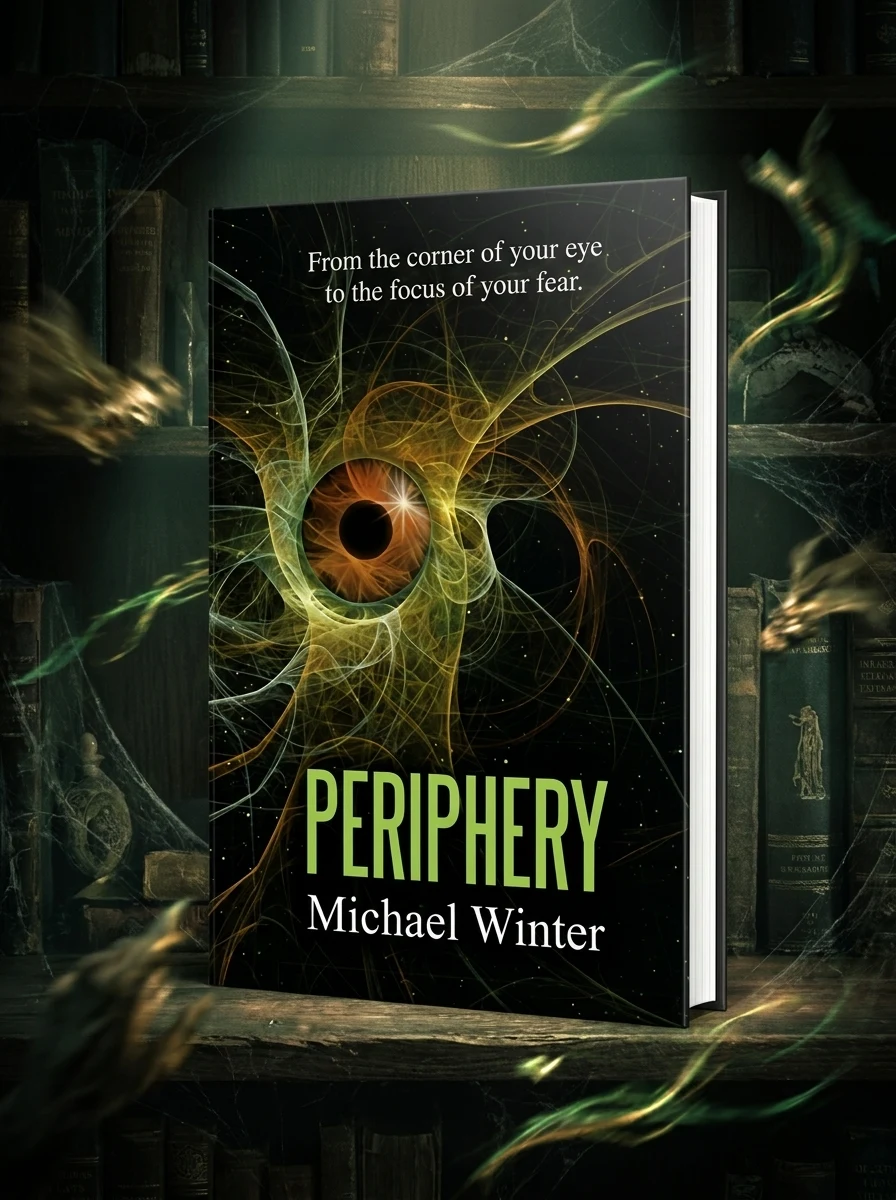
Periphery: A Tale of Cosmic Horror
A man confronts the reality of his father's supernatural warnings in this cosmic horror tale.
Andrew Tate’s life changes after he finally sees what his father warned him about. For years, he ignored claims of creatures lurking at the periphery of vision. He viewed these reports as symptoms of mental illness. A specific confrontation breaks down his defenses. He witnesses the flutters of motion himself. This experience forces him to accept a terrifying truth. The story focuses on his internal struggle and the collapse of his previous worldview. Winter uses this personal crisis to explore broader themes of cosmic horror. The narrative remains tight and focused on Tate’s psychological state. It avoids sprawling plots in favor of intimate dread.
Published by Sandhill Publishing in 2019, this work fits within the modern revival of cosmic horror fiction. It draws on traditions of supernatural fiction that emphasize unseen threats and psychological terror rather than explicit gore or traditional monster encounters.


📝 Description: Periphery: A Tale of Cosmic Horror
💎 Our verdict on Periphery: A Tale of Cosmic Horror
📖 Why choose it
Why this book is worth reading
Readers who appreciate slow-burn psychological horror and the deconstruction of sanity will find this tale deeply rewarding. It appeals to those interested in stories about familial legacy and the breakdown of rationality. The book offers a tight, focused narrative that avoids sprawling plots for intimate dread. Those seeking fast-paced action or traditional jump scares may find the pacing too deliberate. However, fans of cosmic dread and the fragility of perception will enjoy Winter's exploration of forced acceptance. It provides a lingering sense of unease rather than comfort or resolution. The focus on internal struggle over external conflict makes it ideal for introspective horror enthusiasts.
⭐ Reader reviews
Reader rating
Winter crafts an intimate portrait of psychological collapse through Andrew Tate’s journey from skepticism to terrifying recognition. The narrative excels in its tight focus, avoiding sprawling plots to delve deep into Tate’s internal state. By examining the shattering of rational beliefs, Winter highlights the fragility of human perception against cosmic indifference. This approach creates a profound sense of dread without relying on conventional horror tropes. The work is best suited for readers who enjoy slow-burn psychological horror and thematic explorations of familial legacy. While it lacks resolution, its deliberate pacing and focus on undeniable evidence create a powerful, lingering unease. It stands as a strong example of cosmic horror that prioritizes intellectual and emotional impact over visceral thrills.
You might also like
See more →





Have a question about this item?
Ask about the edition, condition, delivery or anything else — we reply by email or phone, usually within a day.
