People's Park
A 1989 horror novel about a park born from Klan violence and punk culture.
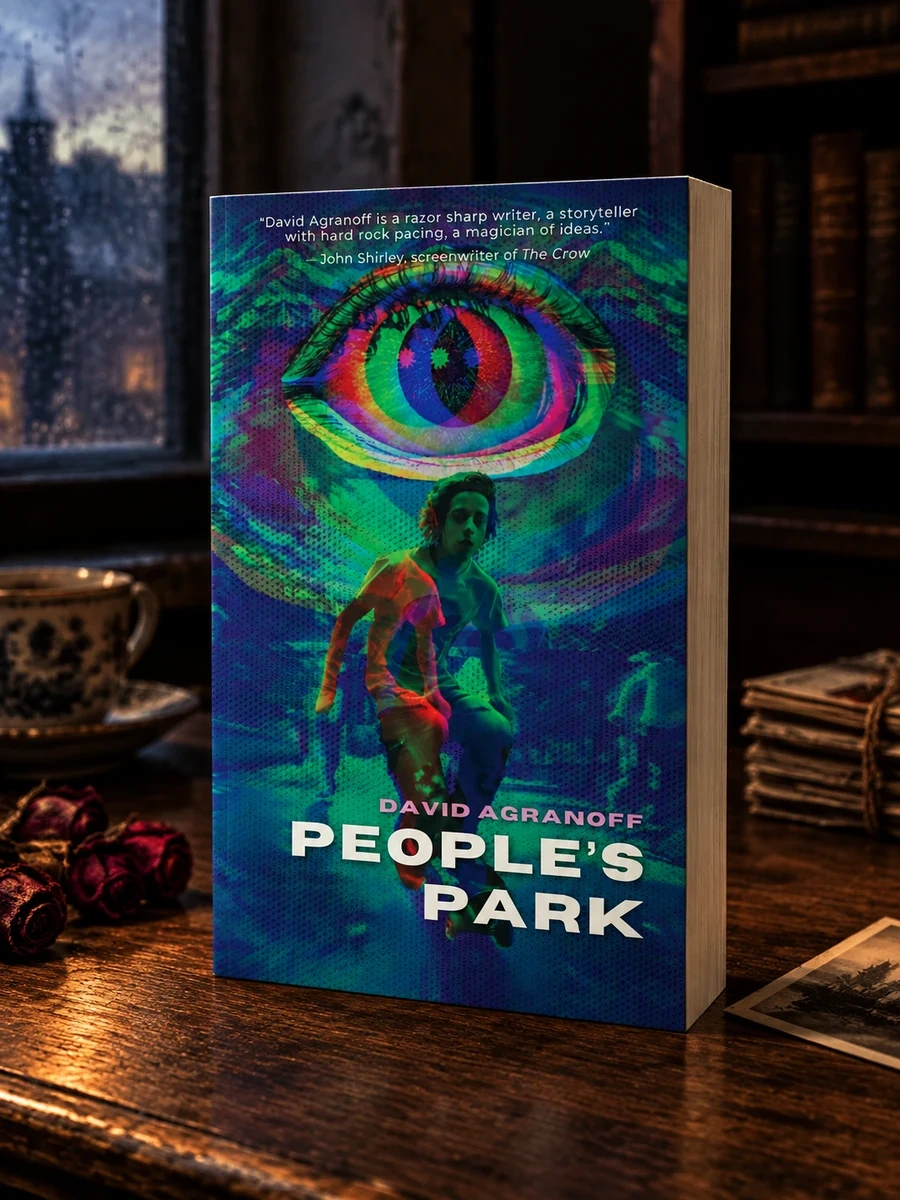
The narrative follows Electric Fred, who witnessed a 1969 bombing of a Black-owned business. He documents his theories while listening to static on a Walkman. These notes eventually predict real events in the park. The setting hosts diverse groups including homeless veterans and metalheads. Agranoff uses this mix to explore how hidden histories affect the present. The book blends supernatural horror with the specific aesthetic of the late eighties. It does not rely on standard ghost stories but instead focuses on collective memory and conspiracy. The protagonist’s isolation mirrors the marginalization of the park’s visitors.
The book is set in Bloomington, Indiana, during the summer of 1989. It draws on the era's punk and skate scenes while referencing a 1969 Klan attack. This context grounds the supernatural elements in real social tensions and local history.


📝 Description: People's Park
💎 Our verdict on People's Park
📖 Why choose it
Why this book is worth reading
Readers interested in subcultural history, genre-bending narratives, and the intersection of personal trauma with supernatural events will find significant value here. The book serves as a tribute to misfits, offering a unique blend of coming-of-age elements and bizarro horror. It appeals to those who appreciate how hidden histories affect the present through the lens of punk rock culture and skateboarding imagery. Fans of atmospheric tales that move beyond standard ghost stories to explore conspiracy and isolation will enjoy this distinctive work.
⭐ Reader reviews
Reader rating
Agranoff constructs a vivid tribute to outcasts, using People's Park as a refuge for society's marginalized. The narrative effectively merges supernatural horror with the specific aesthetic of the late eighties, creating an atmosphere reminiscent of Stranger Things but grounded in punk culture. While the structure highlights the intersection of trauma and evil forces, it avoids traditional linear plots. This approach suits readers seeking bizarre elements and psychological depth over historical accounts. Those disoriented by non-standard storytelling may struggle, but enthusiasts of dark fantasy and collective memory will find this a compelling and atmospheric exploration of isolation and community.
📖 Read on the blog
✍️ More books by this author David Agranoff






You might also like
See more →




Have a question about this item?
Ask about the edition, condition, delivery or anything else — we reply by email or phone, usually within a day.
