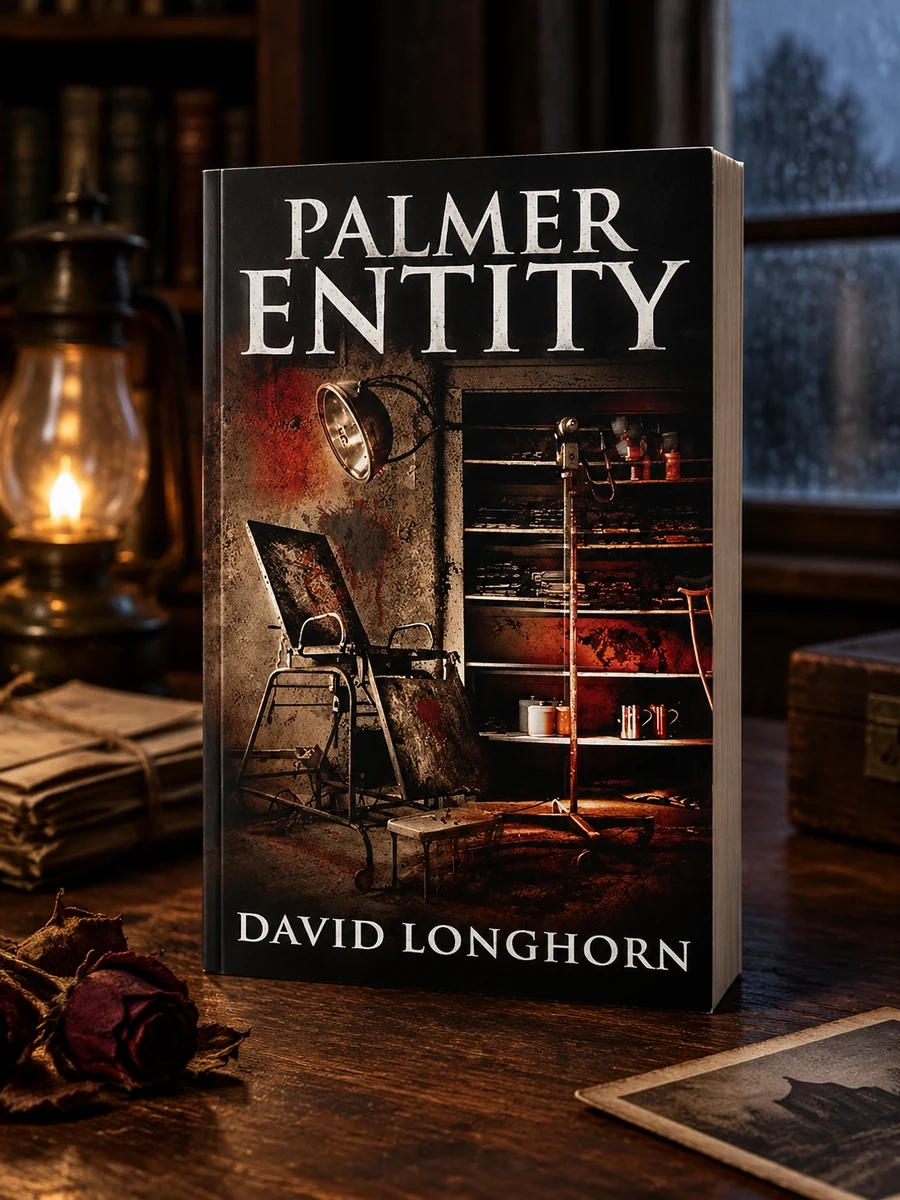

Palmer Entity: Supernatural Suspense with Scary & Horrifying Monsters
A man confronts a returning supernatural entity to save a possessed child from an abandoned apartment building.
Street presents a narrative centered on Paul Mahan, who must return to Rookwood apartments to help Neve Cotter. Her daughter Ella suffers from possession by a spirit Paul freed earlier. The plot involves a paranormal TV show entering the abandoned site to locate a cure. The story highlights the connection between the building’s past and its current haunting. It explores how a powerful presence can persist despite attempts at destruction or escape. The tension arises from Paul’s guilt and the escalating threat posed by the entity.
This 2019 independent publication fits within the American horror tradition of haunted house fiction. It draws on gothic tropes involving ancestral curses and malevolent spirits tied to specific locations. The narrative reflects contemporary interest in paranormal television culture and urban decay.


📝 Description: Palmer Entity: Supernatural Suspense with Scary & Horrifying Monsters
💎 Our verdict on Palmer Entity: Supernatural Suspense with Scary & Horrifying Monsters
📖 Why choose it
Why this book is worth reading
Readers seeking immediate supernatural tension will find this narrative compelling due to its clear stakes and focused premise. It appeals to those who enjoy the 'haunted location' subgenre, where the environment itself acts as a character feeding on ancient power. Fans of stories involving guilt-driven protagonists who must confront their past mistakes to save others will appreciate Paul Mahan’s journey. The inclusion of a paranormal TV crew adds a layer of modern media critique often found in current horror trends. Those who prefer straightforward plots over complex literary experimentation will value the direct interaction between human characters and a malignant entity rooted in historical darkness.
⭐ Reader reviews
Reader rating
Street delivers a focused entry in the haunted house canon, effectively leveraging the trope of a building that festers with ancient evil. The narrative succeeds in establishing high stakes through Paul Mahan’s personal guilt, making the supernatural threat feel personally consequential rather than abstract. The integration of a paranormal television crew provides a plausible mechanism for investigation while heightening the sense of danger. While the plot relies on familiar genre conventions, the execution maintains steady tension regarding the entity’s return and strength. It is best suited for casual horror readers who enjoy clear cause-and-effect storytelling involving possessed children and decaying architecture. Those looking for deep psychological nuance may find the supernatural elements overwhelming.