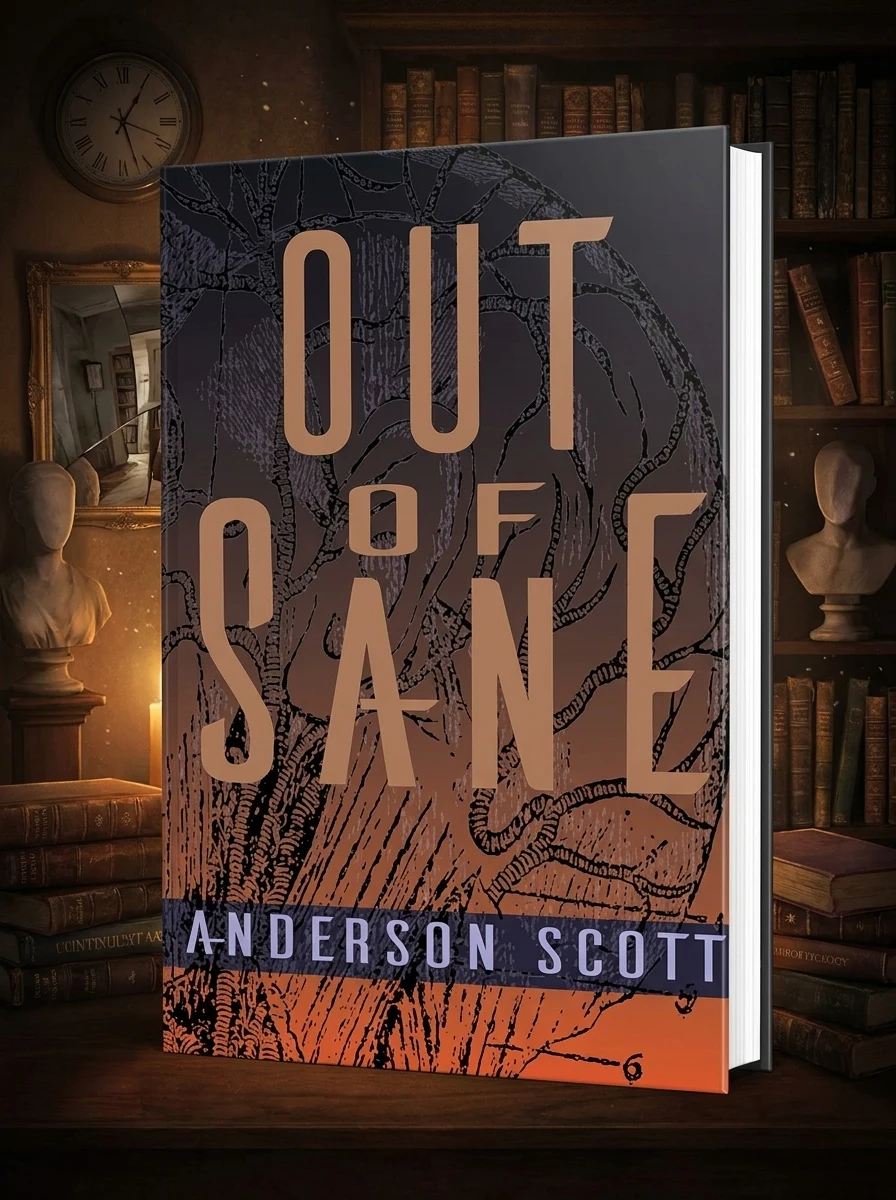
Out of Sane
A man wakes to a changed world and must question his own sanity.
The narrative centers on one individual experiencing sudden, unexplained alterations in his environment. Buildings, people, and physical details shift while everyone else remains oblivious. This creates a deep sense of isolation for the protagonist. He struggles to maintain his rationality as the foundation of his reality crumbles. The story does not offer easy answers or external help. Instead, it focuses on the internal battle to define what is real. The tension arises from the gap between his perception and the world's consensus. Scott uses this premise to explore the limits of human endurance. The horror comes from the inability to trust one's own senses. The ending leaves the reader with questions about the nature of truth.
Published in 2015 by Createspace Independent Publishing Platform, this work sits within the modern independent publishing landscape. It draws on the long tradition of psychological horror where the monster is internal. The story reflects contemporary anxieties about perception and truth in a fragmented world.


📝 Description: Out of Sane
💎 Our verdict on Out of Sane
📖 Why choose it
Why this book is worth reading
Readers who enjoy stories about mental instability and the limits of human endurance will find this book compelling. It offers a deep dive into existential terror, focusing on the erosion of certainty rather than traditional plot twists. Those interested in the mechanics of delusion and the fragility of perception will appreciate the steady examination of sanity. The narrative appeals to those who prefer internal dread over supernatural action or clear resolutions. It is ideal for individuals seeking to explore how a rational person copes when their daily life vanishes, providing a grounded experience of confusion and fear without easy answers.
⭐ Reader reviews
Reader rating
Anderson D Scott delivers a tense exploration of psychological horror that prioritizes the internal logic of madness over external threats. The narrative effectively builds isolation by shifting environmental details while keeping others oblivious, creating a palpable sense of dread. Scott succeeds in examining how fragile human perception can be when reality becomes unreliable. This approach suits readers who appreciate existential terror and mental instability. However, those seeking traditional ghost stories or clear antagonists may find the lack of resolution frustrating. The book is best for audiences willing to engage with the mechanics of delusion and question the nature of truth through a grounded, character-focused lens.
📖 Read on the blog
🏛 Books from this publisher Createspace Independent Publishing Platform



You might also like
See more →


Have a question about this item?
Ask about the edition, condition, delivery or anything else — we reply by email or phone, usually within a day.
