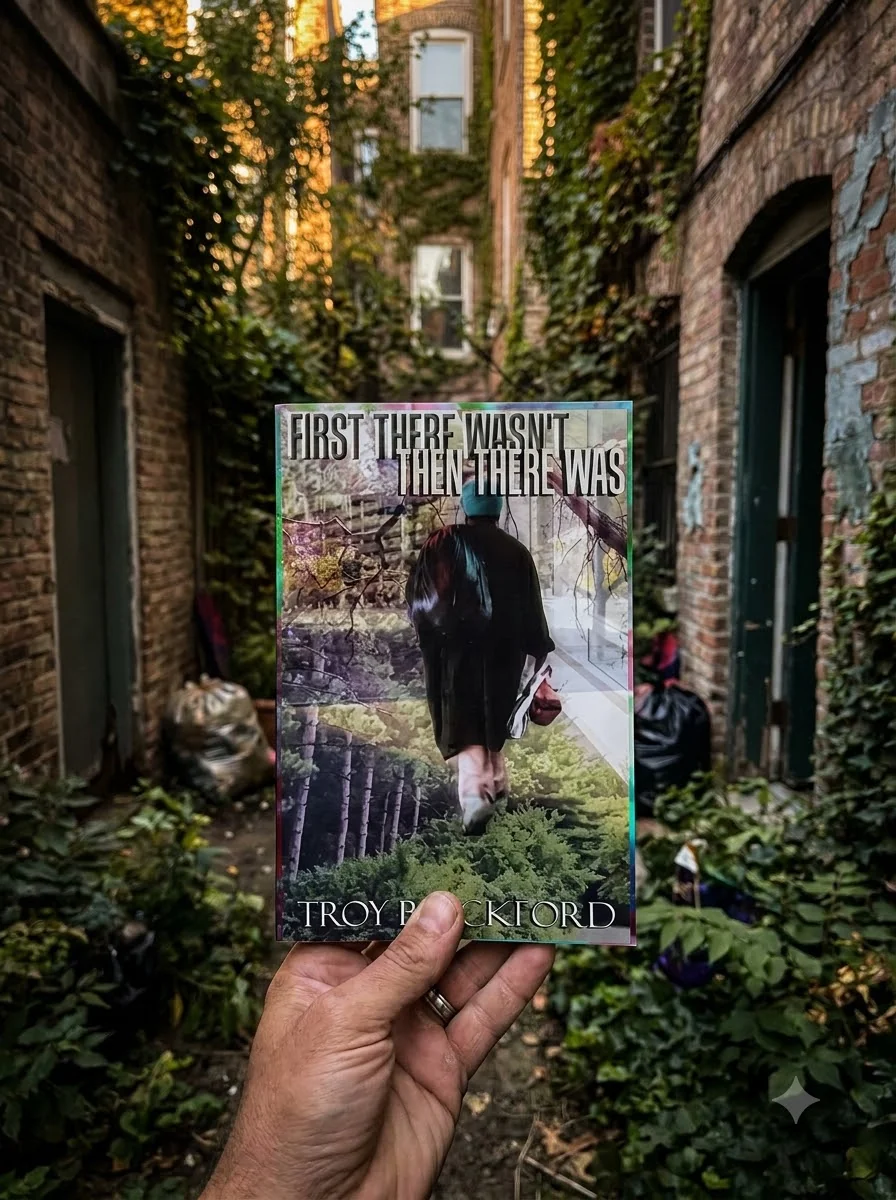
First There Wasn't, Then There Was
A novella about four men capturing words from a mysterious downtown wanderer.
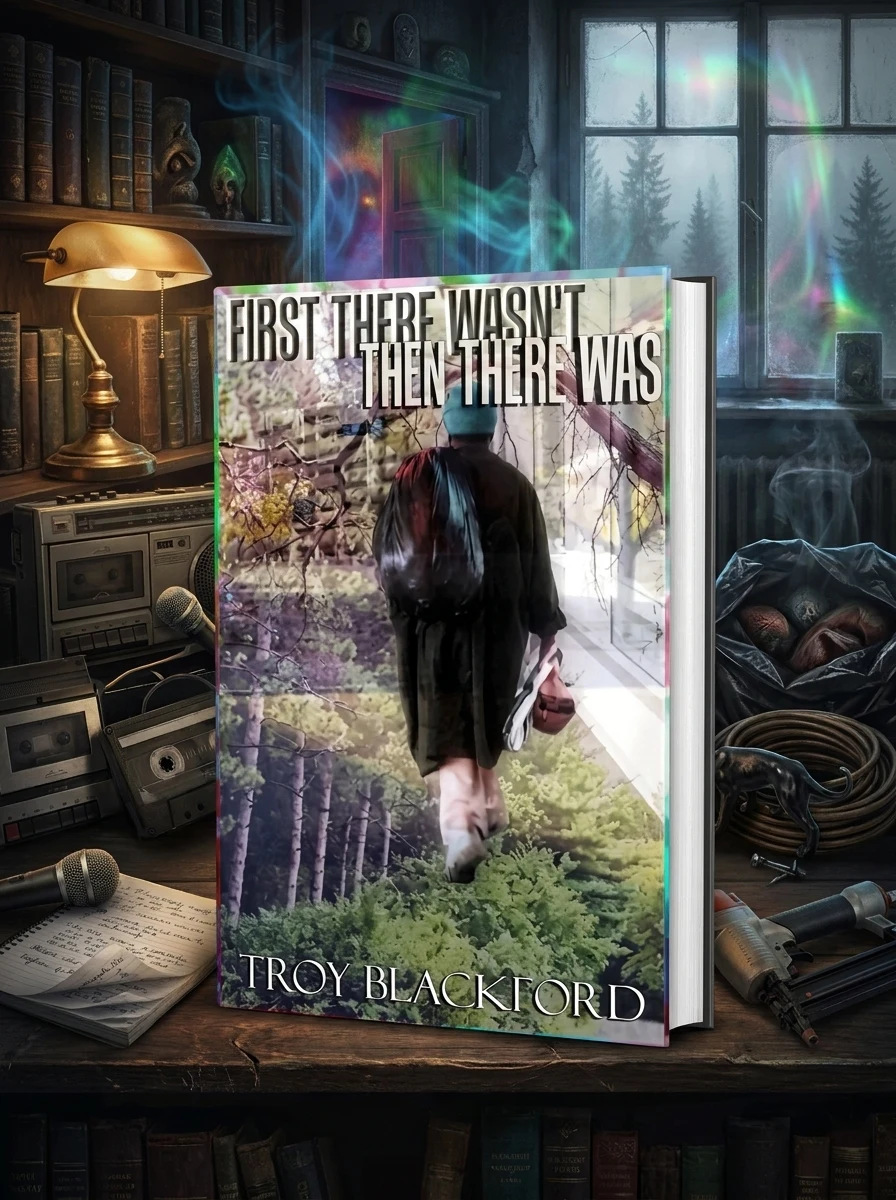
Blackford explores the intersection of urban life and metaphysical horror through the eyes of four young workers. They become obsessed with an old man who carries a trashbag and speaks incoherently. Their attempt to record his mutterings reveals a reality filled with impossible events. The text describes a world where normal physics do not apply, featuring hidden doorways and secret colors. This structure allows the author to present a vision of existence that is both terrifying and wondrous. The novella functions as a bridge between the mundane street level and a deeper, darker dimension. It invites readers to consider what lies beneath the surface of everyday life.
Published in 2014 by Createspace Independent Publishing Platform, this work sits within the tradition of independent horror and supernatural fiction. It reflects a period where self-publishing allowed for more experimental narratives to reach readers directly without traditional gatekeepers.


📝 Description: First There Wasn't, Then There Was
💎 Our verdict on First There Wasn't, Then There Was
📖 Why choose it
Why this book is worth reading
Readers drawn to the intersection of mundane urban observation and profound metaphysical dread will find this work compelling. It appeals specifically to those who appreciate surreal imagery and unconventional storytelling over traditional plot mechanics. Fans of weird fiction seeking a bridge between street-level reality and darker, impossible dimensions will discover a terrifying yet wondrous vision here. The novella invites an exploration of existence through hidden doorways and secret colors, offering a unique perspective for those willing to engage with vivid, strange visuals rather than complex narrative structures. It is ideal for audiences interested in how ordinary life masks deeper, monstrous truths.
⭐ Reader reviews
Reader rating
Blackford constructs a distinct literary experiment that challenges conventional boundaries through surreal elements like uncoiling panthers and recoiling nailguns. The novella succeeds in creating an atmosphere where normal physics dissolve into impossible events, driven by vivid imagery rather than intricate plotting. This approach suits readers who enjoy supernatural fiction and gothic traditions exploring the edges of reality. While it may not satisfy those seeking straightforward realism or traditional horror tropes, it offers a powerful meditation on what lies beneath the surface of everyday life. The work is best appreciated for its unexpected juxtapositions of the mundane and the monstrous.