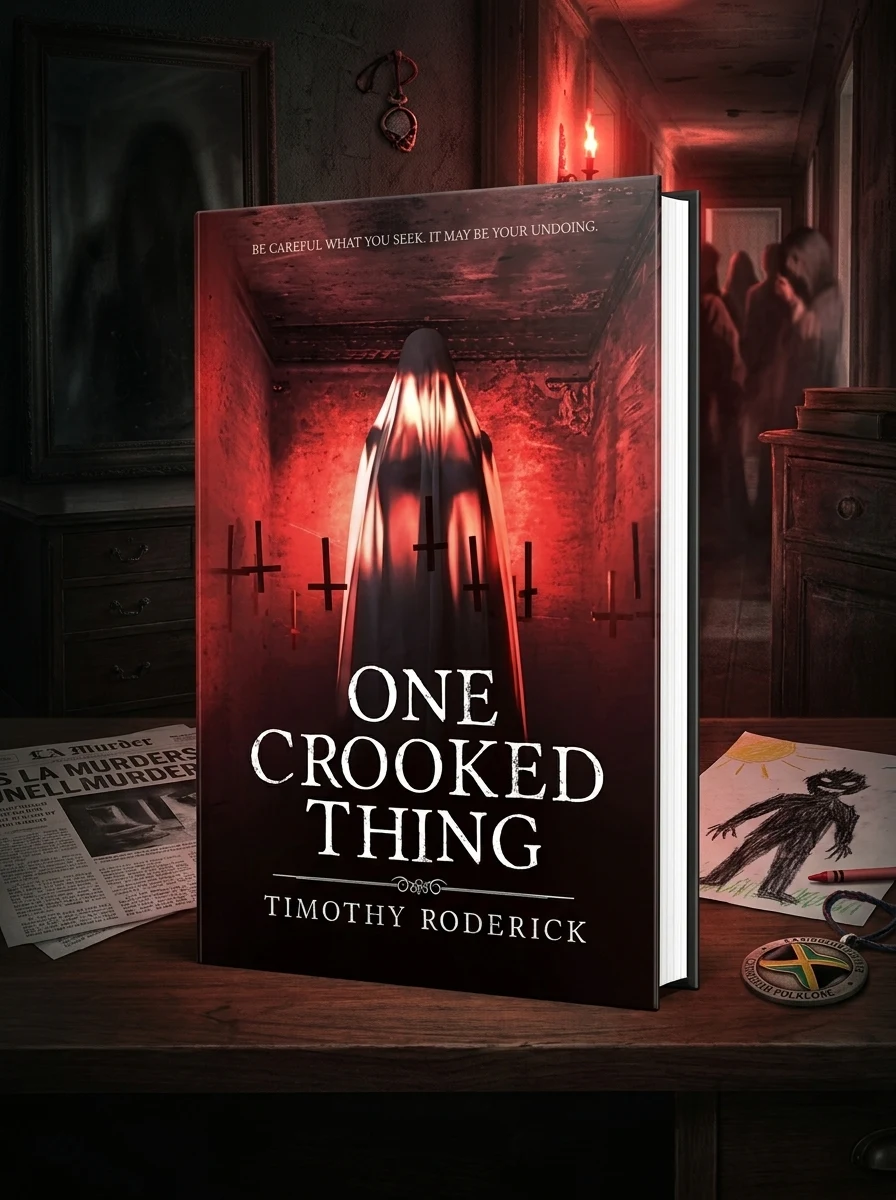
One Crooked Thing
A man investigates murders while a spirit targets his family in Los Angeles.
Ren Larson faces a dual threat as he investigates murders and confronts a stalking entity. His medical diagnosis clashes with his housekeeper’s folklore warnings, creating tension between science and superstition. The narrative focuses on the psychological toll of this pursuit, highlighting how guilt and fear distort perception. Roderick crafts a story where the past haunts the present, and personal secrets become vulnerabilities exploited by dark forces. The plot avoids traditional monster hunting tropes, instead emphasizing the inevitability of a soul being devoured due to hidden sins. This approach grounds the horror in human frailty rather than external spectacle.
Published in 2020 by an independent publisher, this work sits within the contemporary horror genre, blending modern urban settings with traditional gothic elements. It reflects a period where independent voices explore supernatural themes without mainstream constraints, offering a raw look at fear and guilt.


📝 Description: One Crooked Thing
💎 Our verdict on One Crooked Thing
📖 Why choose it
Why this book is worth reading
Readers who favor slow-burn psychological horror over action will find this narrative compelling, as it prioritizes internal decay and atmospheric tension. It appeals to those interested in stories where the boundary between mental illness and supernatural evil blurs, offering a complex exploration of guilt and fear. The book is ideal for audiences who enjoy urban gothic settings and do not require easy resolutions or clear distinctions between reality and hallucination. Those seeking straightforward answers about the nature of evil may find it frustrating, but fans of character-driven dread will appreciate the focus on human frailty and the inevitable consumption of a soul tainted by hidden sins.
⭐ Reader reviews
Reader rating
Roderick crafts a tense atmosphere where every shadow holds potential menace, grounding horror in human frailty rather than external spectacle. The narrative effectively juxtaposes medical diagnosis with folklore warnings, creating compelling tension between science and superstition. By avoiding traditional monster hunting tropes, the story emphasizes the psychological toll of pursuit and the distortion of perception through guilt. This approach makes the book suitable for readers who appreciate subtle dread and complex character studies. However, the lack of definitive answers may alienate those preferring clear resolutions. The work succeeds in its goal to highlight how personal secrets become vulnerabilities, offering a grim but thought-provoking exploration of spiritual consumption within an urban gothic framework.
📖 Read on the blog
✍️ More books by this author Timothy Roderick


🏛 Books from this publisher Independently Published






You might also like
See more →
Have a question about this item?
Ask about the edition, condition, delivery or anything else — we reply by email or phone, usually within a day.
