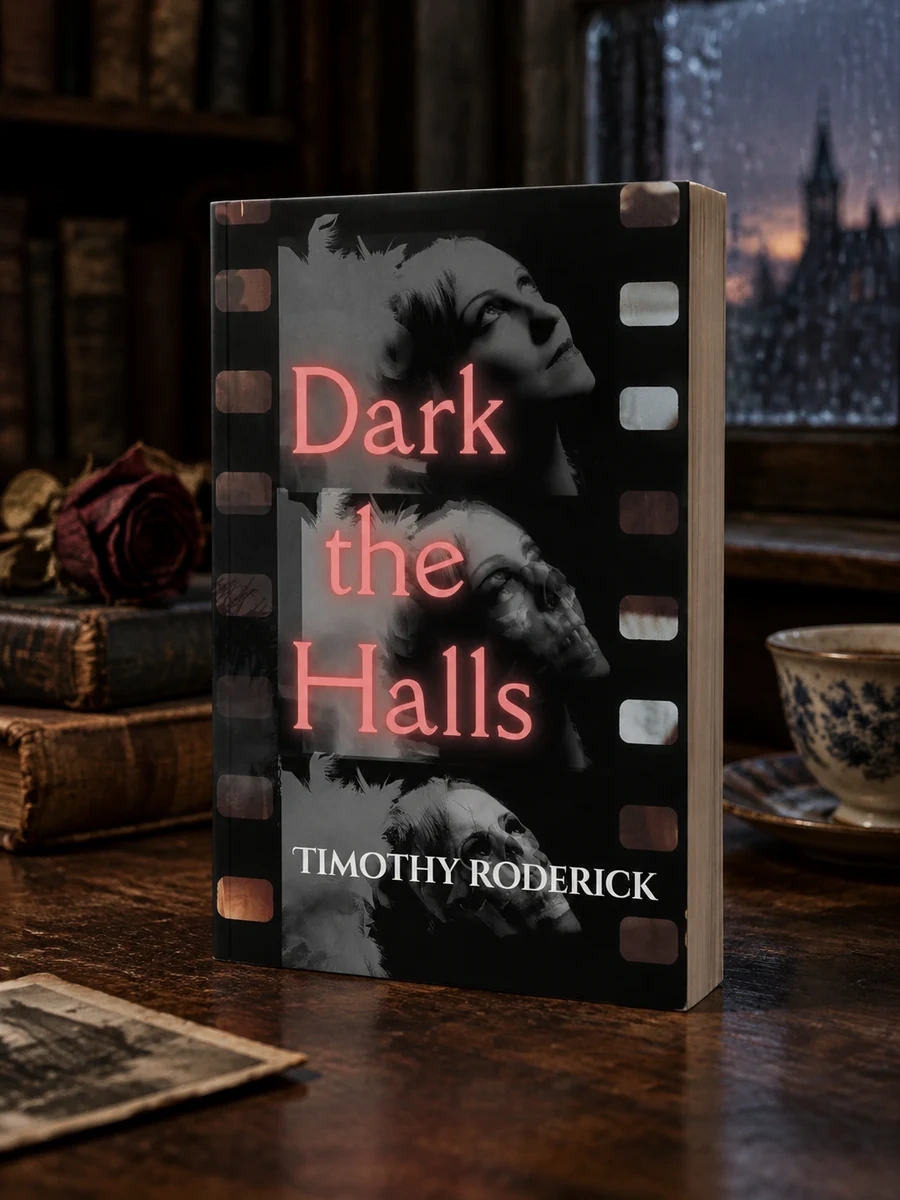
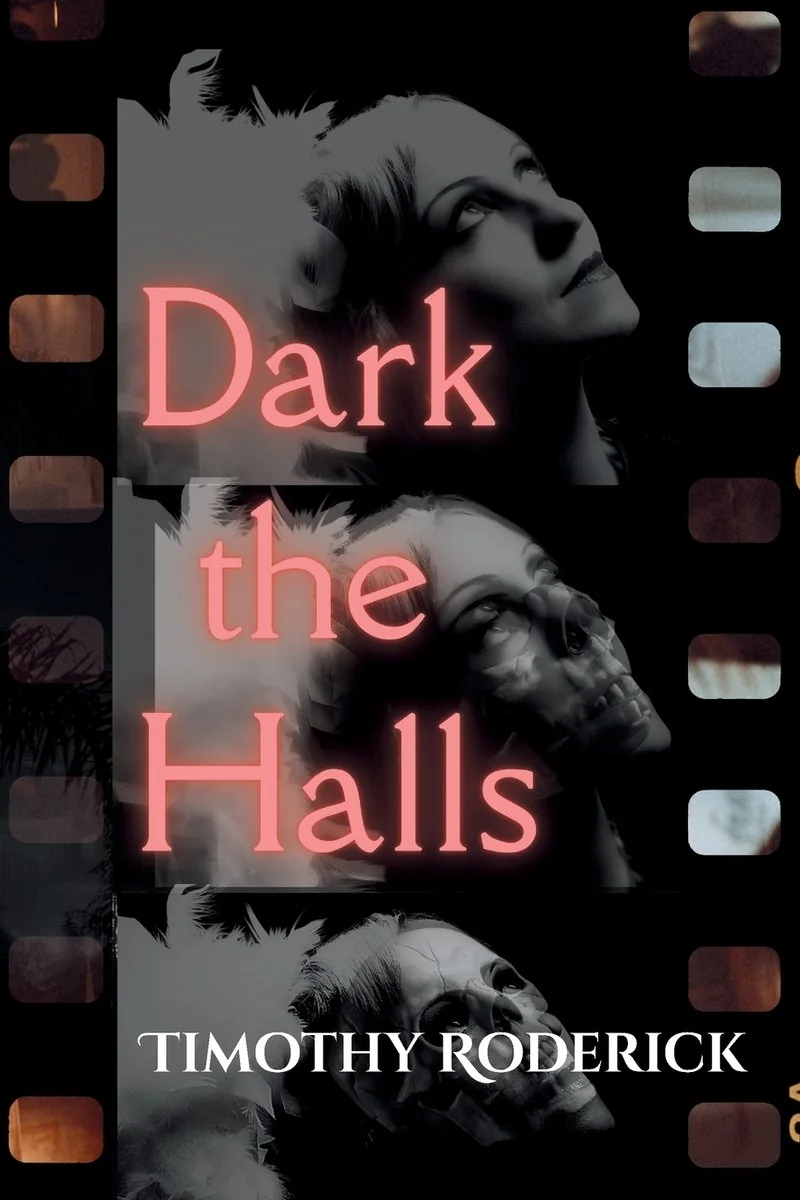
Dark the Halls
A fallen Hollywood mogul faces supernatural judgment in a hidden studio screening room.
Bramwell Finch loses his status as a Hollywood icon and finds himself summoned to a non-existent part of his studio. The invitation leads to a nightmare where unseen hands spin reels exposing his past. Each frame reveals a sin, from bloodshed to betrayal, that built his career. The departed actors and crew members demand the price for their exploitation. Finch cannot escape this spectral feature. The story relies on the atmosphere of 1930s studio culture and the horror of being trapped with one’s own history. Roderick uses the setting of a forgotten screening room to create tension. The narrative structure mirrors a film projection, forcing Finch to watch his life unravel before an audience of ghosts.
The story is set in 1930s Hollywood, focusing on the film industry's golden age. It utilizes the tradition of Christmas Eve gatherings and the lore of haunted studio lots. The narrative draws on the period's cinematic history and the concept of Laurel Awards to ground its supernatural elements in a specific professional context.


📝 Description: Dark the Halls
💎 Our verdict on Dark the Halls
📖 Why choose it
Why this book is worth reading
Readers seeking a grim exploration of guilt and moral reckoning will find this book compelling. It appeals to those interested in supernatural retribution within industrial settings, offering a chilling look at how cinematic history can become a prison for exploiters. The story is ideal for fans who enjoy gothic fiction set against early cinema history, providing tension through atmospheric horror rather than lighthearted holiday tales or modern urban fantasy elements.
⭐ Reader reviews
Reader rating
Roderick effectively constructs a confined setting where the glamour and decay of old Hollywood fuel the terror. By mirroring the narrative structure to a film projection, he forces the protagonist to watch his life unravel before an audience of ghosts. This approach creates significant tension, making the forgotten screening room feel like an inescapable trap. The work suits readers who appreciate atmospheric horror and stories about the consequences of exploitation. It avoids modern tropes, focusing instead on a spectral feature where departed actors demand payment for their time. The tone is consistently grim, offering a serious examination of betrayal rather than a celebration of artistic achievement.
📖 Read on the blog
✍️ More books by this author Timothy Roderick


You might also like
See more →


Have a question about this item?
Ask about the edition, condition, delivery or anything else — we reply by email or phone, usually within a day.
