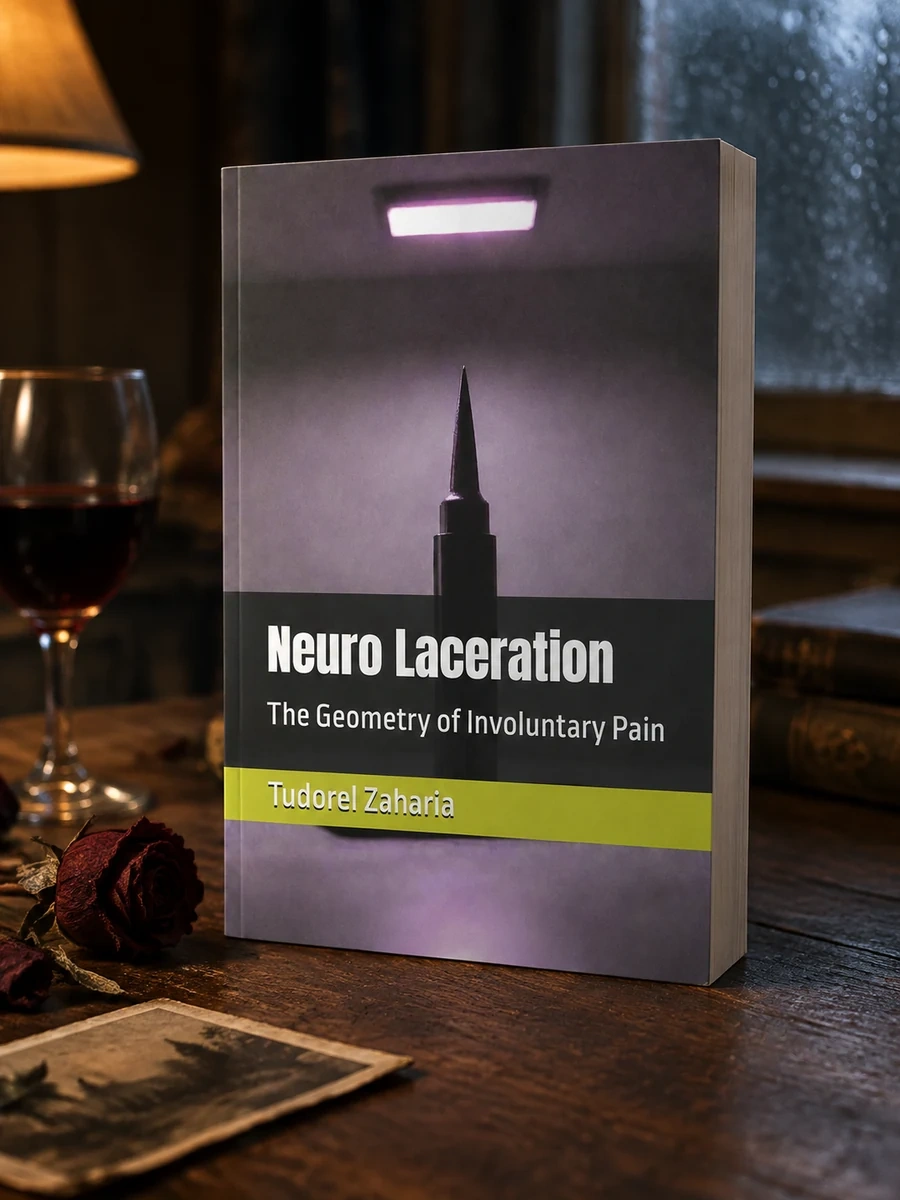
Neuro Laceration: The Geometry of Involuntary Pain
A cyberpunk thriller merging medical suspense with geometric pain.
Zaharia uses cyberpunk visuals and medical accuracy to build dread in this story. Instead of using common horror clichés, the narrative focuses on involuntary pain as a structured concept. By treating fear mathematically, the author creates tension that relies on psychological pressure rather than supernatural elements. The plot contrasts clinical coldness with a dystopian setting to highlight intellectual themes. Readers looking for detailed analysis and atmospheric depth will appreciate this work, while those expecting jump scares or magical plots may find it unsatisfying.
Published in 2026 by Independently Published, this work sits within the contemporary cyberpunk and psychological horror traditions. It reflects current anxieties about technology and bodily autonomy, merging medical suspense with dystopian dread to appeal to modern readers interested in speculative fiction that questions the nature of reality.


📝 Description: Neuro Laceration: The Geometry of Involuntary Pain
💎 Our verdict on Neuro Laceration: The Geometry of Involuntary Pain
📖 Why choose it
Why this book is worth reading
This book is ideal for readers who prefer intellectual depth over fast action and are interested in the mechanics of fear. It offers a unique reading experience by treating suffering as a mathematical shape, creating a tense mix of medical drama and dystopian fear. The narrative appeals to those seeking atmospheric depth and detailed analysis, using precise details to build anxiety without relying on shock value. Fans of cerebral fiction that questions reality through clinical detachment and deep unease will find this work rewarding. It is particularly suitable for individuals who enjoy exploring the intersection of science and terror, provided they are willing to engage with a slow-moving plot that prioritizes psychological pressure over jump scares or magical plots.
⭐ Reader reviews
Reader rating
Zaharia successfully blends cyberpunk visuals with medical accuracy to construct a profound sense of dread. By treating fear mathematically, the narrative creates tension through psychological pressure rather than supernatural elements, offering a refreshing departure from common horror clichés. The story moves slowly, utilizing precise details and clinical coldness to highlight intellectual themes within a dystopian setting. This approach results in a deep unease that appeals to fans of cerebral fiction. While it may not satisfy those expecting rapid pacing or traditional thrills, the book excels in providing atmospheric depth and a unique exploration of involuntary pain as a structured concept. It is a compelling choice for readers who appreciate the intersection of science and terror.
📖 Read on the blog
✍️ More books by this author Tudorel Zaharia




🏛 Books from this publisher Independently Published






You might also like
See more →


Have a question about this item?
Ask about the edition, condition, delivery or anything else — we reply by email or phone, usually within a day.
