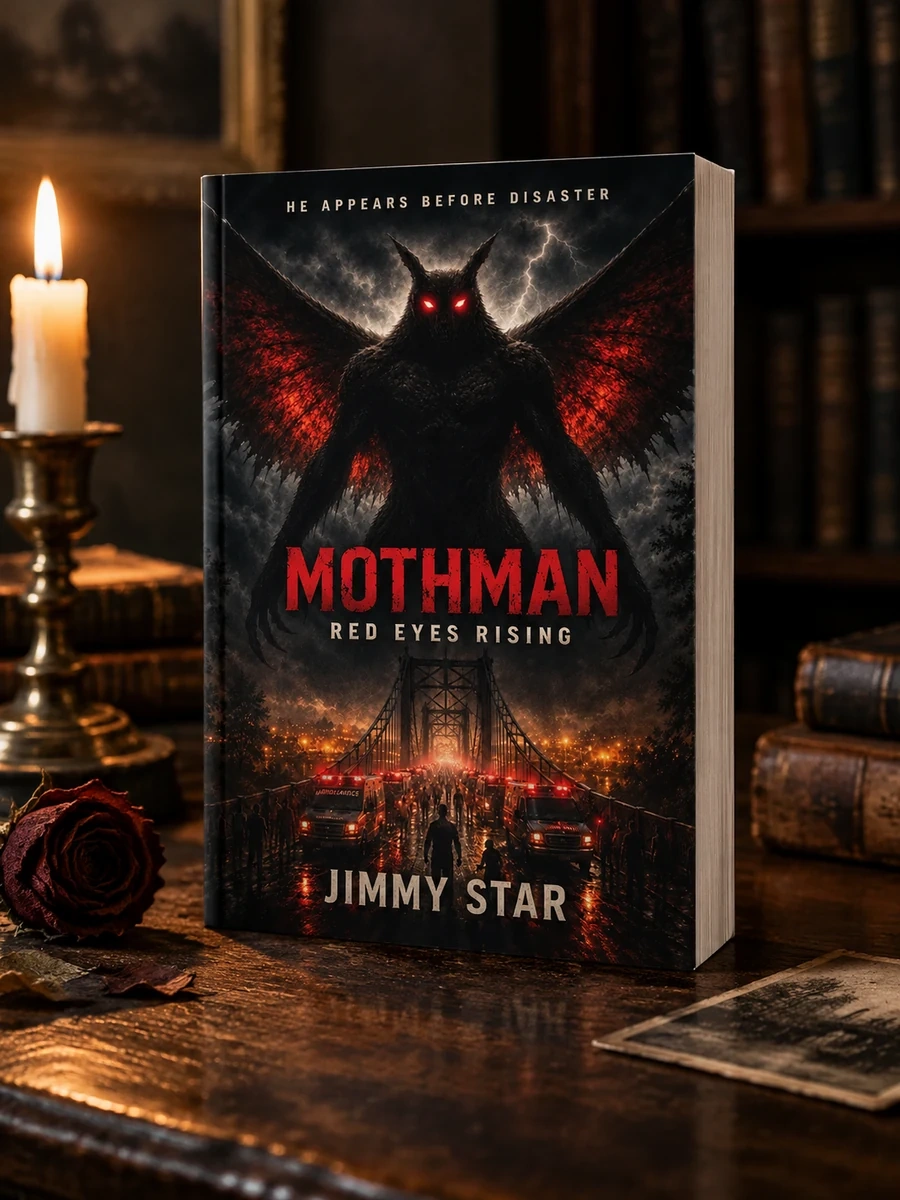
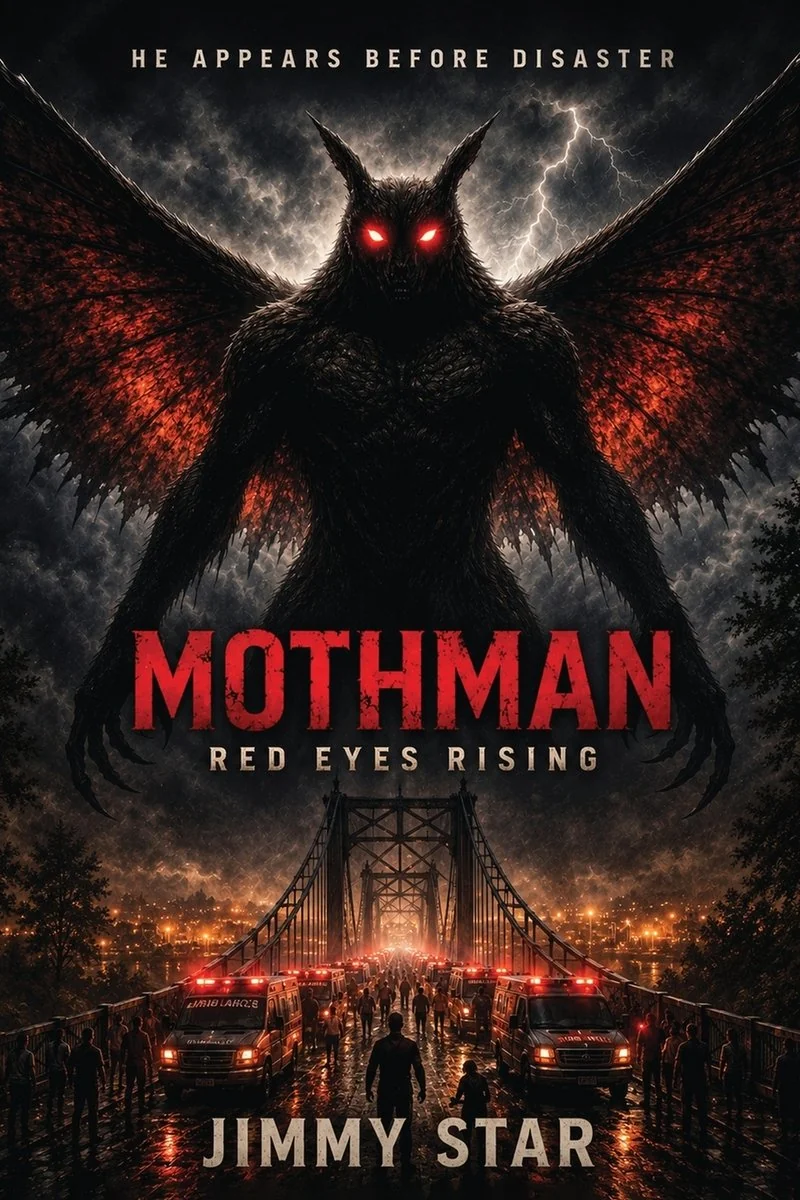
Mothman: Red Eyes Rising
A journalist uncovers a learning entity behind vanished vehicles and red eyes.
Star writes a thriller where a routine drive home turns into a nightmare involving glowing red lights. The protagonist, Jake Mercer, finds that accidents are not random but part of a larger design. He works with colleagues to analyze data that reveals a pattern of disappearance. The story focuses on the terror of being observed by something intelligent and predatory. It combines the fear of the unknown with the anxiety of digital surveillance. The narrative does not rely on jump scares but on the dread of inevitable exposure.
This novel sits within the tradition of American urban legend horror, specifically the Mothman phenomenon. It updates the classic folklore by integrating modern themes of surveillance and data analysis. The setting involves remote bridges and quiet roads, typical of contemporary supernatural fiction.


📝 Description: Mothman: Red Eyes Rising
💎 Our verdict on Mothman: Red Eyes Rising
📖 Why choose it
Why this book is worth reading
Readers who enjoy supernatural fiction grounded in contemporary mystery will find this novel compelling. It appeals to those interested in the intersection of urban legends and modern technology, offering a fresh take on classic folklore through the lens of digital surveillance. The book is ideal for fans of psychological horror who prefer dread over jump scares, as it builds tension through the accumulation of evidence rather than linear action. Those who appreciate investigative suspense combined with cosmic or predatory horror will benefit from the unique premise of an entity that learns from its victims. It offers a thrilling exploration of being watched by something intelligent, satisfying readers who like their folklore updated for the digital age.
⭐ Reader reviews
Reader rating
Star successfully reinvents the Mothman legend by focusing on a learning entity rather than traditional folklore elements. The narrative structure, which follows Mercer’s discovery process, allows tension to build effectively through evidence and witness accounts. By combining psychological horror with investigative suspense, the author creates a tale of modern techno-paranoia that feels both relevant and terrifying. The focus on the anxiety of digital surveillance adds a layer of contemporary dread. This approach suits readers who enjoy supernatural fiction grounded in mystery, though it may not appeal to those seeking traditional folklore without technological components. The result is a distinct entry in urban legend horror that emphasizes the terror of inevitable exposure.