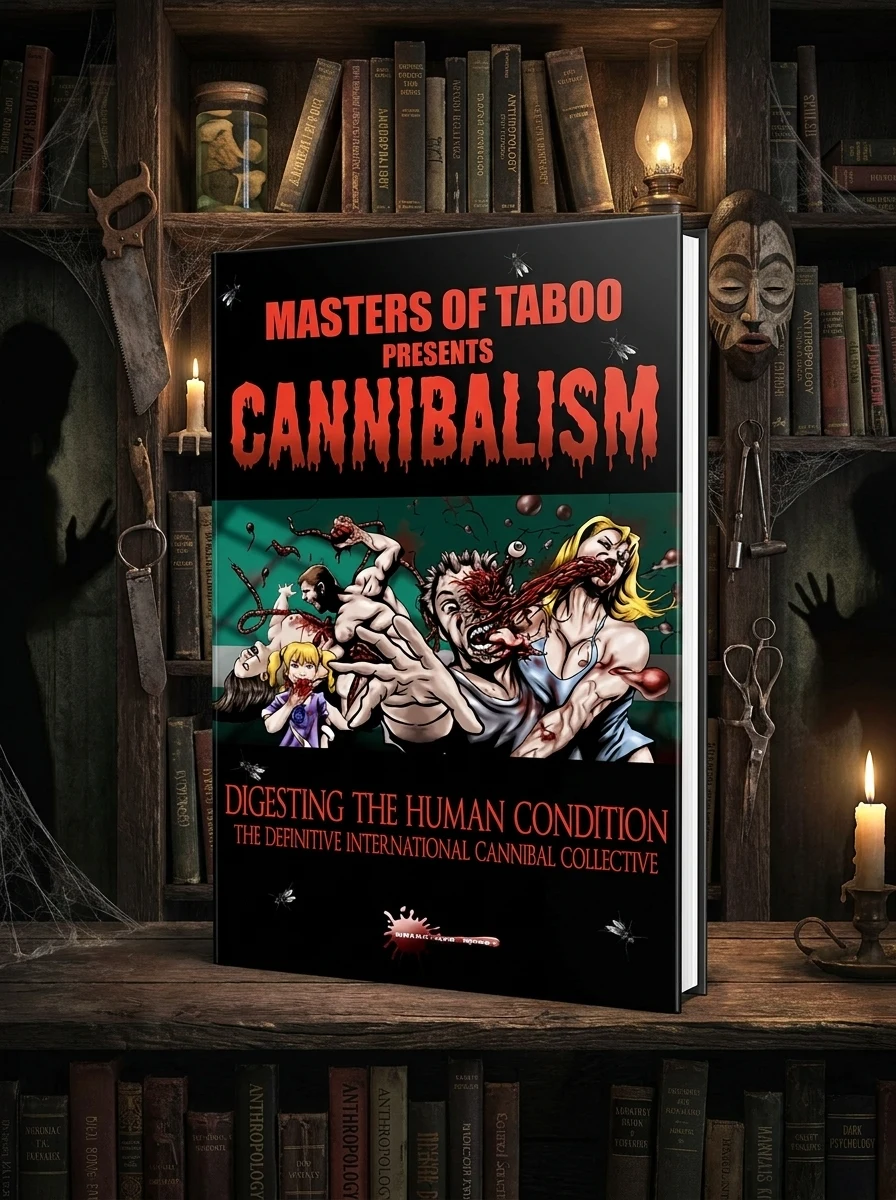

Masters of Taboo: Cannibalism: Limited Edition, Digesting The Human Condition
Bryan Jackson explores the motivations behind human cannibalism in this first volume.
This book functions as Volume One of a series addressing taboo subjects. It focuses on anthropophagy, defining it as the consumption of human flesh by other humans. The text categorizes causes into cultural norms, famine survival, and mental illness. It also examines cases linked to insanity or social deviancy. The author frames these examples within a context of extreme violence. The work appeals to readers interested in the darker aspects of human behavior. It does not offer comfort or conventional narrative structure. Instead, it presents a catalog of motivations behind the act.
Published in 2012 by Createspace Independent Publishing Platform, this work sits within the horror and supernatural fiction market. It addresses international traditions of cannibalism as a subject for study rather than mere entertainment.


📝 Description: Masters of Taboo: Cannibalism: Limited Edition, Digesting The Human Condition
💎 Our verdict on Masters of Taboo: Cannibalism: Limited Edition, Digesting The Human Condition
📖 Why choose it
Why this book is worth reading
Readers seeking an unflinching exploration of the darkest corners of human behavior will find this volume compelling. It appeals to enthusiasts of psychological horror and true crime who desire a catalog of motivations behind extreme acts rather than conventional narrative comfort. The book serves those interested in the raw mechanics of cannibalism, offering insights into cultural norms, famine survival, and mental illness. By framing these topics within a context of ultra-violence and social deviancy, it provides a foundational understanding for fans of the Masters of Taboo series. It is ideal for audiences who wish to understand the psychological drivers behind anthropophagy without the distraction of gentle or traditional storytelling structures.
⭐ Reader reviews
Reader rating
Jackson delivers a comprehensive examination of anthropophagy, categorizing causes from cultural sanctions to severe psychological distress. The text avoids conventional narrative structures, instead presenting a raw catalog of motivations linked to insanity and social deviancy. This approach suits readers who appreciate extensive coverage of ultra-violence and extreme thematic elements. While unsuitable for those seeking gentle fiction, it effectively establishes foundational concepts for the broader series. The work succeeds in its goal to explore the slow boiling stew of cannibalistic behavior, appealing directly to horror enthusiasts interested in the darker aspects of human nature and the psychological drivers behind such taboo acts.