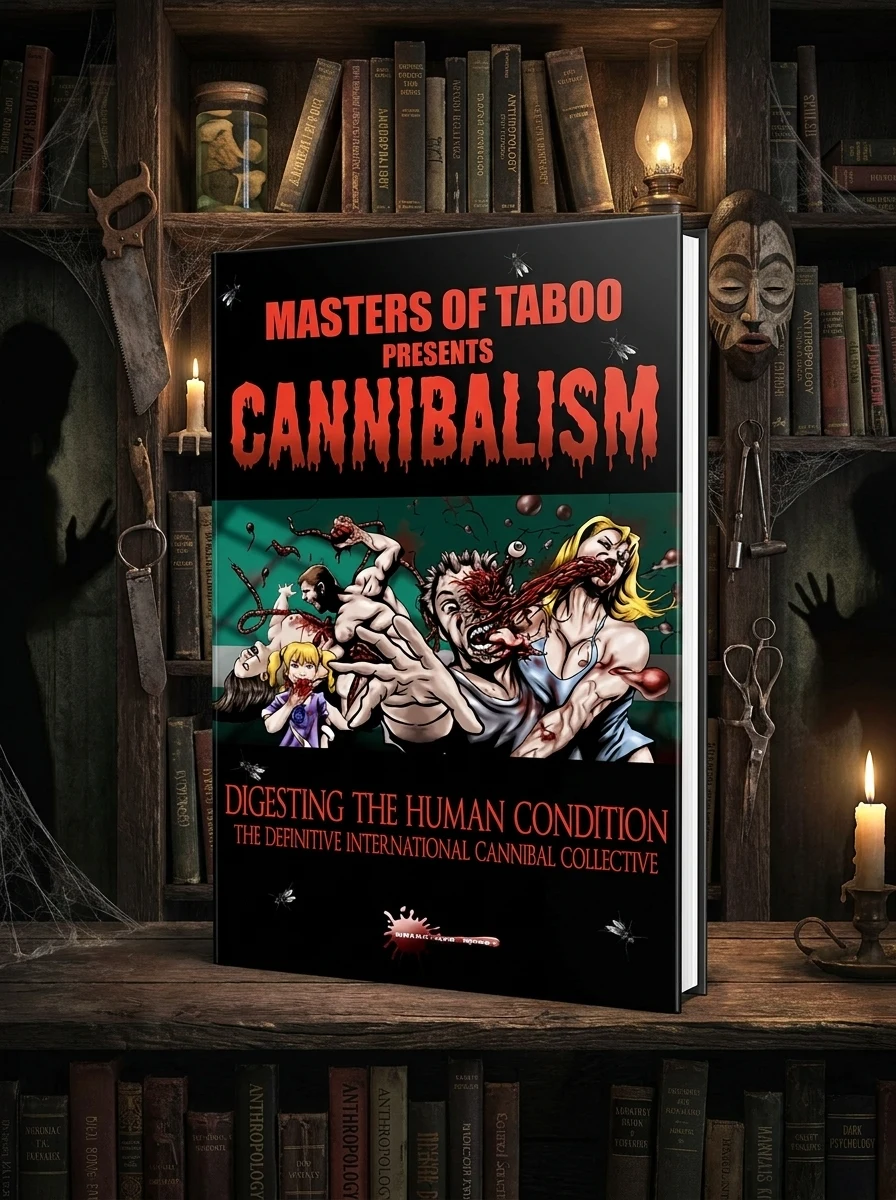
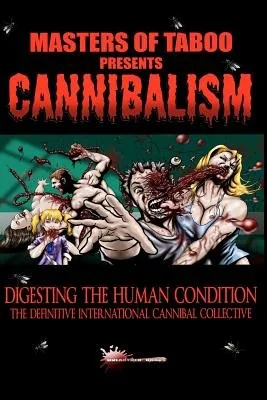
Masters Of Taboo: Cannibalism, Digesting The Human Condition: The Definitive International Cannibal Collective
A non-fiction analysis of cannibalism by Bryan Jackson exploring its cultural and psychological roots.
Jackson’s text moves beyond sensationalism to examine the underlying causes of anthropophagy. He categorizes these acts into distinct groups such as necessity during famine, cultural norms, and mental health issues. The book provides a structured overview of why humans eat other humans, focusing on the conditions that lead to such behavior. It is part of a larger series aimed at horror fans who want to understand the reality behind the fiction. The author uses this first volume to establish the groundwork for future discussions on extreme violence and taboo practices in society.
Published in 2012 by Createspace Independent Publishing Platform, this work sits within the genre of horror and supernatural fiction studies. It addresses international perspectives on cannibalism, serving as Volume One of the Masters Of Taboo series for readers interested in the darker aspects of human history and psychology.


📝 Description: Masters Of Taboo: Cannibalism, Digesting The Human Condition: The Definitive International Cannibal Collective
💎 Our verdict on Masters Of Taboo: Cannibalism, Digesting The Human Condition: The Definitive International Cannibal Collective
📖 Why choose it
Why this book is worth reading
Readers seeking a grounded, analytical perspective on the darkest aspects of human nature will find this book valuable for its structured approach to anthropophagy. It appeals to horror enthusiasts who wish to understand the reality behind fictional monsters by examining real-world cases driven by famine, mental illness, or cultural norms. This volume is ideal for those interested in the sociological and psychological roots of extreme violence, offering a foundational look at taboo subjects without sensationalism.
⭐ Reader reviews
Reader rating
Bryan Jackson delivers a serious inquiry into cannibalism by categorizing acts through necessity, culture, and deviancy. The text excels in providing clear distinctions between survival-driven consumption and psychological disturbance, avoiding mere gore for deeper context. It suits readers who appreciate the intellectual side of horror, offering a comprehensive examination of why humans consume one another. While those expecting pure shock value might find it dry, enthusiasts of true crime and psychological horror will appreciate its rigorous, non-sensationalist framework as a solid introduction to the series.