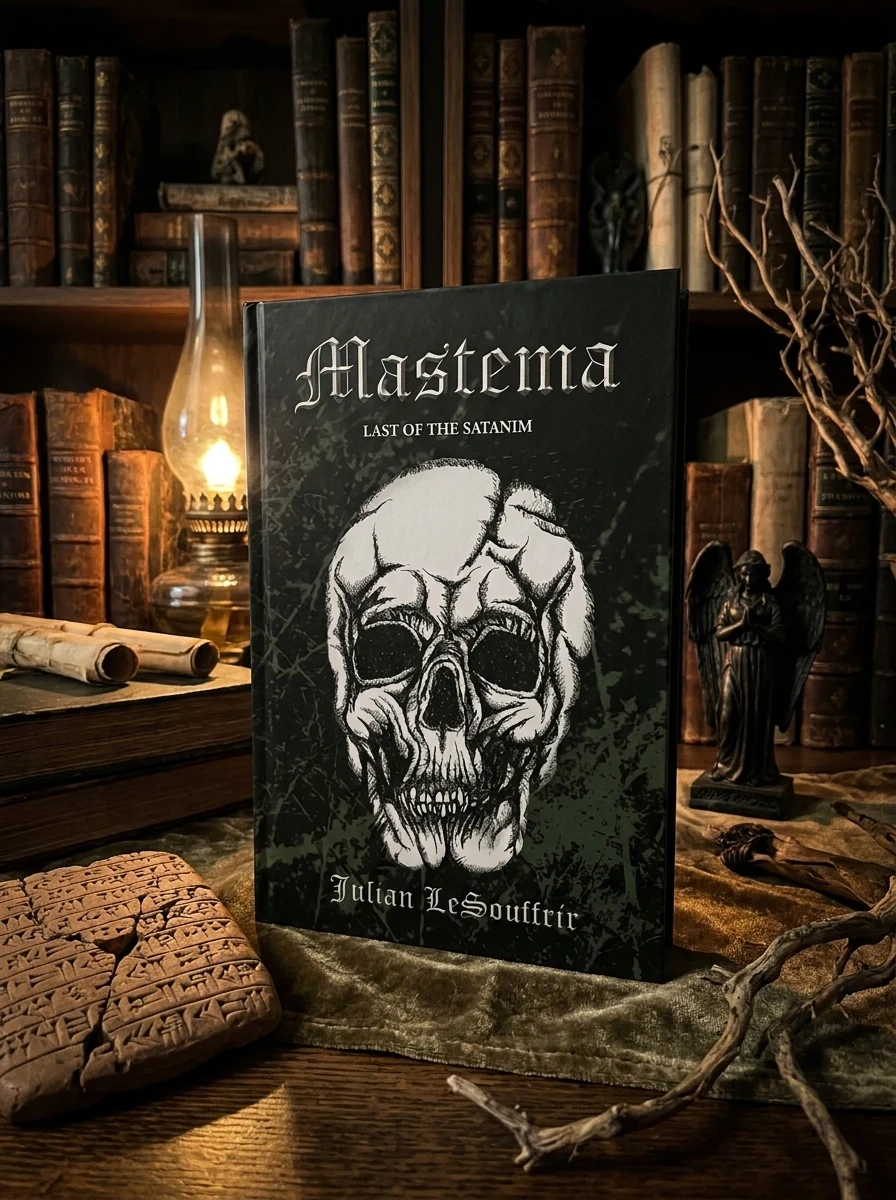
Mastema: Last of the Satanim
A prequel detailing the fall of the Watchers and the War of the Nephilim before the Great Flood.
This volume functions as the foundational backstory for Historia Regum Obscurum Book I. It shifts focus from later kings to the primordial era of the Early patriarchs. Lesouffrir explores the political and spiritual dynamics of the earliest Sumerian rulers. The narrative tracks the descent of the Watchers and their subsequent fall. It details the violent conflict known as the War of the Nephilim. These events are presented as the direct cause of the Great Flood. The author argues that the flood was a necessary purification. He treats these figures as real historical actors rather than symbolic myths. The book provides context for the Satanim and their lineage. It explains how evil gripped the world before the deluge. This perspective offers a unique entry point into the series. Readers gain insight into the motivations of ancient supernatural beings. The text bridges the gap between religious text and speculative fiction. It invites consideration of these stories as literal history.
The work draws on Early patriarch traditions and Sumerian history. It addresses the Satanim and Nephilim from supernatural fiction. The narrative reinterprets myth and lore as literal events leading to the Great Flood.


📝 Description: Mastema: Last of the Satanim
💎 Our verdict on Mastema: Last of the Satanim
📖 Why choose it
Why this book is worth reading
Readers seeking a foundational backstory for the Historia Regum Obscurum series will find this volume essential. It offers a unique entry point into the motivations of ancient supernatural beings, specifically the Satanim and their lineage. Those interested in the political and spiritual dynamics of early Sumerian rulers and the fall of the Watchers will appreciate the detailed narrative. The book appeals to those who view biblical and apocryphal figures as real historical actors rather than mere folklore. It provides context for the War of the Nephilim and frames the Great Flood as a necessary purification. By bridging religious tradition and fictional storytelling, it invites consideration of these stories as literal history. The direct narration style allows the events to speak for themselves without sensationalism, making it ideal for fans of dark fantasy and cosmic horror who prefer substance over modern tropes.
⭐ Reader reviews
Reader rating
Lesouffrir constructs a compelling narrative that treats ancient conflicts as literal history, offering a concrete look at the Satanim’s role in early human history. The prose avoids sensationalism, favoring direct narration to let the events speak for themselves. This approach suits readers interested in ancient Near Eastern mythology and supernatural fiction who desire a detailed account of how the world was shaped by these primordial struggles. However, it may not appeal to those seeking strictly academic historical analysis or modern horror tropes. The text focuses on specific biblical figures rather than general folklore, providing insight into the motivations of watchers and nephilim. It stands as a foundational text for the broader series, bridging the gap between religious tradition and speculative fiction with a tone that is serious and immersive.
📖 Read on the blog
✍️ More books by this author Julian Lesouffrir


🏛 Books from this publisher Authorhouse



You might also like
See more →

Have a question about this item?
Ask about the edition, condition, delivery or anything else — we reply by email or phone, usually within a day.
