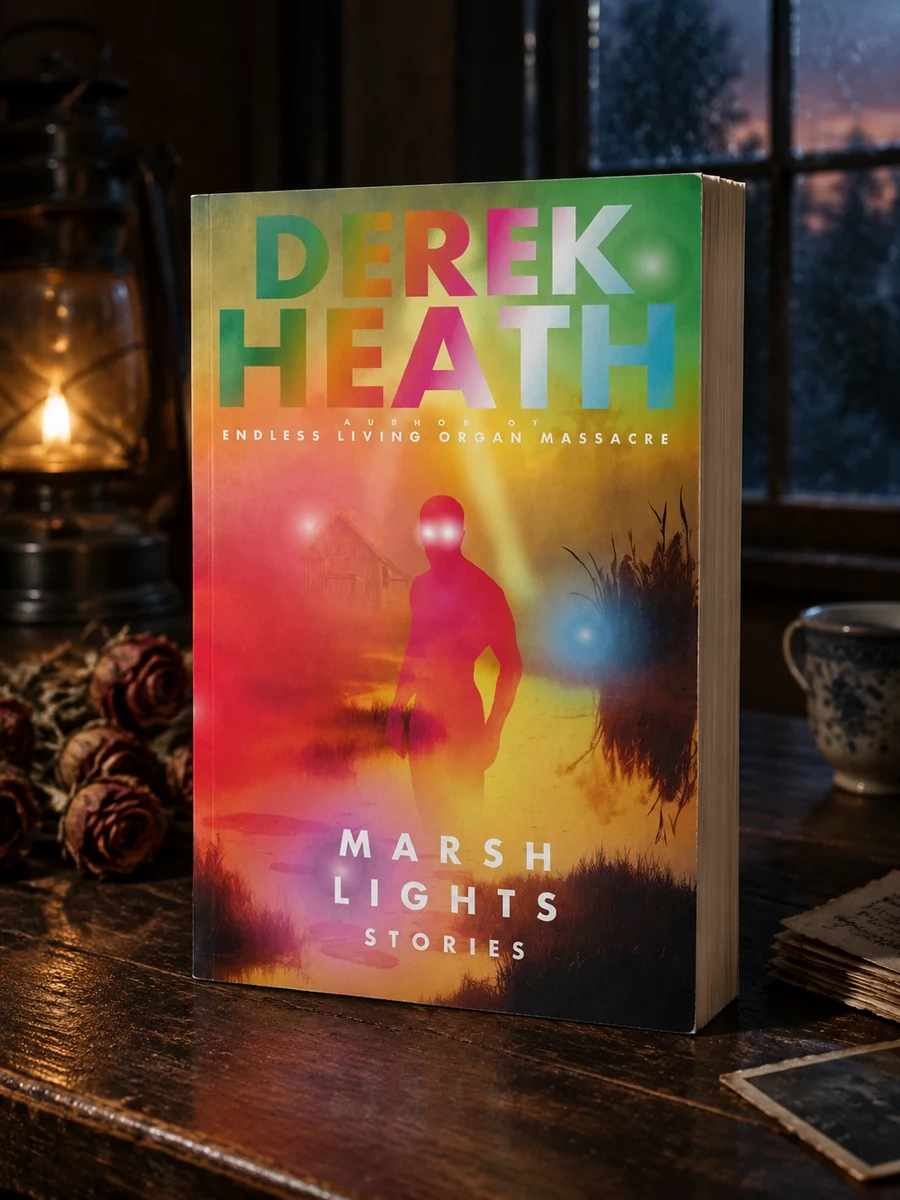
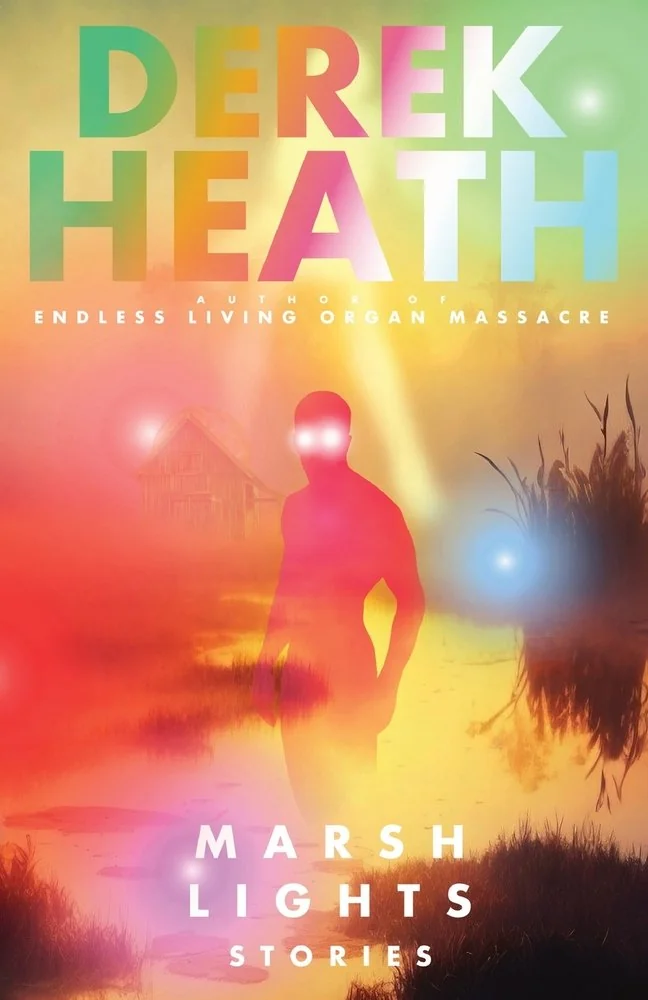
Marsh Lights
Seven color-coded horror stories by British author Derek Heath exploring the weird and paranormal.
Marsh Lights structures its horror through a chromatic lens, moving from pearl white to blood red. Heath employs varied scenarios to evoke fear, including wartime intrigue and domestic disturbances. The inclusion of a fisherman’s despair and a screenwriter’s connection to nature shows range. The isolated marsh keeper tale highlights isolation. This organization allows readers to experience different shades of dread without repetition.
Derek Heath is a British horror author. Marsh Lights is his third short story collection, published by Pope Lick Press in 2024. The work engages with the tradition of weird and paranormal fiction, blending historical references like the First World War with supernatural elements.


📝 Description: Marsh Lights
💎 Our verdict on Marsh Lights
📖 Why choose it
Why this book is worth reading
Readers who appreciate structured horror collections that blend historical elements with supernatural dread will find this book rewarding. The unique color-coded organization allows for a distinct reading experience, moving from pearl white to blood red without repetition. This approach suits those interested in the weird fiction tradition who value atmospheric tension over explicit gore. It appeals to fans of psychological and paranormal unease, offering diverse scenarios ranging from wartime intrigue to domestic disturbances. The collection provides a spectrum of horror experiences that avoid the monotony of standard linear plots.
⭐ Reader reviews
Reader rating
Derek Heath’s Marsh Lights stands as a distinct entry in contemporary horror, utilizing a chromatic lens to structure seven short stories. By organizing narratives from pearl white to blood red, Heath creates a cohesive yet varied exploration of the weird and paranormal. The collection excels in its diversity of settings, juxtaposing First World War intrigue with isolated marsh keeping and domestic disturbances. Heath’s reliance on atmospheric tension rather than explicit gore ensures a consistent tone of psychological unease. This volume is best suited for readers who enjoy the British weird fiction tradition and seek structured collections that prioritize mood and thematic depth over straightforward plot progression.