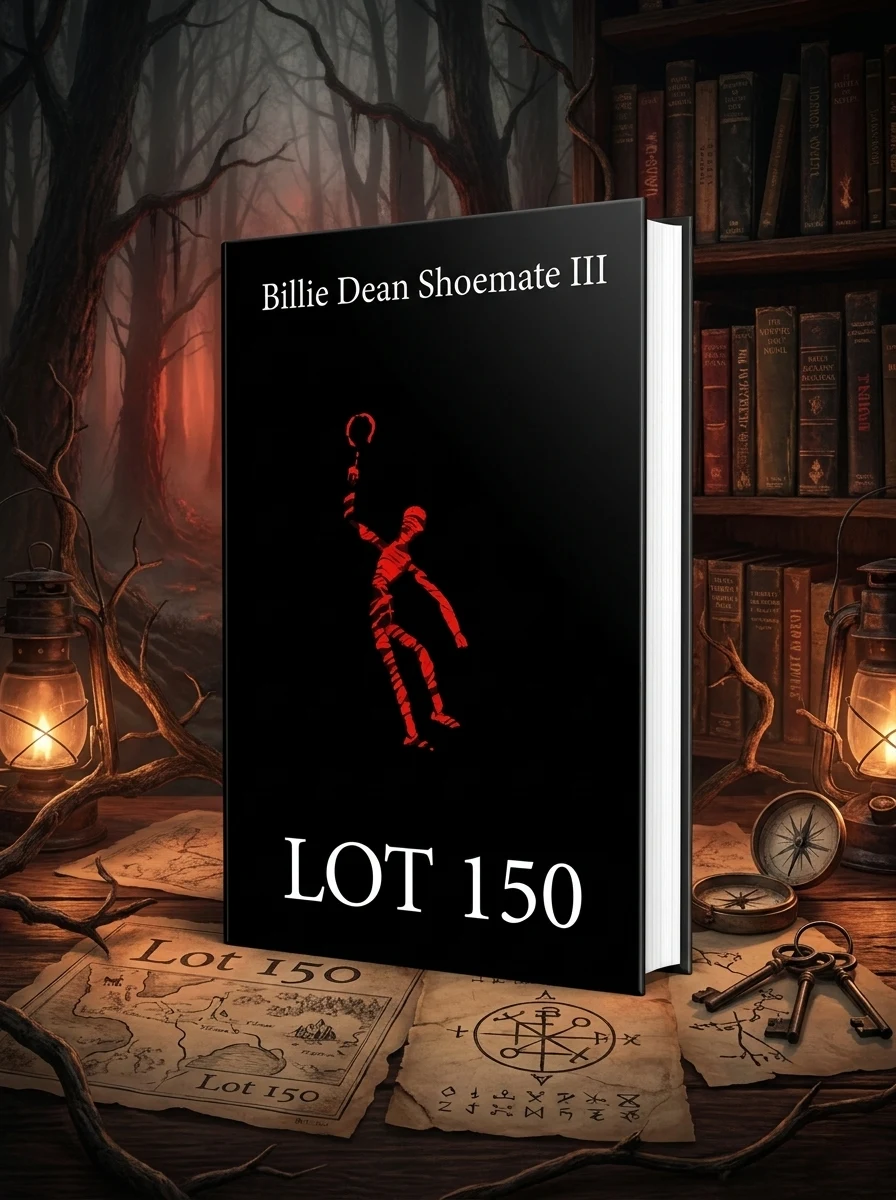
Lot 150
A retreat for friends with a secret turns into a living nightmare.
Billie Dean Shoemate III writes about Matthew Herrington and his friends who gather at Lot 150. They hope to forget their terrible shared past. The house betrays that hope. It becomes a place of suffering. The author claims this is his greatest novel. He considers it the most terrifying story he has created. The plot centers on the failure of escape. The friends find no relief in the getaway. The environment itself turns against them. This approach highlights the inescapability of their secret. The narrative does not rely on external monsters alone. It focuses on the internal and external horror of the location. Shoemate uses this setting to explore fear. The book delivers a specific type of supernatural dread.
Published by Createspace in 2012, this independent release sits within the tradition of self-published horror fiction. It targets readers of gothic and supernatural tales who seek intense fear from indie authors. The ISBN is 9781495213434.


📝 Description: Lot 150
💎 Our verdict on Lot 150
📖 Why choose it
Why this book is worth reading
Readers who crave the claustrophobic intensity of gothic horror and psychological dread will find this narrative deeply compelling. It appeals to those fascinated by the trope of a sanctuary turning into a prison, offering a stark exploration of inescapable guilt and isolation. The book is ideal for fans of indie supernatural fiction who appreciate settings that actively contribute to terror rather than merely serving as backdrops. Those interested in stories where secrets fester and transform environments into sources of torment will discover a resonant examination of fear. It provides a concentrated dose of atmospheric horror, focusing on the psychological unraveling of characters trapped by their own pasts within a cursed location.
⭐ Reader reviews
Reader rating
The novel excels at establishing an oppressive atmosphere where the setting itself becomes the primary antagonist. Shoemate effectively utilizes the concept of inescapable secrets to drive the narrative tension, creating a sense of dread that permeates every page. The focus on internal and external horror within a confined space allows for a intense, concentrated reading experience. This approach suits readers who prefer environmental terror over complex character studies or external monster fights. It is particularly well-suited for enthusiasts of gothic traditions and psychological horror who enjoy stories about the failure of escape. The work delivers a specific type of supernatural anxiety that lingers long after the final page.