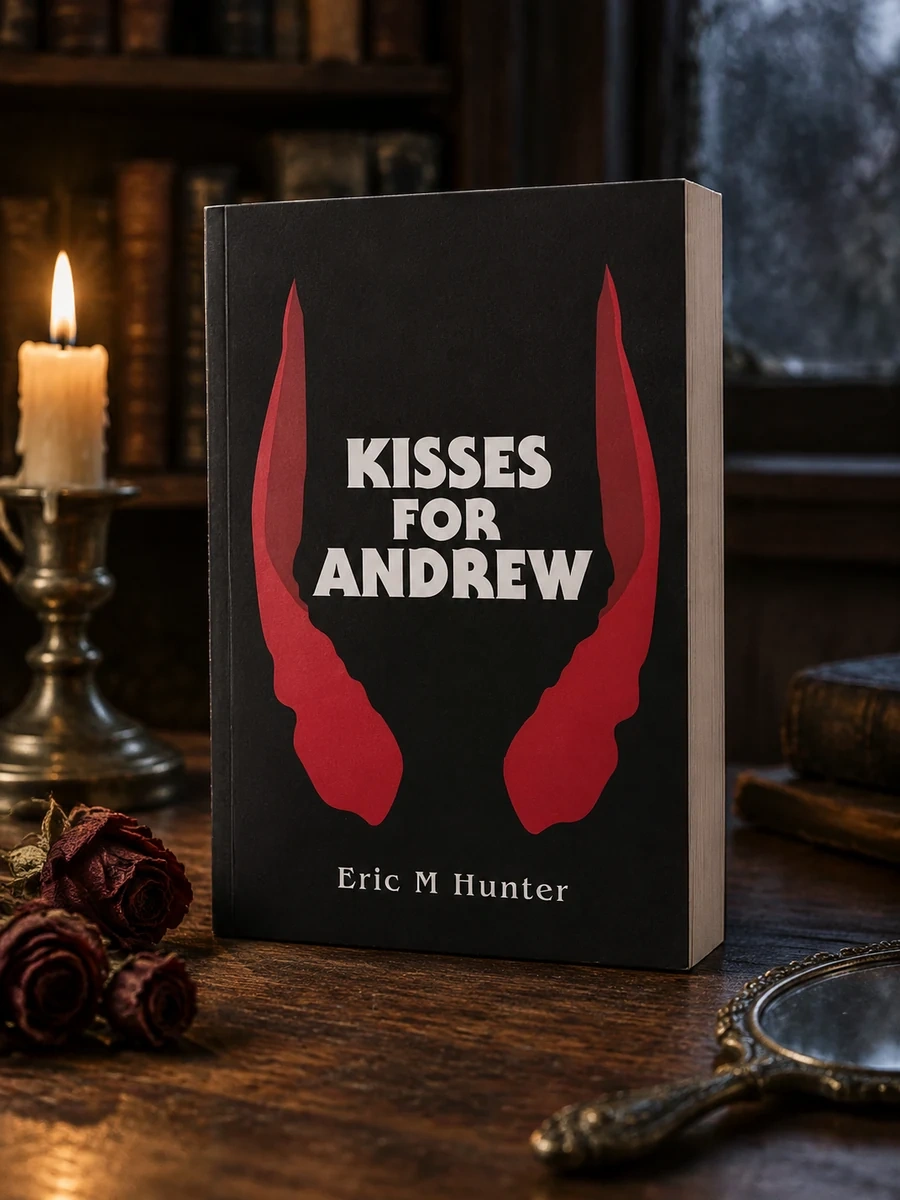

Kisses for Andrew
A father sees his dead wife after her suicide, just like his son.
Dixon Milner struggles to cope with the loss of Karolyn through drink and denial. His attempt at recovery via therapy fails as supernatural events intensify. The line between grief-induced hallucination and actual haunting blurs for both father and eldest son. Hunter uses this premise to examine how unresolved trauma can manifest in domestic spaces. The story focuses on the internal experience of the protagonist rather than external threats. This creates a claustrophobic atmosphere that mirrors Dixon’s mental state. The narrative does not provide easy answers but instead presents the ongoing struggle of living with loss. The supernatural elements serve as metaphors for guilt and denial. Hunter’s prose remains focused on character development over plot twists.
Published in 2021 by Eric M Hunter, this work sits within the modern tradition of psychological horror. It reflects contemporary interests in mental health and the lingering effects of suicide on surviving family members. The text engages with gothic themes of death and memory in a domestic setting.


📝 Description: Kisses for Andrew
💎 Our verdict on Kisses for Andrew
📖 Why choose it
Why this book is worth reading
Readers seeking a profound exploration of grief, trauma, and the fragility of the human mind will find this novel deeply resonant. It appeals to those who appreciate slow-burn psychological horror where the terror stems from internal disintegration rather than jump scares. Fans of character-driven narratives that use supernatural elements as metaphors for guilt and denial will value its emotional depth. The book offers a claustrophobic, immersive experience for those willing to engage with uncomfortable truths about loss. It is ideal for readers who prefer literary quality over plot-driven action and understand that horror often lies in the unraveling of reality itself.
⭐ Reader reviews
Reader rating
Hunter delivers a harrowing portrait of grief through Dixon Milner’s descent into alcoholism and psychological ruin. The narrative excels in blurring the line between hallucination and haunting, creating an intensely claustrophobic atmosphere. By grounding eerie phenomena in raw human emotion, the author avoids cheap thrills in favor of genuine pathos. The prose focuses on character development, immersing the reader in Dixon’s isolated perspective without offering easy answers or comfort. This approach suits readers who appreciate slow-burn psychological horror and family dramas rooted in loss. It may not appeal to those seeking fast-paced action or clear resolutions to grief, but it rewards patience with a poignant examination of how unresolved trauma manifests in domestic spaces.
📖 Read on the blog
✍️ More books by this author Eric M Hunter



🏛 Books from this publisher Eric M Hunter
You might also like
See more →



Have a question about this item?
Ask about the edition, condition, delivery or anything else — we reply by email or phone, usually within a day.
