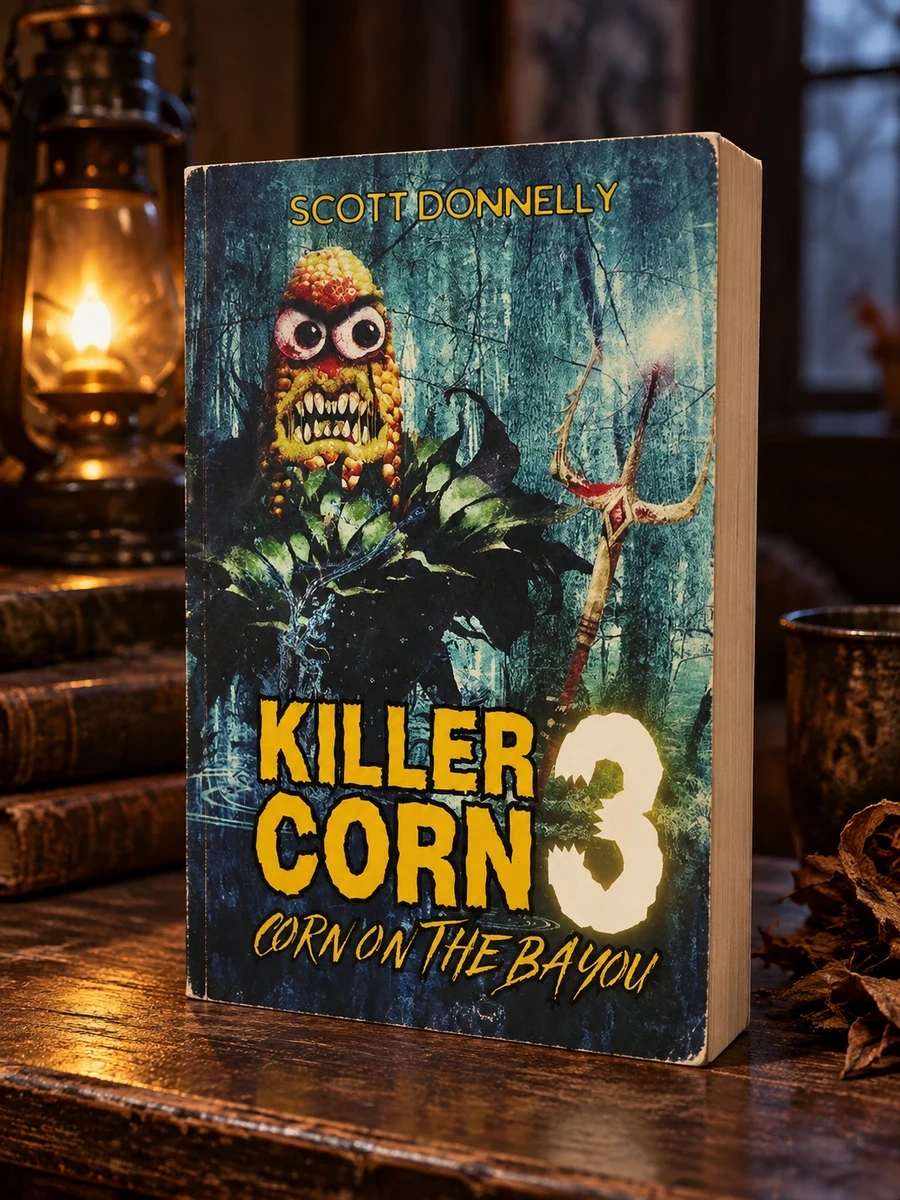
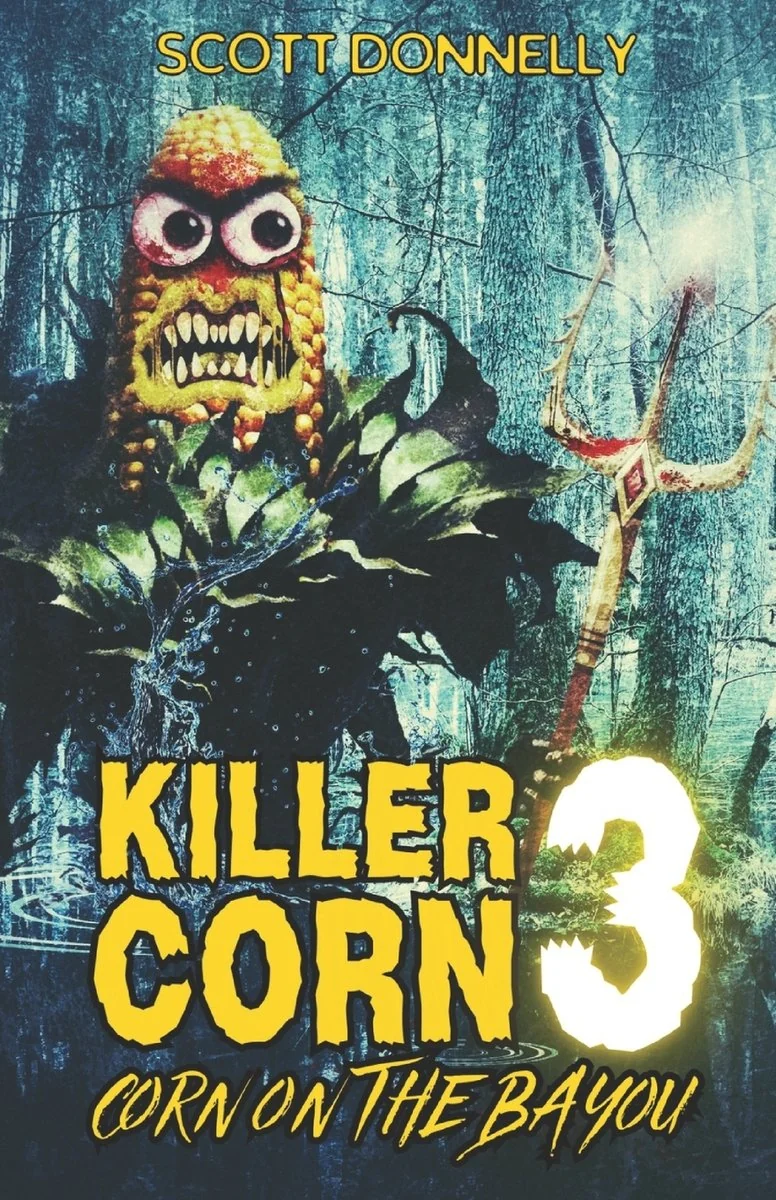
Killer Corn 3: Corn on the Bayou
A horror novel about a killer corn cob plotting resurrection in the Texas bayou.
The narrative splits its focus between two distinct locations and groups of people. Survivors of a previous massacre search police records for a way to stop their enemy. Simultaneously, the antagonist prepares his return in a remote swamp region. The story examines the gap between knowledge and action. It explores how fear lingers long after the initial violence ends. The author uses distance to build suspense, showing that safety is an illusion when evil remains active.
The story sits within the tradition of American rural horror and gothic fiction. It utilizes the specific atmosphere of east Texas swamps to create isolation. The narrative draws on folklore where agricultural elements become violent. This setting grounds the supernatural events in a recognizable, yet terrifying, part of the United States.


📝 Description: Killer Corn 3: Corn on the Bayou
💎 Our verdict on Killer Corn 3: Corn on the Bayou
📖 Why choose it
Why this book is worth reading
Readers who enjoy creature features and tales of survival against overwhelming odds will find this book particularly engaging. The narrative effectively explores the gap between knowledge and action, showing how fear lingers long after initial violence ends. It appeals to those interested in rural American folklore where nature turns against humanity. The plot hinges on whether survivors can act before the antagonist completes his return, creating sustained tension. Those who appreciate the contrast between human hope and monstrous ambition will find the dual-focus structure compelling. It offers a grounded supernatural experience in an eerie landscape rather than abstract terror.
⭐ Reader reviews
Reader rating
This book excels at building suspense through distance, demonstrating that safety is an illusion when evil remains active. The narrative effectively splits focus between survivors uncovering secrets in police files and the antagonist plotting resurrection in the swamps. This structure highlights the contrast between human hope and monstrous ambition with precision. It suits readers who enjoy creature features and survival tales over complex character studies or literary prose. The reliance on tension between hidden truths and looming threats creates a gripping atmosphere. Donnelly grounds supernatural events in a specific Texas landscape, making the horror feel immediate and tangible for fans of gothic fiction.