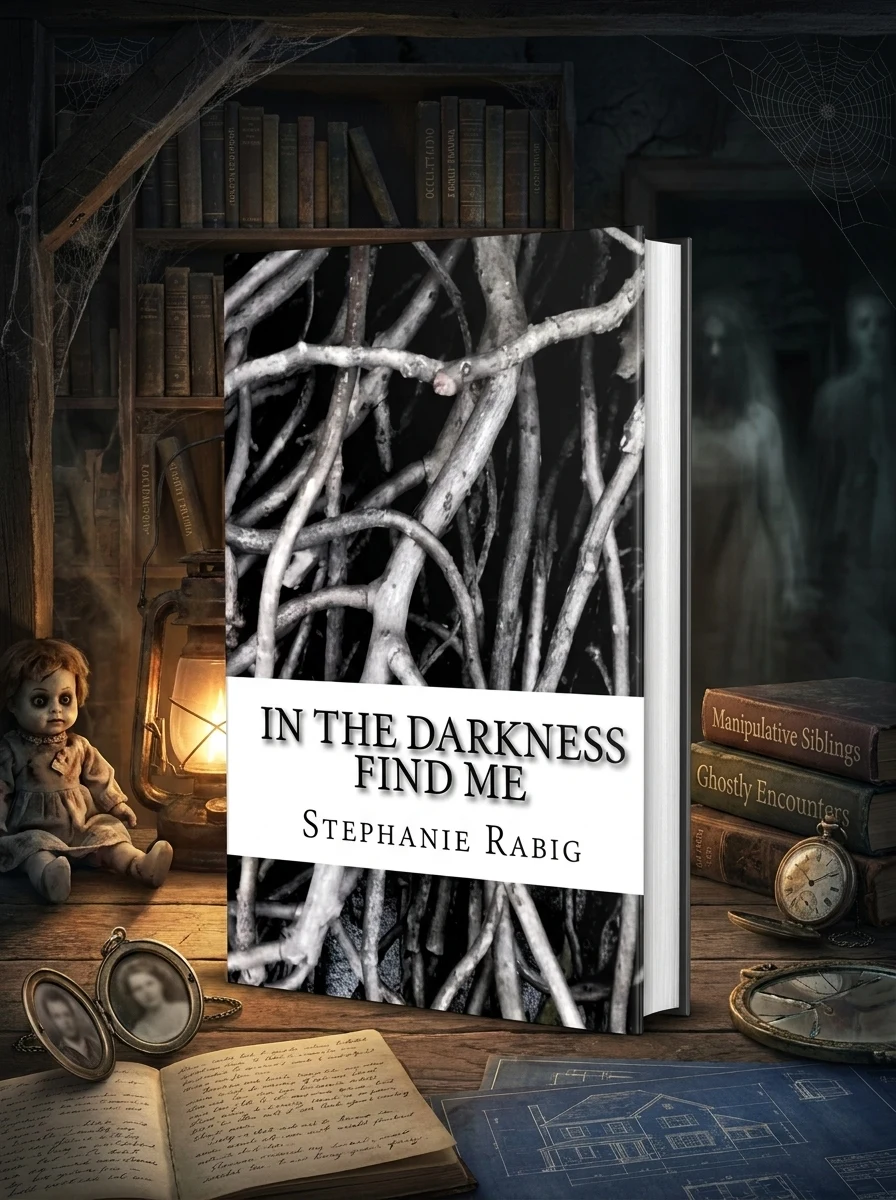
In the Darkness Find Me
A sister's claim of haunting tests a fractured family bond in a haunted house.
Amelia moves into a dilapidated home to escape her divorce, bringing along Lucy at their mother's request. The move becomes fraught with tension when Lucy insists the property is occupied by Evan, a ghost claiming to be an early owner. While Amelia dismisses these claims as further manipulation from her sister, the supernatural elements begin to manifest more clearly. The narrative focuses on the thinning veil between worlds and the sisters' desperate attempts to manage the crisis. Rabig draws on gothic traditions of isolated homes and restless spirits to create a sense of claustrophobic dread.
Published in 2012 by Createspace Independent Publishing Platform, this work sits within the contemporary independent horror market. It utilizes the enduring American tradition of the haunted domestic space, where personal trauma intersects with supernatural events to explore themes of isolation and trust.


📝 Description: In the Darkness Find Me
💎 Our verdict on In the Darkness Find Me
📖 Why choose it
Why this book is worth reading
Readers who appreciate the claustrophobic dread of traditional ghost stories will find this narrative compelling. It offers a focused exploration of familial dysfunction, where the haunting serves as a metaphor for fractured relationships rather than mere spectacle. Those drawn to psychological horror rooted in domestic settings will enjoy the tension between skepticism and belief. The book provides an accessible entry point into gothic themes without requiring extensive historical knowledge or complex magical systems. It is ideal for audiences seeking intimate, character-driven scares that prioritize interpersonal drama and atmospheric tension over broad world-building or extensive exposition.
⭐ Reader reviews
Reader rating
Rabig effectively utilizes the haunted fixer-upper trope to examine the fragility of sisterly bonds under stress. The narrative succeeds in creating a sense of claustrophobic dread through its focus on the thinning veil between worlds. By centering the conflict on familial tension and the protagonist's skepticism, the story avoids relying on complex lore, instead opting for immediate supernatural threat. This approach suits readers who prefer psychological horror grounded in family dynamics over extensive historical exposition. The pacing remains tight, ensuring the supernatural elements feel intrusive and personal rather than detached. It is a solid choice for fans of gothic fiction who value atmospheric intensity and domestic realism.
📖 Read on the blog
✍️ More books by this author Stephanie Rabig


🏛 Books from this publisher Createspace Independent Publishing Platform
You might also like
See more →
Have a question about this item?
Ask about the edition, condition, delivery or anything else — we reply by email or phone, usually within a day.
