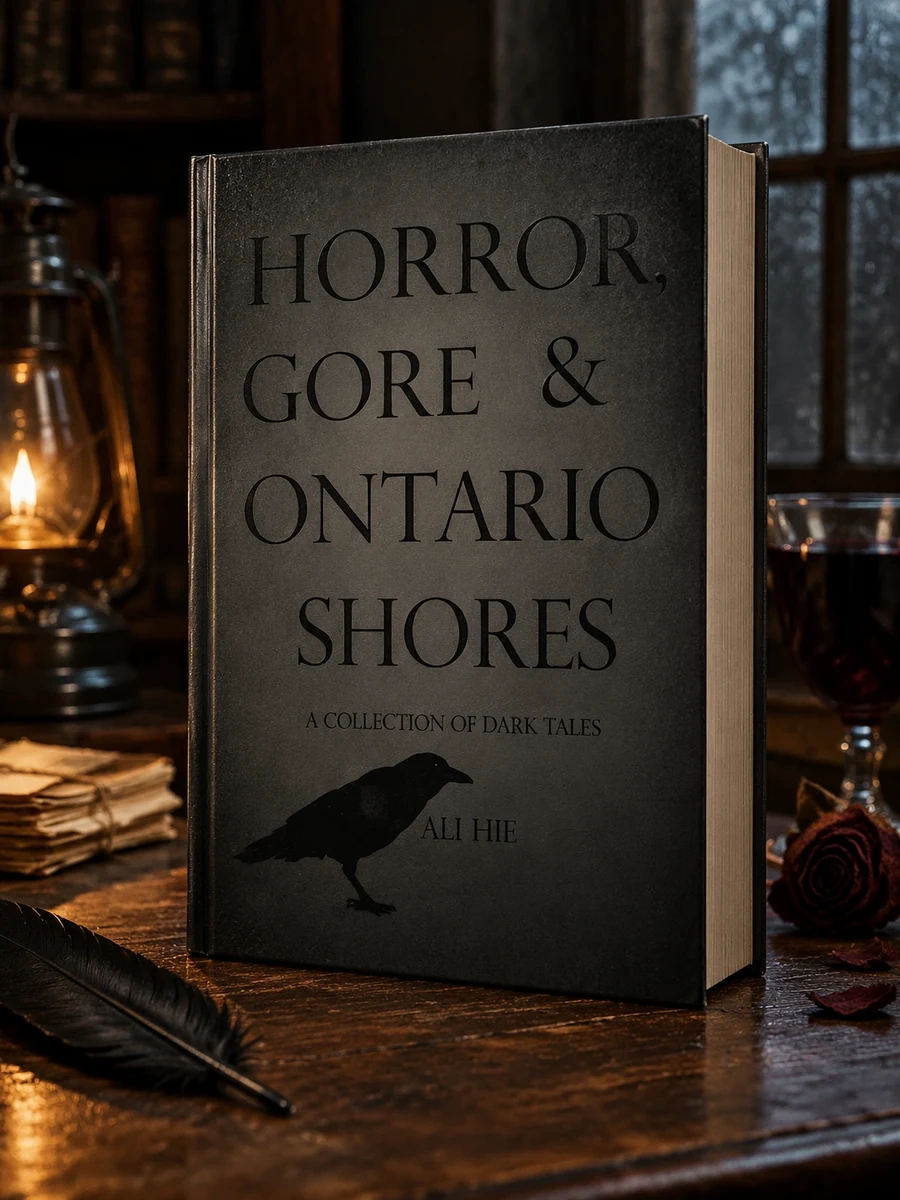
Horror, Gore and Ontario Shores
Seventeen short stories exploring Ontario's dark folklore and history.
This collection focuses on the intersection of Canadian geography and supernatural horror. Hie uses real towns like Hamilton and Toronto as primary settings for her narratives. The stories draw from local legends and historical events to create a sense of unease. The author does not invent new myths but rather reimagines existing regional folklore through a lens of gore and fear. This method grounds the horror in reality, making the supernatural elements feel more immediate and plausible. The structure allows readers to experience different facets of Ontario’s dark side, from urban centers to rural areas like Long Point. Each tale contributes to a broader understanding of how place influences fear. The work is not a guide but a literary exploration of regional dread.
Published in 2015 by Createspace Independent Publishing Platform, this book sits within the tradition of regional horror fiction. It draws on Ontario’s specific cultural landscape and historical narratives to create a unique voice in contemporary supernatural literature.


📝 Description: Horror, Gore and Ontario Shores
💎 Our verdict on Horror, Gore and Ontario Shores
📖 Why choose it
Why this book is worth reading
Readers who appreciate horror rooted in real-world locations will find this collection deeply engaging. Hie’s approach transforms familiar Canadian towns like Hamilton and Toronto into landscapes of unease, appealing to those who enjoy folklore-based narratives. Fans of gothic fiction seeking tangible scares rather than abstract terror will benefit from the specific, localized dread presented here. The work is ideal for enthusiasts of dark fantasy and psychological horror who want their fears to feel immediate and plausible through historical grounding.
⭐ Reader reviews
Reader rating
Hie delivers a compelling anthology that effectively merges Canadian geography with supernatural horror. By utilizing real towns and historical events, the narratives achieve a sense of immediacy often missing in broader horror works. The collection excels in creating an atmosphere where the ordinary meets the disturbing, offering distinct tales for each location. It suits readers interested in the darker aspects of Canadian history and local legends. While not a travel guide, it provides a literary exploration of regional dread that feels both grounded and unsettling. The gore serves to heighten the realism of the supernatural elements.