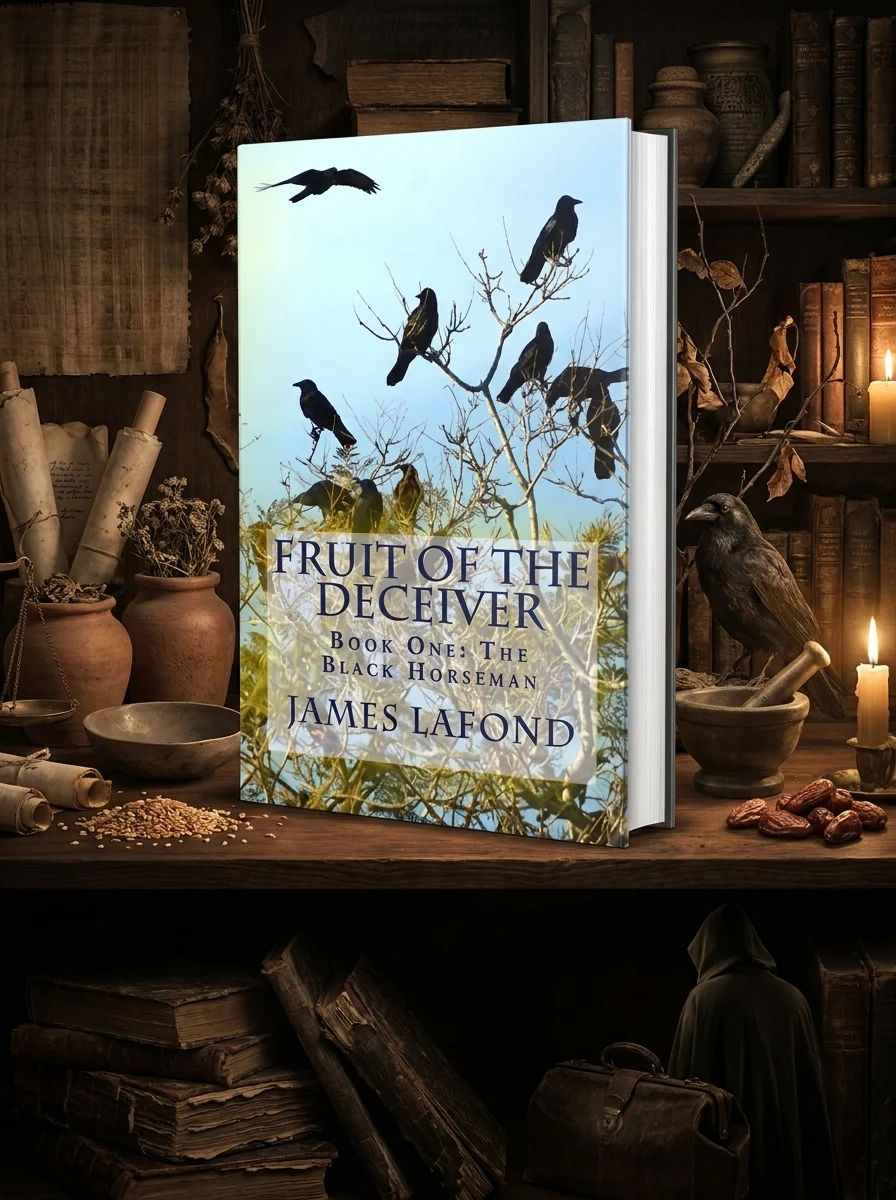
Fruit of The Deceiver: Book One: The Black Horseman
A fictionalized historical horror based on Abd al-Latif's account of Egyptian cannibalism during the 1200 famine.
LaFond uses the diary of Abd al-Latif to reconstruct a period where starvation erased moral boundaries. The physician’s perspective offers a clinical yet horrifying view of a society collapsing under hunger. By focusing on the specific timeframe from late 1200 to mid-1201, the author highlights the gradual erosion of humanity. The story does not rely on supernatural creatures but on the real horror of human desperation. This approach creates a chilling atmosphere that feels grounded in historical fact rather than fantasy.
The narrative is set in Egypt during the early thirteenth century, specifically between October 1200 and August 1201. It draws on the historical record of Abd al-Latif, a traveling physician who documented the worst famine in Egyptian history. This period saw extreme social breakdown as starvation forced people to consume one another.


📝 Description: Fruit of The Deceiver: Book One: The Black Horseman
💎 Our verdict on Fruit of The Deceiver: Book One: The Black Horseman
📖 Why choose it
Why this book is worth reading
Readers interested in the psychological erosion of humanity under extreme duress will find this narrative compelling. It offers a grounded, non-supernatural horror experience that challenges moral boundaries through the lens of historical fact. Those who appreciate medical observation woven with gothic dread will gain insight into the physiological degradation of populations facing starvation. The book is ideal for those seeking a chilling atmosphere rooted in documented suffering rather than fantastical plots. It provides a unique perspective on how society collapses when survival instincts override ethical norms, making it essential for fans of dark historical fiction and true horror.
⭐ Reader reviews
Reader rating
LaFond successfully reconstructs a terrifying period where starvation erased moral boundaries, using the diary of Abd al-Latif as a framework. The physician’s clinical yet horrifying view creates a chilling atmosphere that feels grounded in reality rather than fantasy. By focusing on the gradual erosion of humanity from late 1200 to mid-1201, the author highlights the breakdown of social order without relying on supernatural creatures. This approach suits readers interested in historical horror and psychological terror. The text avoids sensationalism while depicting the darkest aspects of survival, challenging the reader's understanding of morality. It is a significant, intimate narrative for those who can handle dark themes.