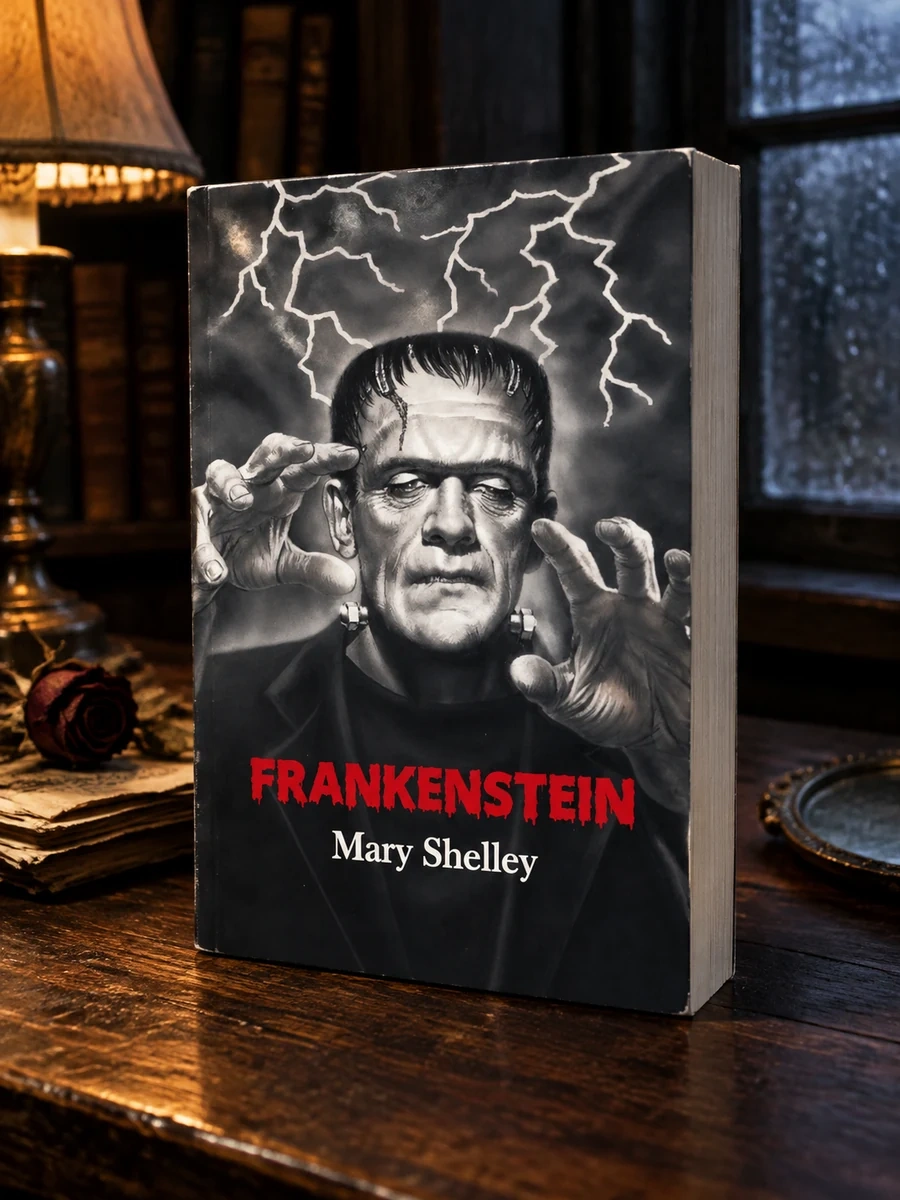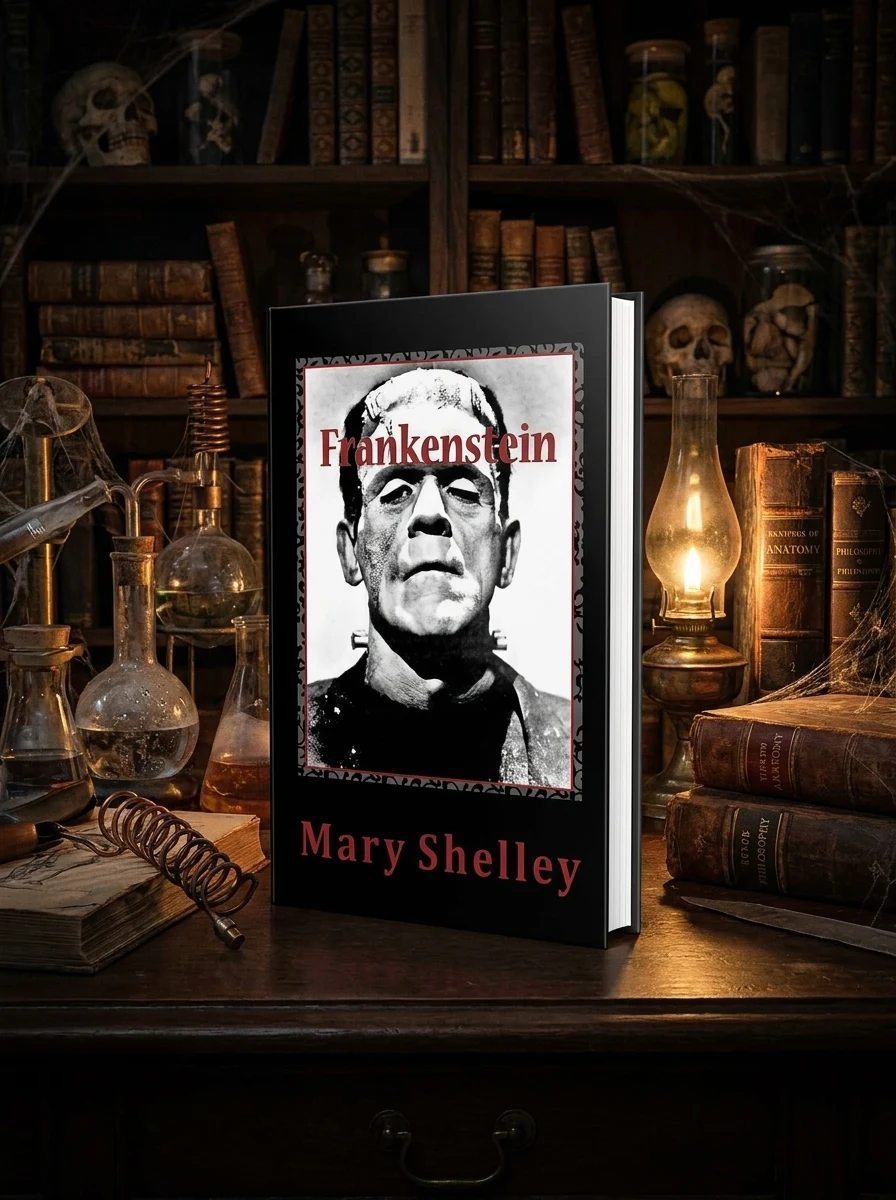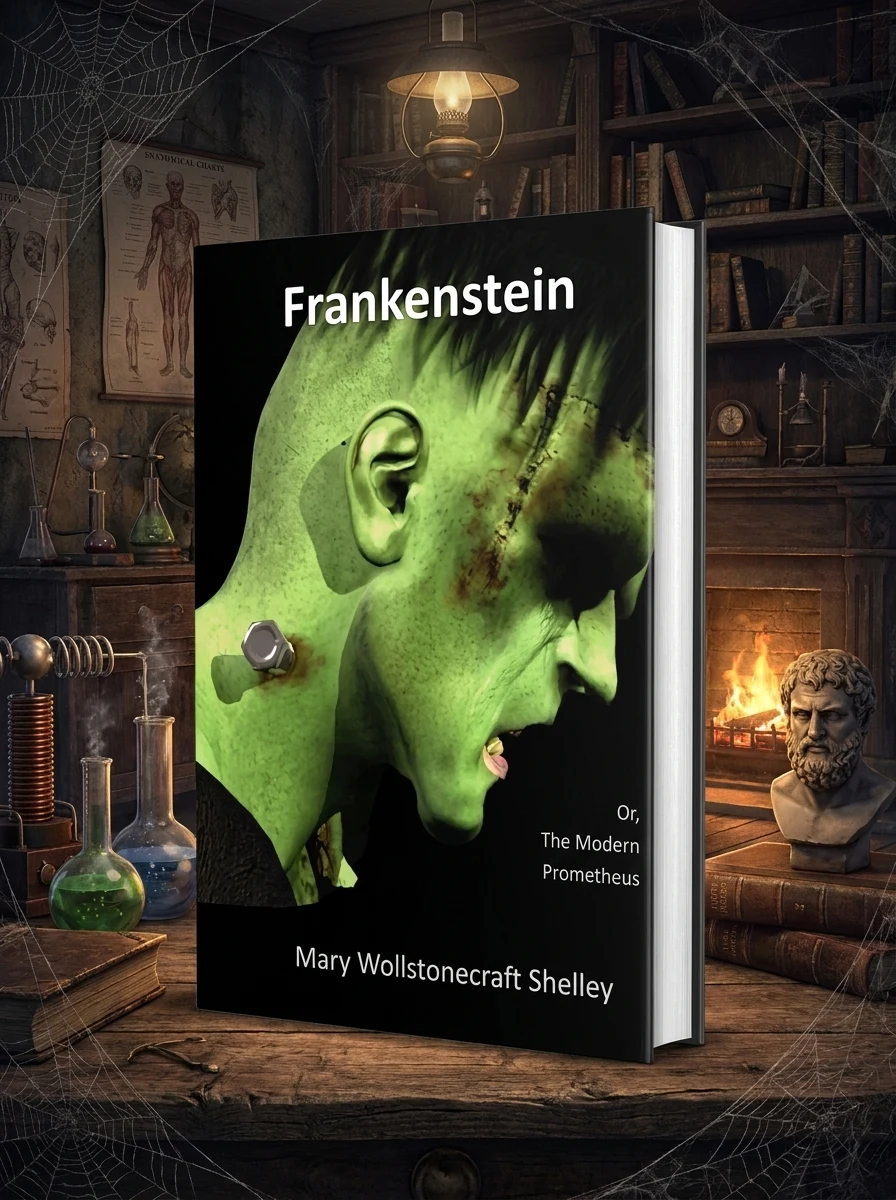
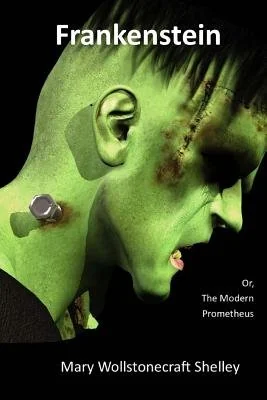
Frankenstein
Mary Shelley's 1818 novel about a scientist who creates a sapient creature.
This volume contains the original text of Frankenstein; or, The Modern Prometheus. Mary Shelley wrote the story starting at age eighteen. She published it anonymously in London when she was twenty years old. The plot centers on Victor Frankenstein, a young scientist who uses unorthodox methods to bring a grotesque creature to life. The creature is sapient, which adds complexity to the narrative. The book reflects Shelley’s early development as a writer. It remains relevant for its exploration of scientific ethics and human nature. Readers can examine how Shelley constructed her narrative before she was twenty. The text offers a raw look at gothic fiction origins. It does not sanitize the horror elements for modern sensibilities.
Shelley began writing at eighteen. She published anonymously in London at twenty. The story emerged from her early creative period. It reflects the literary climate of early nineteenth-century England. The work stands as a key text in gothic fiction history.


📝 Description: Frankenstein
💎 Our verdict on Frankenstein
📖 Why choose it
Why this book is worth reading
Readers interested in the psychological tension of dark atmospheric settings will find this volume deeply engaging. It suits those seeking to examine the origins of science fiction and the complexities of creation, isolation, and responsibility. Those who appreciate raw gothic horror without sanitization for modern sensibilities should pick this up. It offers students of literature a direct link to Shelley’s early career and anonymous publication history. The narrative provides no simple answers about humanity or monstrosity, making it essential for those willing to endure a bleak tone rather than seeking lighthearted adventure.
⭐ Reader reviews
Reader rating
Shelley constructs a complex narrative through Victor’s account of his tragic journey, preserving the original text without alteration. This edition allows modern readers to witness her development as a writer before she turned twenty. The work remains relevant for its exploration of scientific ethics and unchecked ambition. It does not sanitize horror elements, offering a raw look at gothic fiction origins. Readers who enjoy psychological tension will find it engaging, while those seeking clear moral resolutions may find the tone too bleak. It stands as a direct link to early nineteenth-century literature and the foundations of the genre.