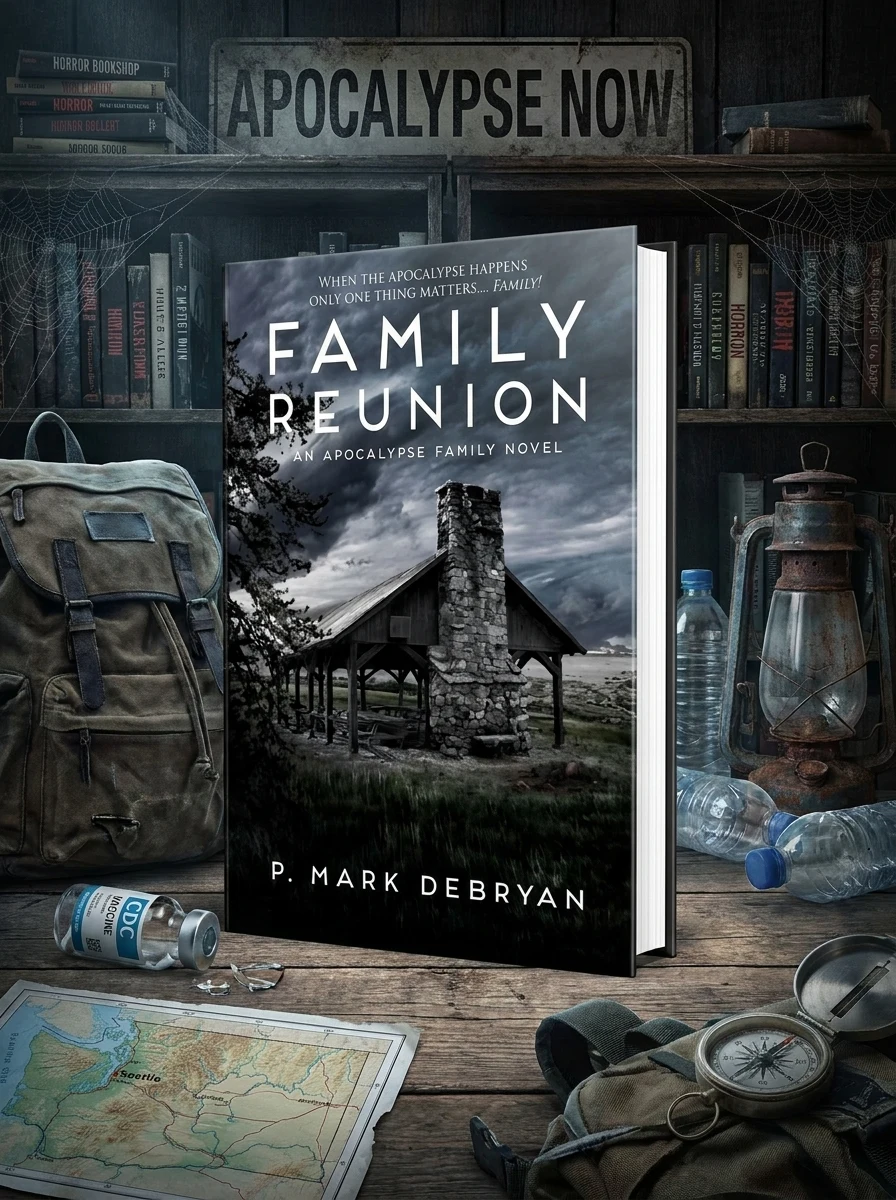
Family Reunion: When the Apocalyse happens only one thing matters, Family
A man survives a vaccine-induced apocalypse to reunite with his family.
The narrative follows Ryan Brant as he navigates a Seattle transformed by catastrophe. He must rely on his brother and niece to survive the immediate threat of vaccine by-products. The primary goal shifts from leisure to locating scattered relatives who were traveling for the reunion. This quest drives the plot forward, emphasizing the fragility of human connection during crisis. The story explores themes of resilience and the desperate need for family unity in a broken world.
Published in 2015 by P. Mark Debryan, this work reflects contemporary anxieties about public health crises and societal collapse. It sits within the tradition of American apocalyptic fiction that focuses on personal survival rather than global politics. The setting in Seattle grounds the supernatural elements in a recognizable modern context.


📝 Description: Family Reunion: When the Apocalyse happens only one thing matters, Family
💎 Our verdict on Family Reunion: When the Apocalyse happens only one thing matters, Family
📖 Why choose it
Why this book is worth reading
Readers seeking character-driven post-apocalyptic narratives will find value in this grounded approach to survival. The book appeals to those interested in the psychological and emotional dynamics of ordinary people facing societal collapse, rather than complex world-building or high-octane action sequences. It is ideal for individuals who prioritize themes of resilience, sibling bonds, and the desperate human need for kinship unity amidst chaos. Those who enjoy stories that emphasize personal survival and connection over gore or fast-paced thrills will appreciate this focus on the immediate aftermath of disaster. The narrative offers a contemplative look at how family ties are tested and reinforced when the world falls apart.
⭐ Reader reviews
Reader rating
The novel distinguishes itself by prioritizing the emotional core of reunion over traditional horror spectacle. It excels in portraying the initial days of global collapse through the lens of personal survival, making the catastrophe feel intimate and immediate rather than abstract. The focus on sibling bonds and the drive to protect kin provides a steady, albeit slow, narrative pace that may frustrate readers seeking constant action but will satisfy those looking for depth. By omitting complex world-building, the author keeps the attention on human connection. This grounded tone suits readers who prefer atmospheric tension and character study over visceral horror or rapid-fire plot progression.
You might also like
See more →




Have a question about this item?
Ask about the edition, condition, delivery or anything else — we reply by email or phone, usually within a day.
