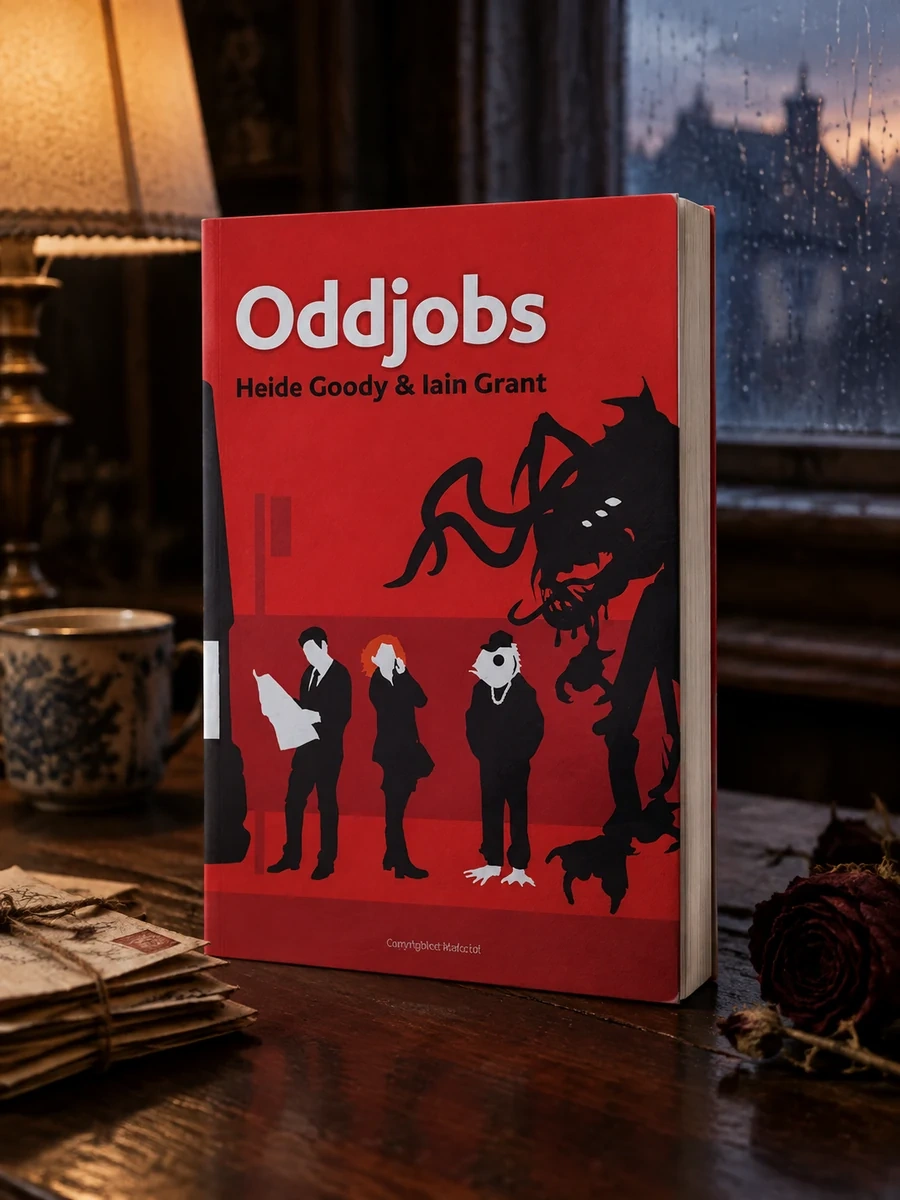

Oddjobs
A secret government worker fights ancient gods during her first week on the job.
Morag discovers her boring office job is actually a cover for controlling deities. She faces immediate threats including impossible creatures and fatal prophecies. The narrative structure emphasizes urgency as she tries to survive her first weekend. Grant uses this premise to explore themes of duty versus survival in a hidden world. The story avoids lengthy exposition, focusing instead on Morag’s direct experiences with the supernatural. This approach creates a fast-paced entry point into the genre. It highlights the absurdity of maintaining cosmic order through administrative means. The protagonist’s desire for a different life contrasts sharply with her current reality.
Published in 2016 by Pigeon Park Press, this work sits within the contemporary urban fantasy and dark comedy genres. It reflects modern anxieties about bureaucratic power and hidden control structures through a lens of supernatural horror.


📝 Description: Oddjobs
💎 Our verdict on Oddjobs
📖 Why choose it
Why this book is worth reading
Readers seeking a fast-paced entry point into cosmic horror will appreciate this narrative’s urgent tone and direct approach to supernatural threats. It suits those who enjoy dark comedy mixed with bureaucratic satire, offering a unique perspective on maintaining cosmic order through administrative means. The book appeals to fans of urban fantasy who value workplace dynamics in extraordinary settings, providing immediate stakes rather than lengthy exposition. Those interested in the contrast between mundane desires and monstrous realities will find resonance in Morag’s experience. It is ideal for audiences who prefer ironic commentary over straightforward action, allowing them to explore themes of duty versus survival without getting bogged down in complex lore dumps or classical horror frameworks.
⭐ Reader reviews
Reader rating
Grant effectively juxtaposes the mundane with the monstrous, creating a tense narrative centered on immediate survival rather than extensive world-building. The story succeeds by avoiding lengthy exposition, focusing instead on Morag’s direct experiences with impossible creatures and fatal prophecies. This approach creates a brisk, engaging pace suitable for modern horror readers. While it may not satisfy those seeking classical horror without bureaucratic framing, it excels in blending dark comedy with eldritch threats. The emphasis on the absurdity of controlling deities through paperwork offers a fresh take on hidden world tropes. It is a compelling read for those who appreciate irony and urgent deadlines within supernatural contexts.