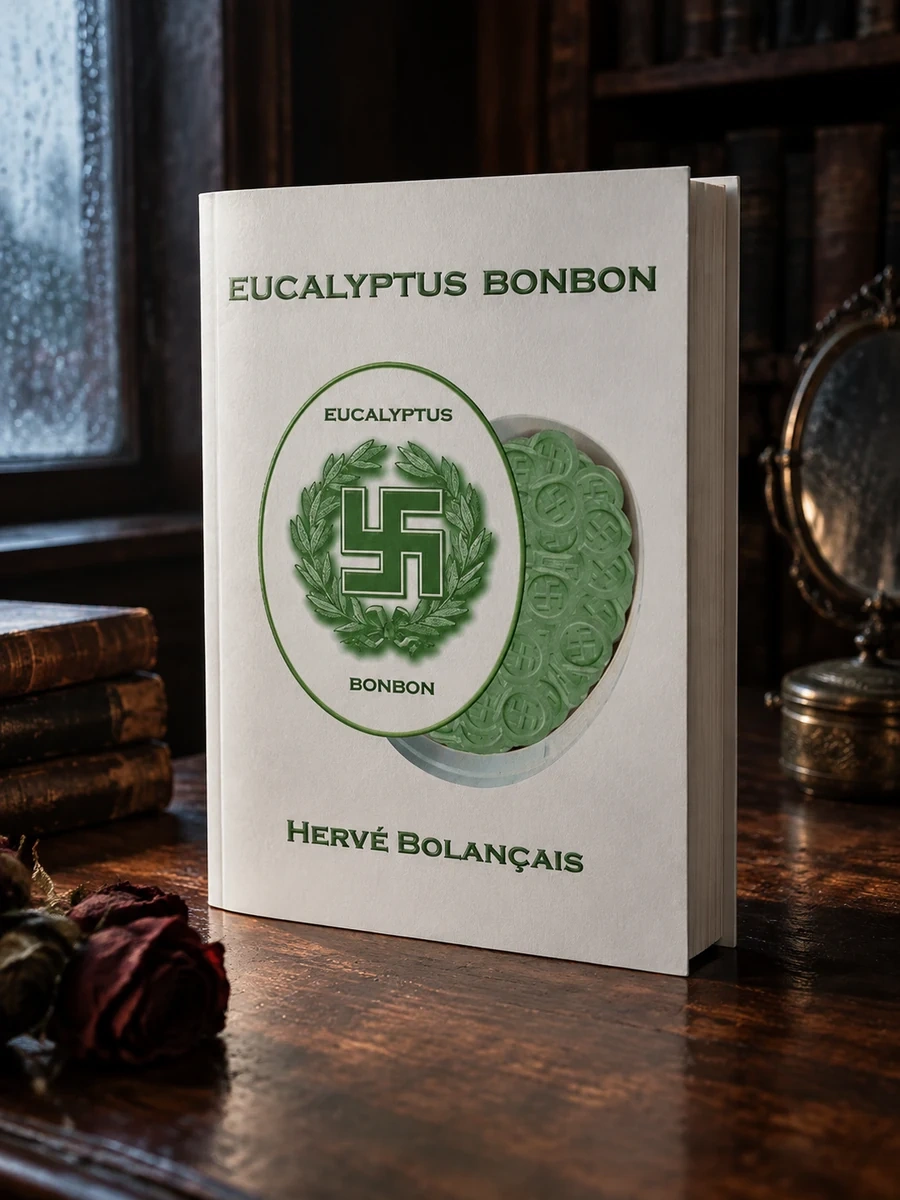

Eucalyptus bonbon
A high school town faces a deadly epidemic controlled by mysterious Nazis.
The narrative unfolds in a German town where a battlefield encounter triggers a health crisis. Students at a local lycée ignore the danger until they must choose sides. The only cure is held by unexpected Nazi figures, turning the community into a battleground of ideology and survival. Bolancais examines how fear alters personal relationships and political loyalties in a closed environment.
The story is set in North Rhine-Westphalia, Germany, referencing the Second World War. It draws on the historical weight of Nazi legacy within a modern context, creating a supernatural horror scenario rooted in specific regional history and post-war trauma.


📝 Description: Eucalyptus bonbon
💎 Our verdict on Eucalyptus bonbon
📖 Why choose it
Why this book is worth reading
Readers intrigued by the intersection of political ideology and visceral survival horror will find this narrative compelling. It offers a unique exploration of how fear reshapes personal relationships and moral compasses within a confined community. The book is ideal for those who appreciate stories where historical weight burdens contemporary characters, forcing difficult choices between submission and rebellion. By framing the antidote as the exclusive domain of former oppressors, it challenges readers to confront uncomfortable questions about power, dependency, and the persistence of evil. It appeals to audiences seeking a tense atmosphere where romantic indifference clashes with existential threat, providing a thought-provoking critique of loyalty and survival in the face of an incomprehensible epidemic.
⭐ Reader reviews
Reader rating
Bolancais constructs a chilling microcosm where a mysterious epidemic forces a German town to confront its past. The narrative excels in building tension through the stark contrast between teenage apathy and escalating political horror. The premise, requiring reliance on Nazi figures for survival, creates a potent moral dilemma that drives the plot forward effectively. This approach allows for a deep examination of how external threats alter internal loyalties and social dynamics. The book suits readers who enjoy psychological horror blended with historical commentary. It avoids simple scares in favor of complex character interactions under pressure. While the concept is bold, the execution focuses heavily on ideological conflict rather than supernatural spectacle, making it a distinctive entry in the genre for those interested in the mechanics of fear and control.