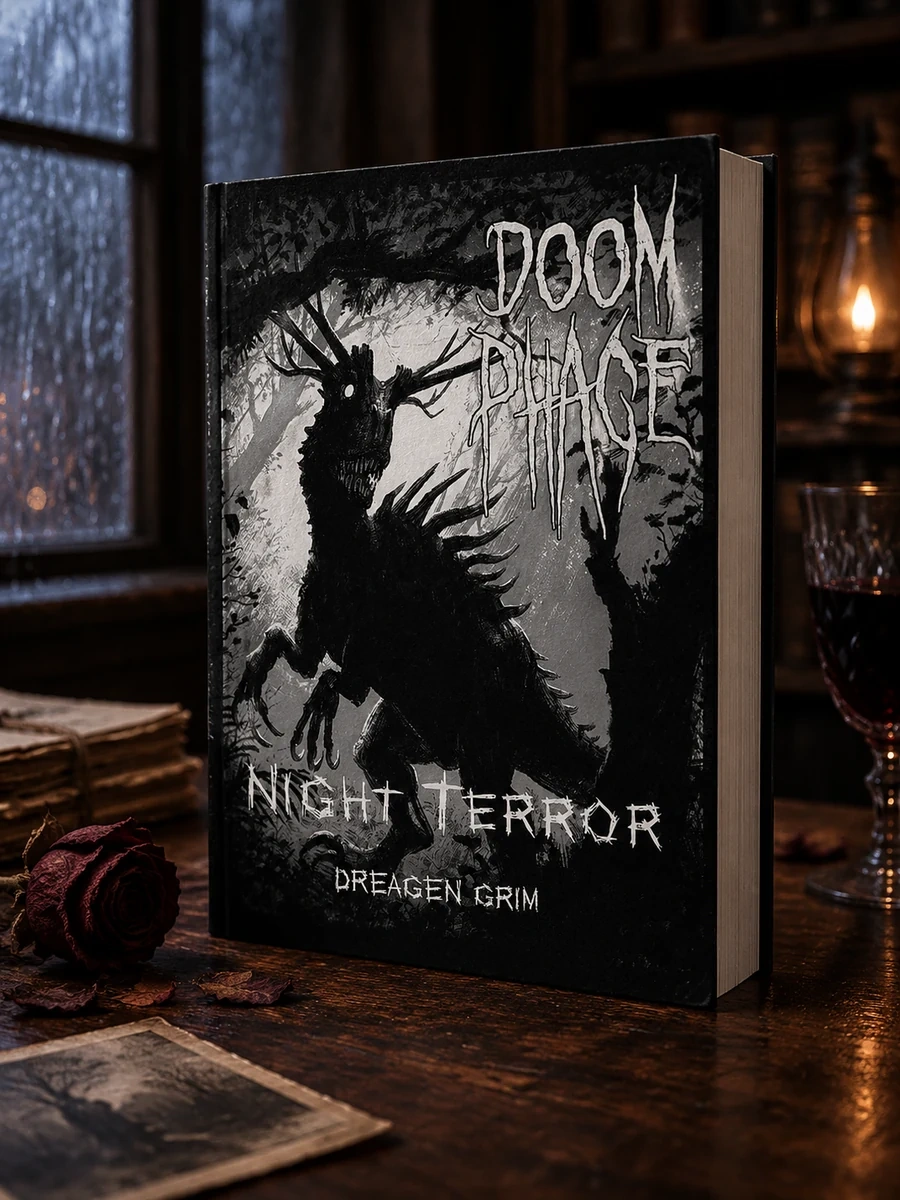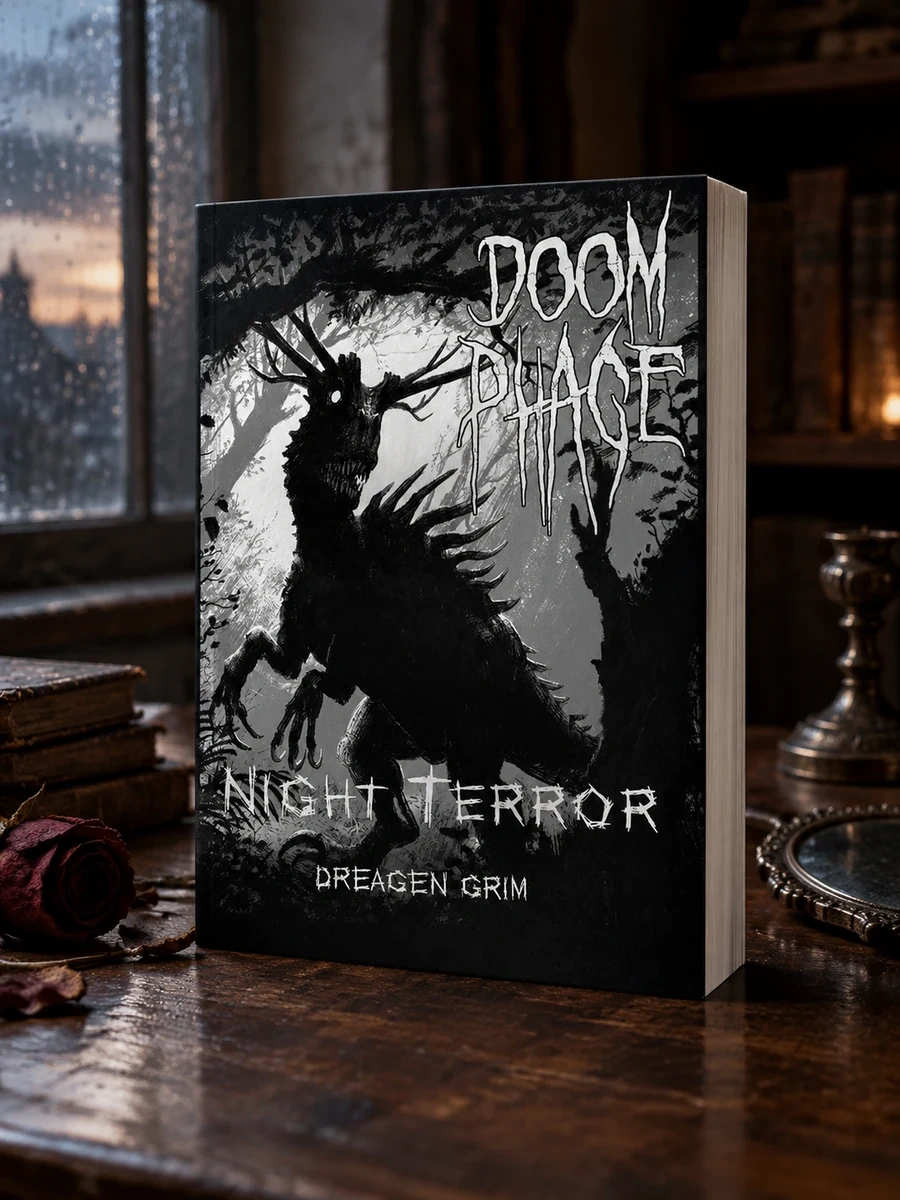
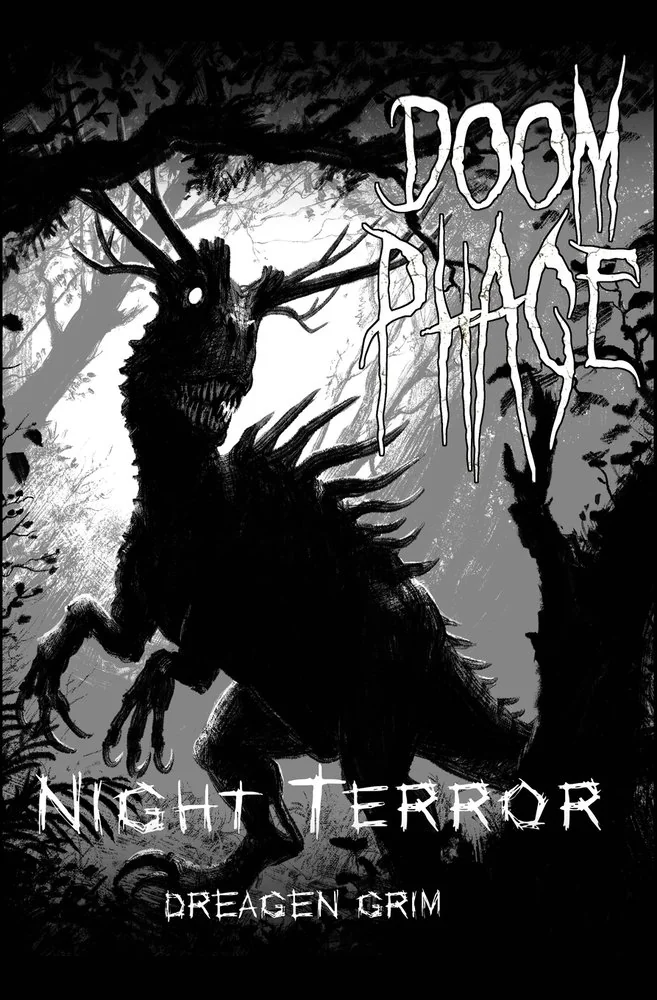
Doom Phage: Night Terror
Teenagers release ancient evil from prison near summer camp in 1993.
The narrative centers on a specific incident where young people disturb a sleeping entity. The location is key, with the abandoned prison serving as the source of danger. The nearby summer camp becomes the primary site for the ensuing chaos. Grim constructs a scenario where survival depends on confronting the monster directly. The text avoids complex metaphors, focusing instead on direct action and fear. This approach aligns with traditional horror storytelling methods. The characters are defined by their reaction to the sudden shift from safety to peril. The violence is described as merciless, leaving little room for hope. Grim uses the setting to amplify the sense of isolation. The story does not offer easy resolutions or happy endings. It remains a pure exercise in generating dread through plot and atmosphere.
This work sits within the tradition of supernatural fiction, specifically drawing on gothic horror elements. The setting in 1993 places it in a period known for such tales. The independent publication model reflects current trends in niche genre writing.


📝 Description: Doom Phage: Night Terror
💎 Our verdict on Doom Phage: Night Terror
📖 Why choose it
Why this book is worth reading
Readers who crave the visceral thrill of classic horror will find satisfaction in this relentless narrative. It is ideal for those who enjoy straightforward survival stories where atmospheric fear outweighs character depth. The book appeals to fans of late nineties horror aesthetics, offering a nostalgic return to uncomplicated plots and direct action. Those seeking pure dread through plot rather than psychological nuance will appreciate the merciless violence and isolation. It serves as a perfect escape for readers tired of modern revisionism, delivering a pure exercise in generating terror through traditional storytelling methods and claustrophobic settings.
⭐ Reader reviews
Reader rating
Grim delivers a potent dose of supernatural horror by leveraging the iconic tension between youthful ignorance and inevitable doom. The narrative excels in creating a claustrophobic atmosphere within the abandoned prison and summer camp, amplifying the sense of isolation effectively. By avoiding complex metaphors, the author ensures the focus remains on direct action and the relentless nature of the threat. This approach suits readers who prefer classic slasher elements mixed with gothic traditions of ancient curses. While it lacks nuanced character development or historical accuracy, it succeeds as a pure exercise in dread. The linear progression from unleashing evil to final confrontation provides a satisfying, albeit bleak, resolution for fans of uncomplicated, atmospheric terror.