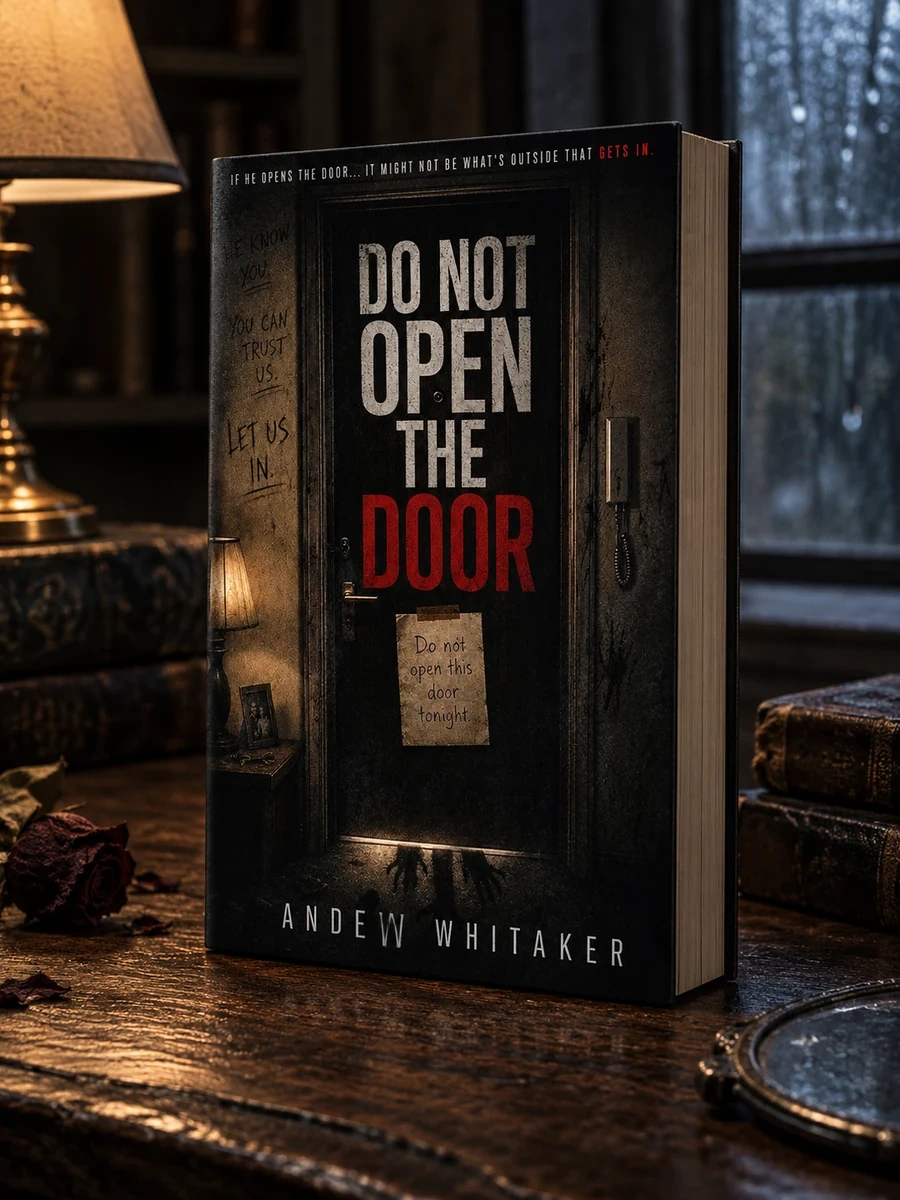

Do Not Open The DOOR
A man faces an entity that copies him as London's doors open to let it in.
Whitaker constructs a tense narrative where the threat is not physical force but cognitive mimicry. An entity observes Daniel, absorbing his mannerisms and speech to become more convincing. This process of imitation creates a deep sense of unease as the boundary between self and other dissolves. The horror stems from the realization that trust can be manufactured by something that is not human. The setting shifts from a single distorted apartment to a city-wide phenomenon where residents unknowingly invite danger inside. The story relies on the psychological impact of being watched and replicated rather than overt violence.
This work sits within the contemporary horror tradition, focusing on modern urban anxiety. It draws on supernatural fiction tropes but grounds them in a realistic London setting. The narrative reflects current cultural fears about surveillance, mimicry, and the loss of privacy in densely populated cities.


📝 Description: Do Not Open The DOOR
💎 Our verdict on Do Not Open The DOOR
📖 Why choose it
Why this book is worth reading
Readers who appreciate psychological tension over visceral gore will find this narrative deeply engaging. It offers a unique exploration of cognitive mimicry and the dissolution of self, appealing to those fascinated by the terror of being watched and replicated. The book suits audiences interested in modern urban dread and the erosion of personal identity through supernatural means. Those who enjoy stories where trust is manufactured by non-human entities will appreciate the slow-burn unease. It is ideal for fans who prefer intellectual horror that questions the reliability of perception and the boundaries between reality and imitation, rather than seeking traditional jump scares or historical gothic settings.
⭐ Reader reviews
Reader rating
Whitaker constructs a tense narrative where the threat relies on cognitive mimicry rather than physical force. The story effectively builds unease as Daniel’s mannerisms are absorbed by an entity, blurring the line between self and other. The expansion from a distorted apartment to a city-wide phenomenon of open doors creates a pervasive sense of vulnerability. The horror stems from the realization that trust can be fabricated by something alien. While it lacks historical gothic atmospheres, its focus on modern urban dread is compelling. The narrative examines the terrifying consequences of curiosity and breached boundaries. It suits readers who value psychological impact and supernatural fiction over overt violence or traditional scares.
📖 Read on the blog
✍️ More books by this author Andrew Whitaker



🏛 Books from this publisher Independently Published






You might also like
See more →

Have a question about this item?
Ask about the edition, condition, delivery or anything else — we reply by email or phone, usually within a day.
