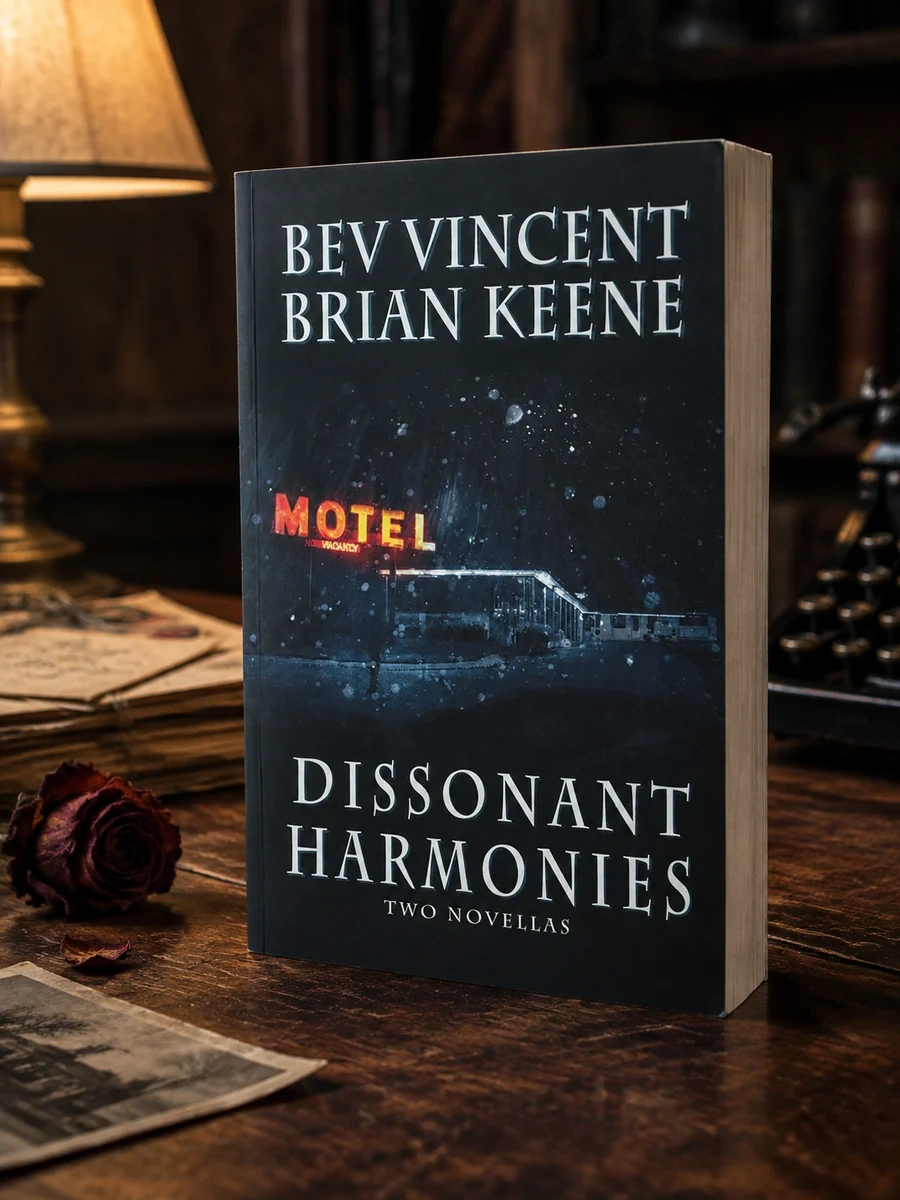
Dissonant Harmonies
Brian Keene presents two novellas exploring isolation and reality through gothic and psychological horror.
This collection examines the fragility of human perception under extreme stress. The first story uses a snowbound setting to create claustrophobia, while the second utilizes pop culture anomalies to depict societal collapse. Keene avoids standard monster tropes in favor of internal dread. The narrative structure contrasts physical survival with mental disintegration. Fans of Brian Keene will recognize his signature style here. The book appeals to those interested in the intersection of folklore and modern anxiety.
Published in 2021 by Cemetery Dance Publications, this work sits within contemporary American horror. It bridges classic gothic isolation with modern internet-era phenomena like the Mandela Effect. The stories reflect current anxieties about reality and community breakdown.


📝 Description: Dissonant Harmonies
💎 Our verdict on Dissonant Harmonies
📖 Why choose it
Why this book is worth reading
Readers who appreciate atmospheric suspense and the slow unraveling of mental stability will find this collection deeply engaging. Brian Keene offers a distinct alternative to standard monster tropes, focusing instead on internal dread and the fragility of human perception under extreme stress. The first novella provides claustrophobic isolation through a snowbound setting, while the second uses pop culture anomalies to depict societal breakdown. This work is ideal for those interested in the intersection of folklore and modern anxiety, as well as fans who enjoy exploring how reality fractures when pushed to its limits. It appeals to those seeking psychological depth over fast-paced action.
⭐ Reader reviews
Reader rating
Brian Keene’s Dissonant Harmonies delivers unsettling novellas that prioritize psychological unraveling over traditional horror shocks. The first story effectively utilizes gothic isolation in a snowbound Bayport, creating claustrophobia as brothers investigate strange disappearances linked to hidden tunnels. The second tale shifts to a motel barricade, using the Berenstain Bears and Mandela Effect to illustrate how reality fractures during societal collapse. Keene avoids standard monster tropes in favor of internal dread, contrasting physical survival with mental disintegration. This structural choice highlights the fragility of perception under stress. The book suits readers who enjoy atmospheric suspense and complex narratives about folklore meeting modern anxiety, rather than those seeking quick thrills or classic ghost stories.
📖 Read on the blog
✍️ More books by this author Brian Keene


🏛 Books from this publisher Cemetery Dance Publications
You might also like
See more →


Have a question about this item?
Ask about the edition, condition, delivery or anything else — we reply by email or phone, usually within a day.
