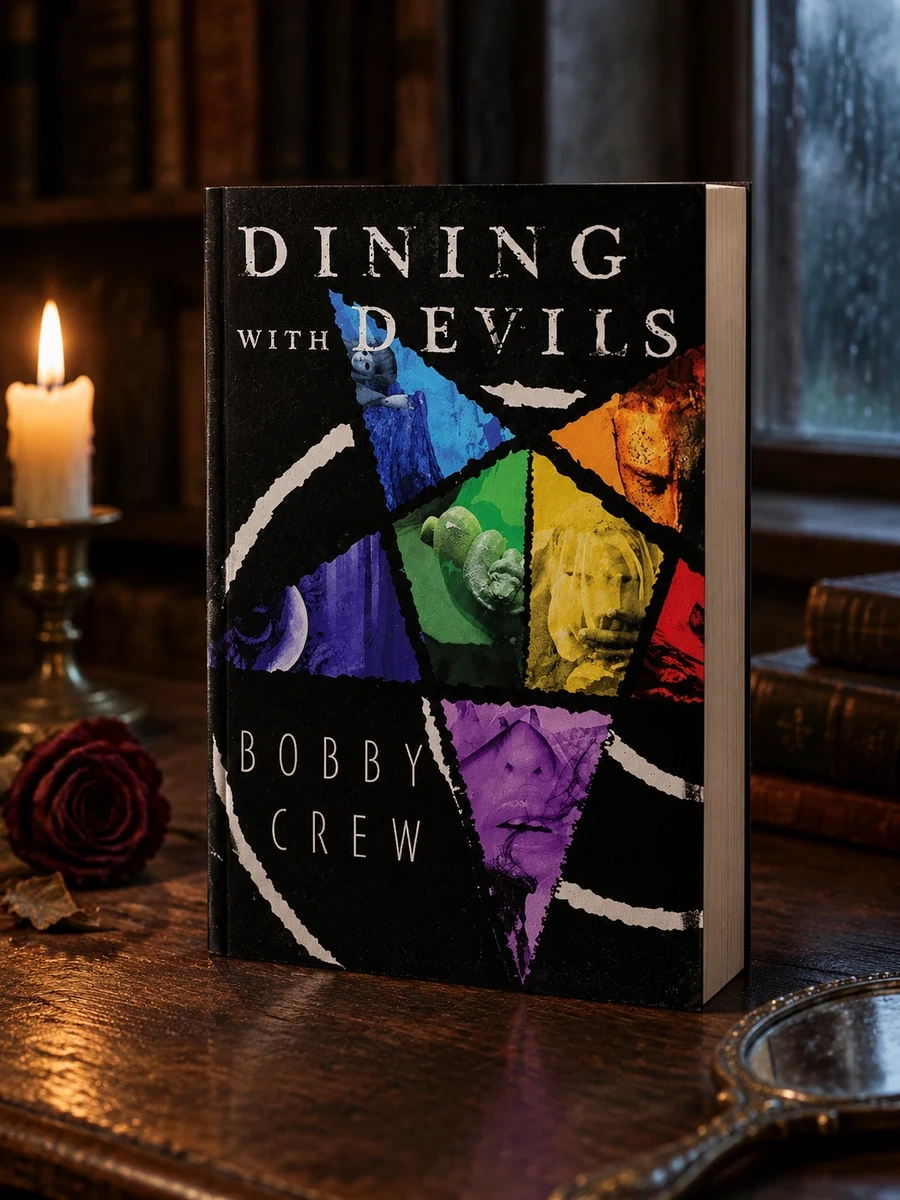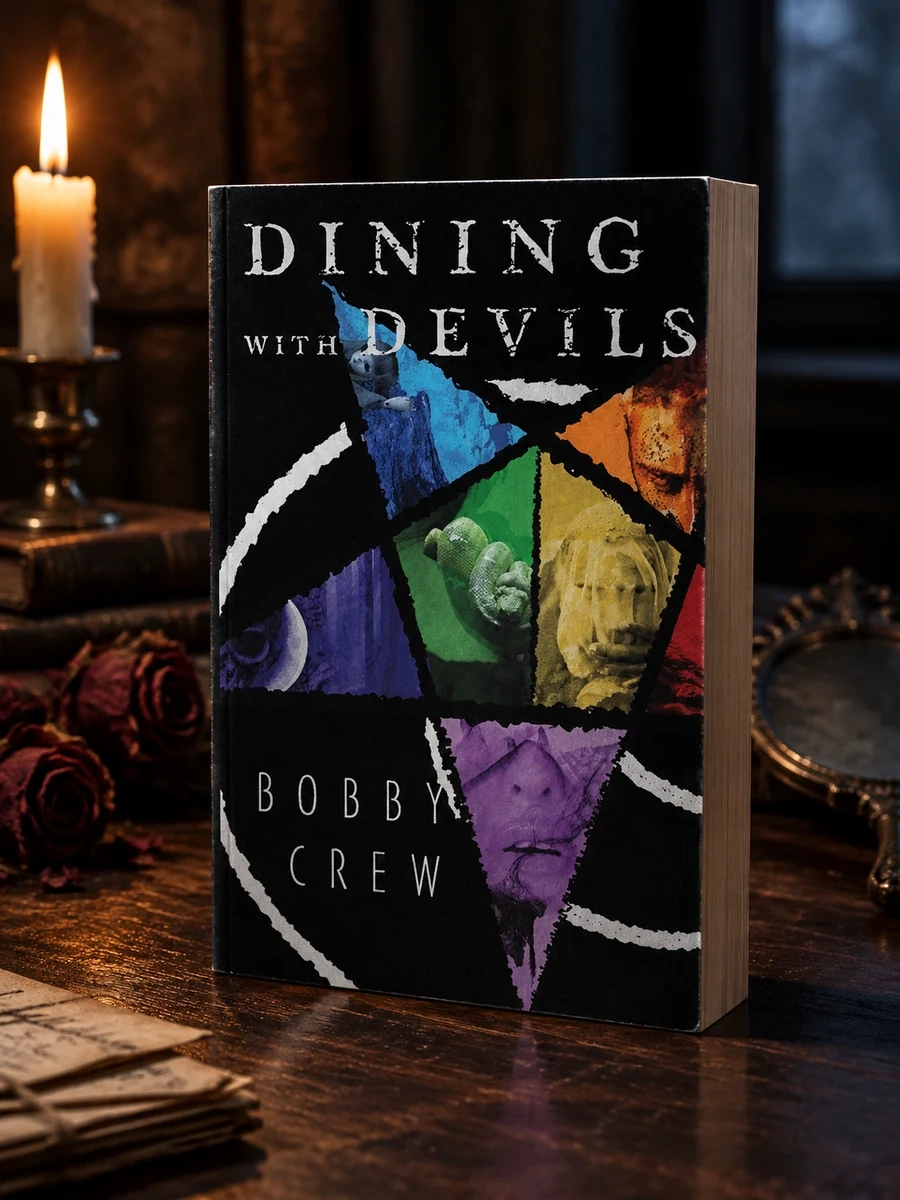

Dining with Devils
A collection of horror stories exploring demonic intimacy and psychological dread
Dining with Devils offers a distinct perspective on horror by focusing on relationships with malevolent entities. Bobby Crew, the author, curates tales where devils act as companions rather than just adversaries. The book examines how close contact with darkness can alter one's perception of love and loyalty. It draws on gothic traditions to create a sense of unease that lingers after reading. The stories are organized to gradually reveal the personal costs of such connections. This approach differs from standard monster hunts by emphasizing internal conflict over external action. Readers will find a consistent tone of melancholy horror throughout the pages.
Published in 2019 by Horror Crew Press, this work fits within the contemporary American horror market. It engages with gothic and supernatural traditions that have long explored the intersection of desire and danger. The book reflects a modern interest in psychological complexity within genre fiction.


📝 Description: Dining with Devils
💎 Our verdict on Dining with Devils
📖 Why choose it
Why this book is worth reading
Readers seeking atmospheric tension over graphic violence will find value in this distinct exploration of demonic companionship. It appeals to those interested in gothic and supernatural fiction who enjoy examining the blurred lines between torment and love. The collection offers a consistent tone of melancholy horror, making it suitable for audiences who prefer short-form narratives that challenge conventional moral boundaries. Those willing to engage with stories where devils act as intimate forces rather than mere adversaries will discover a unique perspective on the personal costs of proximity to evil. It is ideal for fans of dark fiction that questions identity and desire without offering redemption or clear resolutions.
⭐ Reader reviews
Reader rating
Bobby Crew delivers a compelling collection that prioritizes psychological unease over traditional horror tropes. By positioning devils as companions rather than adversaries, the book creates a lingering sense of dread through atmospheric tension. The work excels in exploring how close contact with darkness alters perceptions of love and loyalty. It suits readers who appreciate gothic traditions and are unafraid of melancholy tones. The absence of heroic narratives or clear resolutions makes it a challenging but rewarding experience for dedicated horror enthusiasts. Crew’s focus on internal conflict provides a refreshing departure from standard monster hunts, offering a nuanced look at destructive connections.