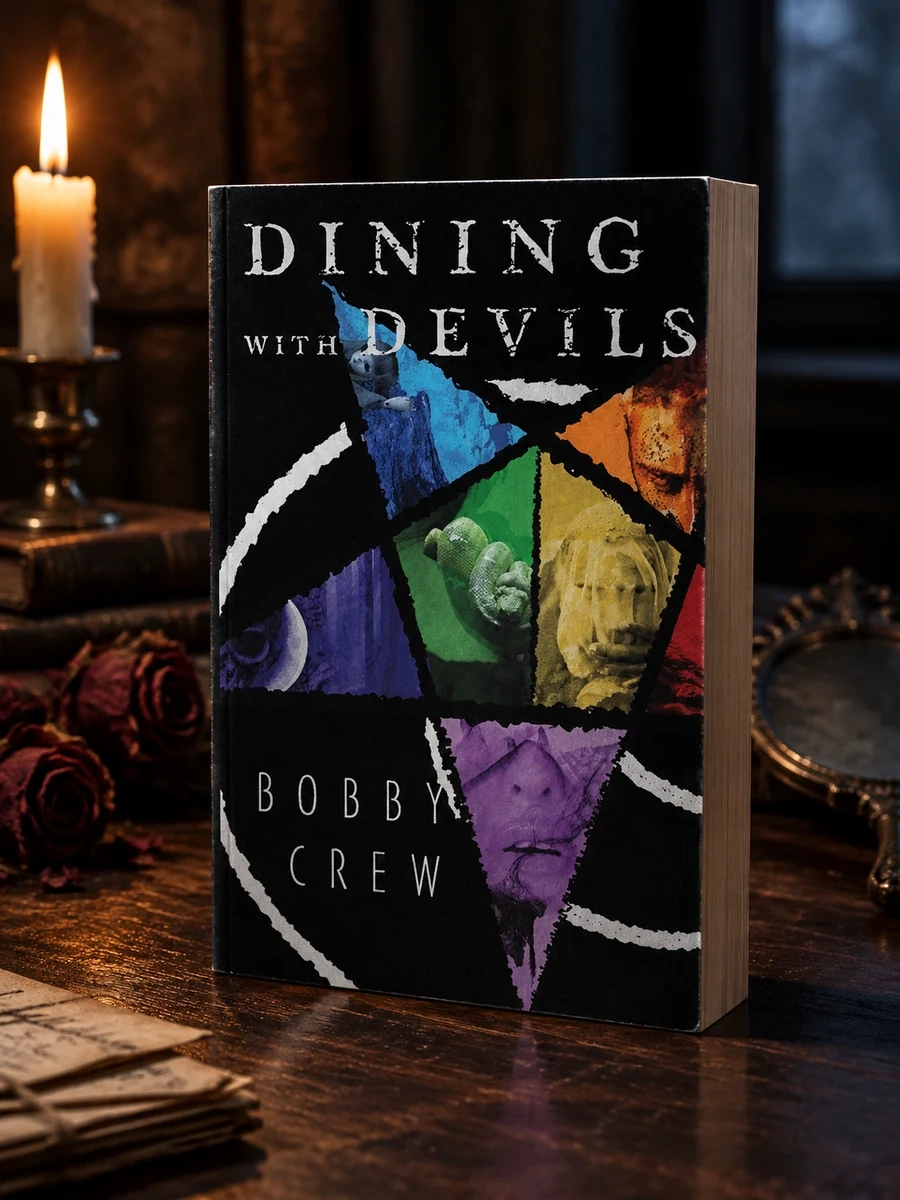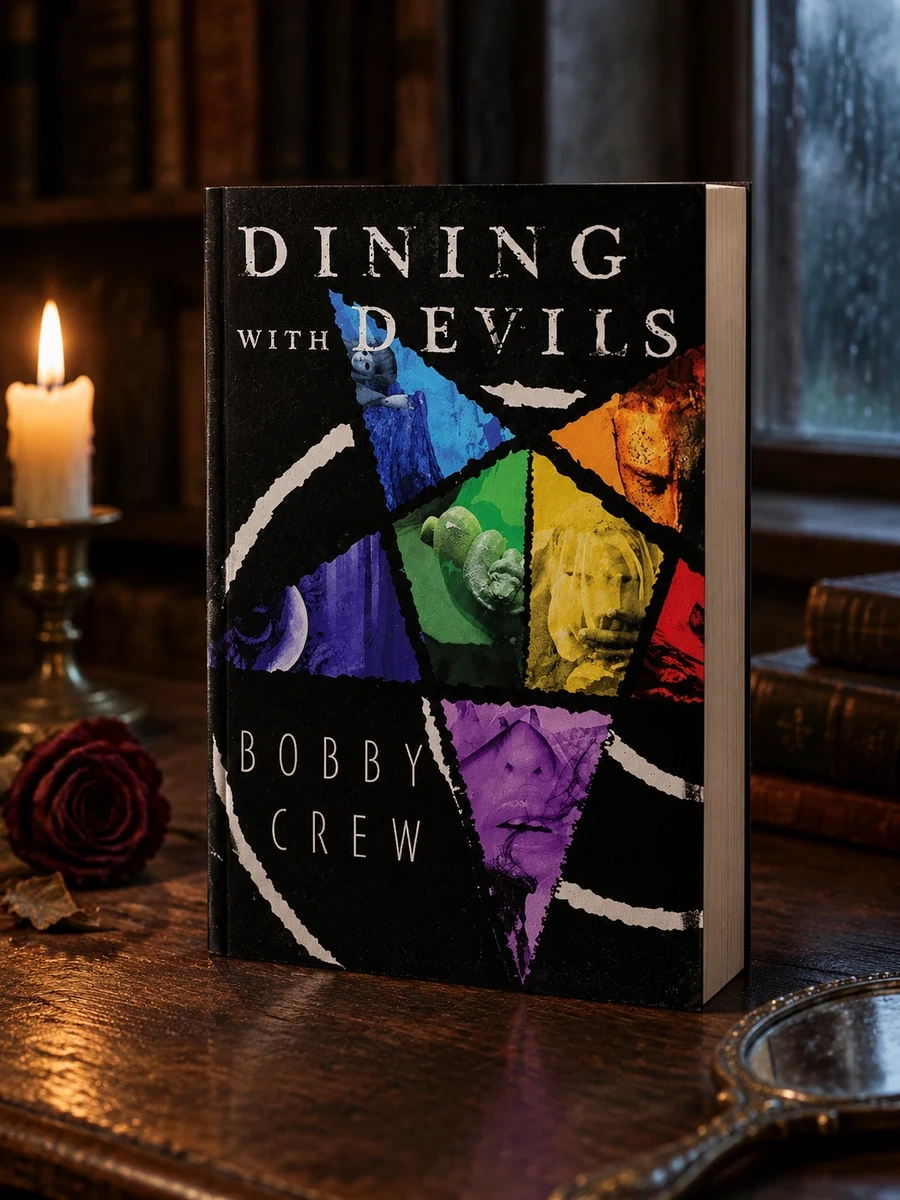

Dining with Devils
A collection of horror stories about demons that lurk in woods and inside us.
Bobby Crew writes fiction that blurs the line between external supernatural threats and internal psychological decay. The stories focus on the consequences of confronting one's personal demons, suggesting that these entities can be those who love you most. The book avoids traditional monster hunting tropes in favor of exploring the hell created by proximity to fear. Each tale contributes to a broader examination of how darkness resides within human connections. The author uses short fiction to dissect the nature of evil and its relationship to intimacy. Readers will find a consistent tone of dread that permeates every page without offering comfort or escape.
Published by Horror Crew Press in 2019, this work sits within the contemporary American horror fiction tradition. It draws on gothic and supernatural literary modes to explore modern anxieties about identity and relationships. The collection reflects a period where personal psychological horror gained prominence alongside traditional monster narratives.


📝 Description: Dining with Devils
💎 Our verdict on Dining with Devils
📖 Why choose it
Why this book is worth reading
Readers who appreciate horror that dissects the destructive nature of human connections will find this collection compelling. Bobby Crew offers a consistent tone of dread, exploring how proximity to fear creates personal hell rather than offering escape. It suits those interested in cosmic and psychological horror, particularly those who enjoy narratives where demons manifest through love and intimacy. The book challenges audiences to confront the cost of facing deepest fears without providing comfort or clear moral resolutions.
⭐ Reader reviews
Reader rating
Bobby Crew masterfully blurs the line between external supernatural threats and internal psychological decay in this cohesive collection. By focusing on consequences of confronting personal demons, the author illustrates how darkness resides within human connections. The work avoids traditional monster hunting tropes, instead dissecting evil’s relationship to intimacy. Readers seeking lighthearted tales should look elsewhere, as this book offers no escape from its pervasive dread. It is a rigorous examination of fear rooted in hidden sins and close relationships, leaving a lingering unease about those nearest to us.