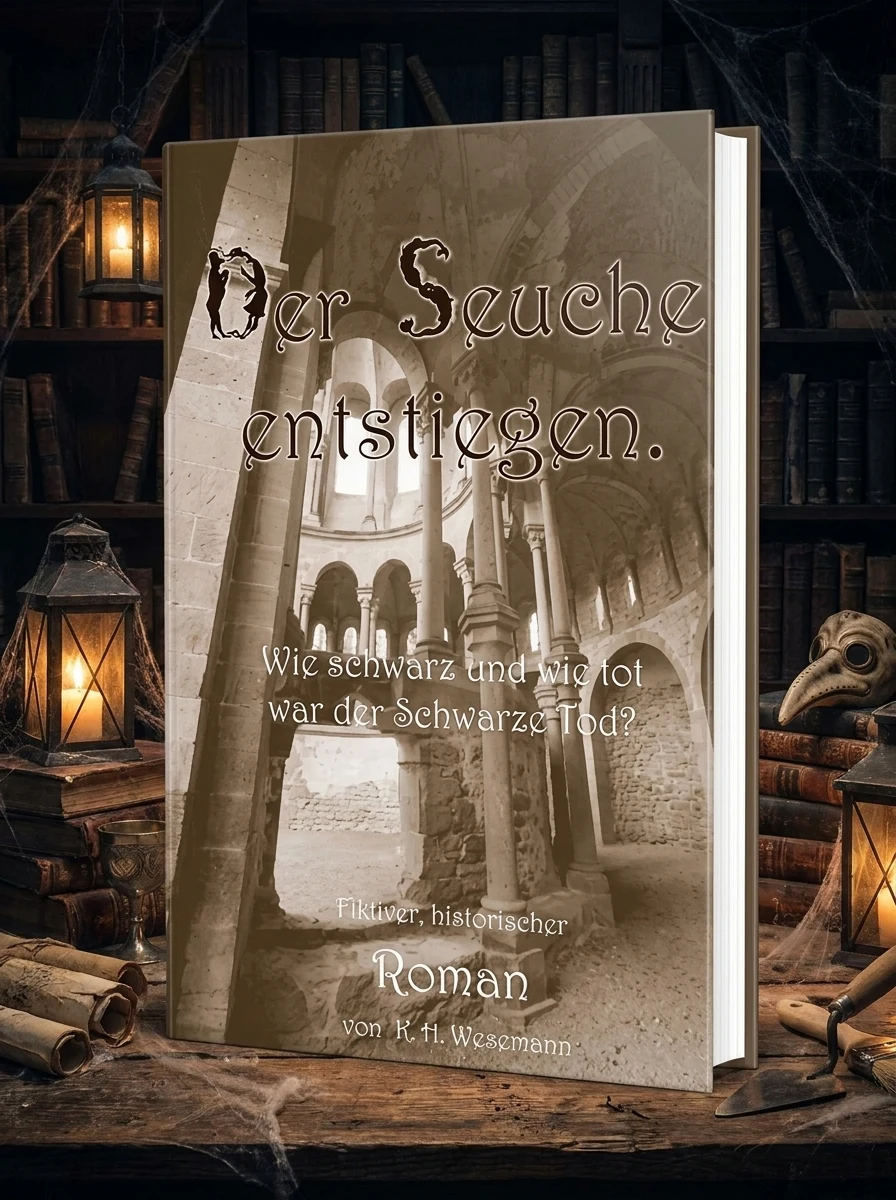
Der Seuche entstiegen: Wie schwarz und wie tot war der Schwarze Tod?
An archaeologist reads a priest's plague-era journal revealing the dead have risen.
The narrative operates on two levels. Elvira von Rensdorf digs up a book that changes her existence. Inside, a priest records his struggle against the plague in the Rhineland. He fights not only the disease but also entities emerging from it. His words freeze the blood of the modern reader. The structure connects the archaeologist’s present with the past through these writings.
The story is set in Europe during the fourteenth century, specifically around 1350. It focuses on the Rhineland region during a time of severe pestilence. The narrative draws on traditions of medieval storytelling and combines them with modern zombie fiction elements.


📝 Description: Der Seuche entstiegen: Wie schwarz und wie tot war der Schwarze Tod?
💎 Our verdict on Der Seuche entstiegen: Wie schwarz und wie tot war der Schwarze Tod?
📖 Why choose it
Why this book is worth reading
Readers interested in the intersection of historical plague studies and supernatural horror will find this title compelling. It offers a unique perspective on the Black Death by introducing entities that rise from the pestilence, transforming a historical epidemic into a battle against the undead. The narrative appeals to those who enjoy stories where modern discovery uncovers medieval terrors. By following an archaeologist’s journey alongside a priest’s desperate struggle, the book provides tension between past and present. It is ideal for fans of dark fantasy and gothic fiction who appreciate narratives that bridge centuries through found documents. Those seeking light romance or contemporary settings will likely find it unsuitable, as the focus remains firmly on historical terror and supernatural dread.
⭐ Reader reviews
Reader rating
Wesemann successfully merges medieval narrative conventions with zombie fiction to create a chilling atmospheric experience. The dual structure, connecting an archaeologist’s present discovery with a priest’s fourteenth-century struggles in the Rhineland, effectively builds suspense. The text describes a world where death is not passive but active, with the dead rising to walk the land. This approach suits readers who enjoy gothic supernatural fiction and historical horror. The tension between modern discovery and medieval terror drives the narrative forward without relying on contemporary comforts. It is best for those seeking light romance or contemporary settings may find it unsuitable due to its grim tone and focus on plague-era entities.
📖 Read on the blog
🏛 Books from this publisher Createspace Independent Publishing Platform


You might also like
See more →
Have a question about this item?
Ask about the edition, condition, delivery or anything else — we reply by email or phone, usually within a day.
