
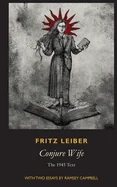
Conjure Wife: The 1943 Text
A rational professor loses his wife's protective magic and faces hidden dangers.
Fritz Leiber presents a story where scientific logic collides with supernatural reality. Norman Saylor dismisses Tansy’s witchcraft as superstition. His demand to destroy her charms triggers a cascade of threats within their social circle. The narrative follows Norman as he realizes the mundane world conceals a violent struggle for power. This work connects twentieth-century horror with earlier magical traditions. It highlights how women wield influence through unseen means. Leiber’s background shapes this exploration of fear and control. The plot moves from domestic dispute to existential threat. Readers interested in the sociology of fear will appreciate the detailed depiction of faculty politics and suburban rituals.
This 1943 text by Fritz Leiber is a foundational work of twentieth-century supernatural horror. It influenced later writers such as Michael Moorcock, Harlan Ellison, Kelly Link, and George R.R. Martin. The novel reflects mid-century anxieties about rationalism and gender roles within academic and domestic spheres.


📝 Description: Conjure Wife: The 1943 Text
💎 Our verdict on Conjure Wife: The 1943 Text
📖 Why choose it
Why this book is worth reading
Readers interested in the sociology of fear will appreciate this work’s detailed depiction of faculty politics and suburban rituals. The narrative offers a compelling exploration of how women wield influence through unseen means, challenging traditional power structures within domestic and academic settings. Those who enjoy rational protagonists facing irrational threats will find Norman Saylor’s journey from skepticism to existential dread particularly engaging. The book suits fans of gothic fiction and supernatural horror who appreciate the clash between scientific logic and ancient magical traditions. It provides a unique lens for examining psychological tension and hidden power dynamics without resorting to simple good-versus-evil tropes.
⭐ Reader reviews
Reader rating
Leiber masterfully constructs a narrative where scientific skepticism collides with supernatural reality, creating a tense atmosphere of domestic unease. The novel excels in portraying the mundane world as a battlefield for hidden powers, using academia as a microcosm for broader societal fears. Its strength lies in the detailed exploration of gender dynamics and the subtle ways influence operates beneath the surface of polite society. This work is best suited for readers who enjoy psychological horror and gothic fiction. It appeals to those willing to engage with complex themes of control and rationality. However, it may not satisfy readers seeking pure academic theory or those who dislike intense domestic settings. The story remains a vital study of fear and power.
📖 Read on the blog
✍️ More books by this author Fritz Leiber





🏛 Books from this publisher Frolic Press

You might also like
See more →
Have a question about this item?
Ask about the edition, condition, delivery or anything else — we reply by email or phone, usually within a day.
