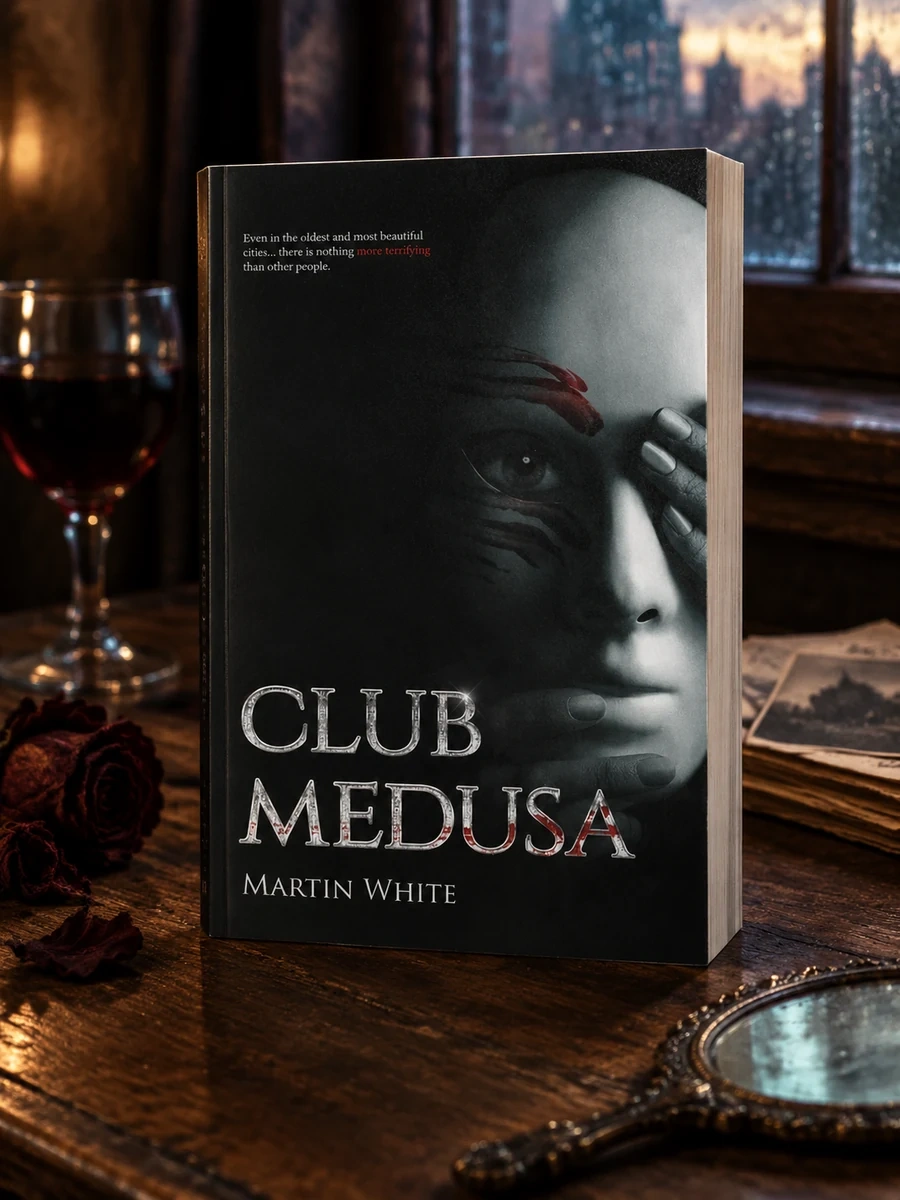
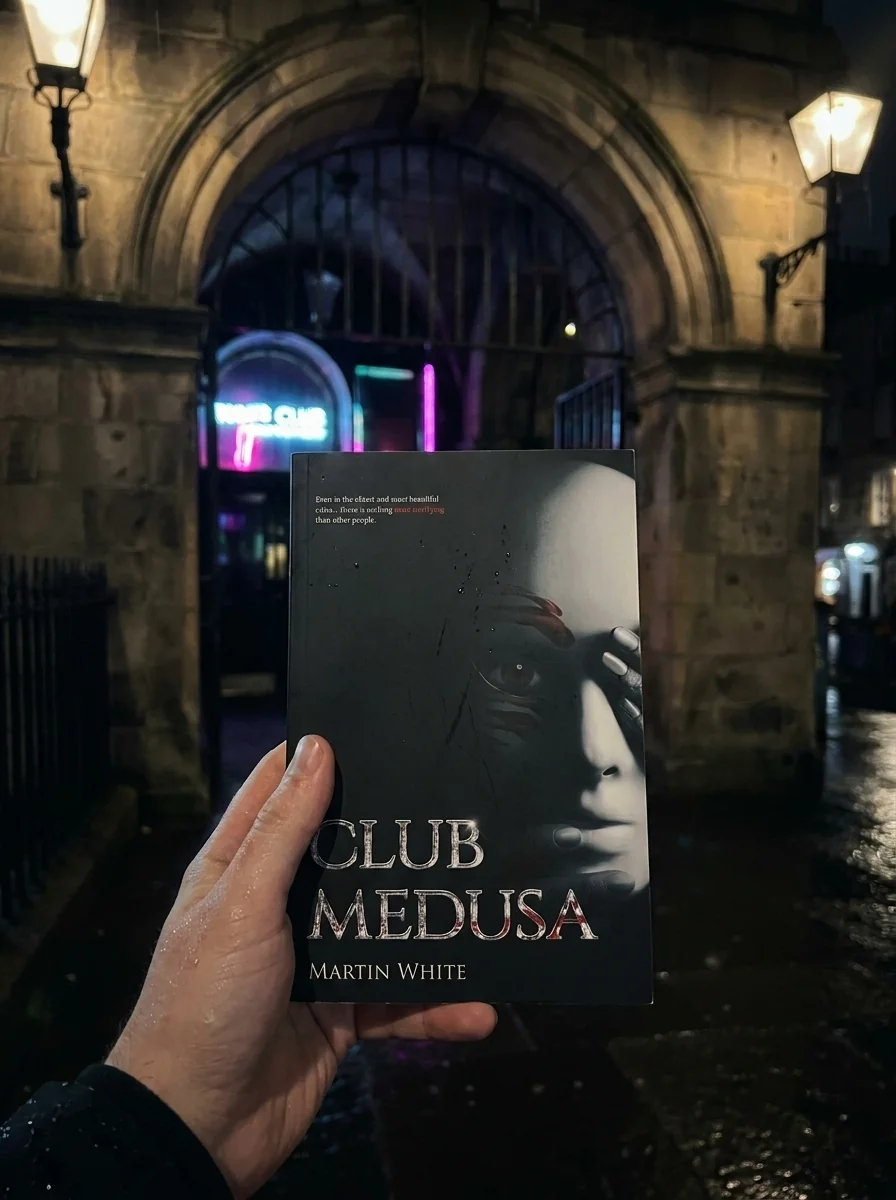
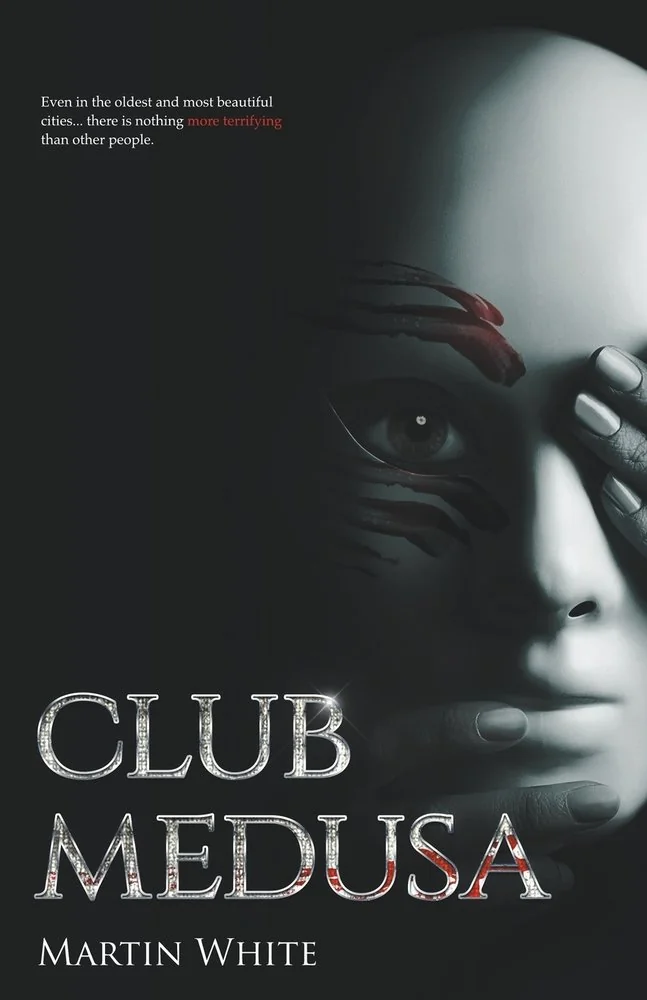
Club Medusa
Two veterans enter a shifting Edinburgh club that forces them to confront hidden truths.
White’s narrative follows Gerry and Paul as they flee a brawl in Edinburgh’s Old Town, stumbling into Club Medusa. Inside, the boundaries of time and memory dissolve, creating a maze where the past is irrelevant. The authors use the setting to explore how trauma distorts perception. The club acts as a psychological mirror, reflecting fears that are more immediate than their military history. This approach distinguishes the work from standard supernatural tales by focusing on internal decay rather than external threats.
The story is set in Edinburgh’s Old Town, a location with deep historical roots. It engages with contemporary discussions on veteran reintegration and the psychological aftermath of armed conflict. The narrative utilizes the specific urban geography of Scotland to ground its supernatural elements in a recognizable, albeit altered, reality.


📝 Description: Club Medusa
💎 Our verdict on Club Medusa
📖 Why choose it
Why this book is worth reading
Readers seeking a departure from conventional supernatural tropes will find value in this intense exploration of internal decay. The book appeals to those interested in the lingering effects of war and the distortion of memory. It offers a unique perspective on trauma, using a shifting physical environment to mirror psychological unraveling. Fans of urban gothic fiction who prefer atmospheric dread over jump scares will appreciate the focus on hidden truths. The narrative challenges readers to engage with disorienting perceptions rather than external monsters. It is ideal for those who enjoy stories where reality itself becomes the antagonist, forcing characters to confront suppressed fears within a neon-lit maze.
⭐ Reader reviews
Reader rating
White delivers a compelling psychological horror that prioritizes internal terror over external threats. By situating the narrative in Edinburgh’s Old Town, he grounds abstract trauma in a tangible, shifting urban landscape. The depiction of Club Medusa as a psychological mirror effectively illustrates how memory distorts perception for veterans struggling with civilian life. The work succeeds by avoiding supernatural clichés, instead focusing on the disintegration of reality. This approach makes it particularly suitable for readers who enjoy complex character studies within horror frameworks. While it may frustrate those seeking clear resolutions or traditional ghost stories, its atmospheric depth and thematic richness regarding post-conflict trauma provide a rewarding experience for dedicated fans of literary horror.
📖 Read on the blog
📖 From the series “Club Medusa”



✍️ More books by this author Martin White
🏛 Books from this publisher Martin White
You might also like
See more →




Have a question about this item?
Ask about the edition, condition, delivery or anything else — we reply by email or phone, usually within a day.
