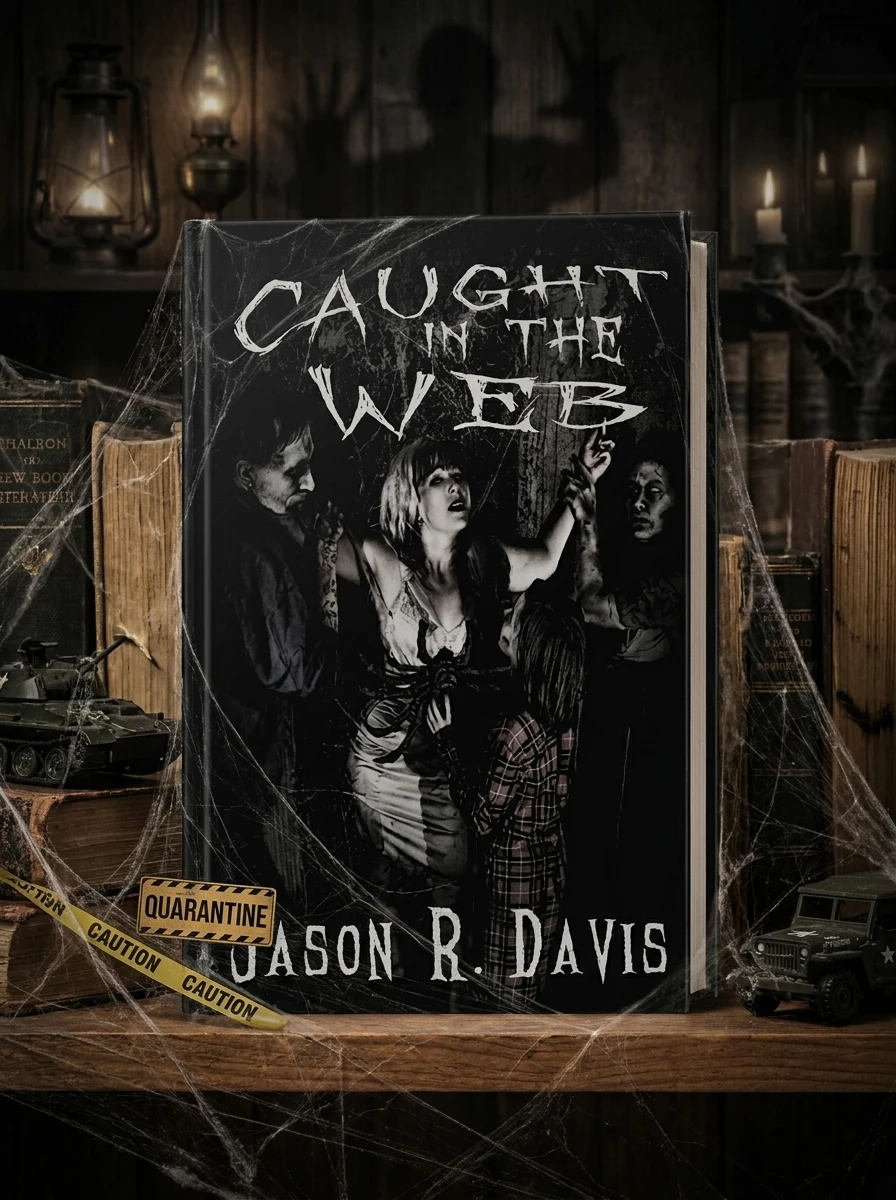
Caught in the Web
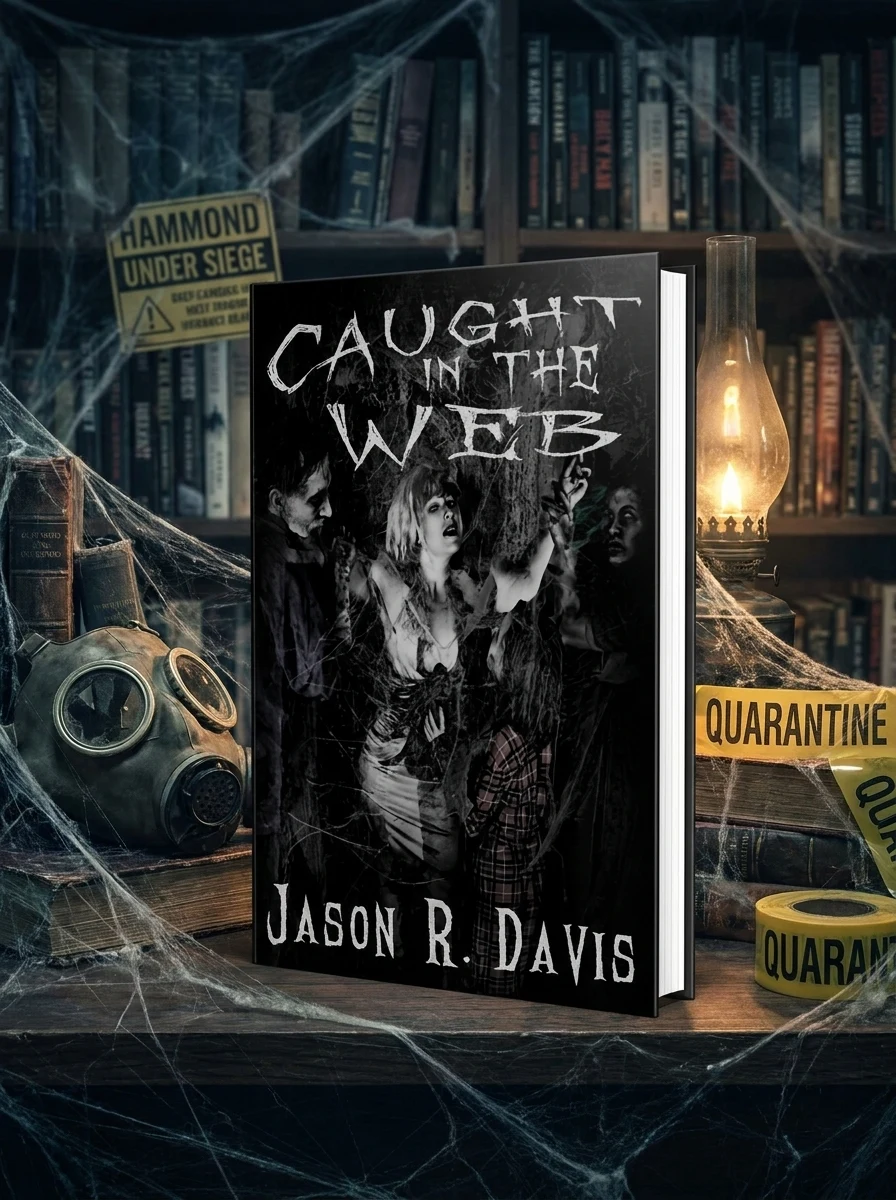
A horror novel about a town trapped by an unseen threat.
The narrative follows the inhabitants of Hammond as they deal with a sudden quarantine caused by hatched entities. The military presence offers no solutions, creating a vacuum of knowledge that heightens the fear. Davis explores the breakdown of order when faced with something that cannot be seen or understood. The characters must rely on their own wits to escape the web that traps them. This approach prioritizes tension and isolation over action sequences or scientific explanations. The story remains grounded in the immediate experience of those affected, avoiding grandiose claims about the nature of the threat.
Published by Fof Publishing in 2015, this work sits within the contemporary American horror genre. It reflects modern anxieties about isolation and the unknown through a confined setting. The narrative style aligns with recent trends in supernatural fiction that emphasize psychological dread over physical confrontation.


📝 Description: Caught in the Web
💎 Our verdict on Caught in the Web
📖 Why choose it
Why this book is worth reading
Readers who prioritize tension and atmospheric dread over action sequences will find this narrative compelling. It appeals to those who enjoy stories of containment and psychological strain where order breaks down under the weight of the inexplicable. The book is ideal for fans of horror fiction that explores the vulnerability of individuals against an incomprehensible force without relying on scientific explanations or clear resolutions. Those seeking a grounded, immediate experience of fear within a confined space will appreciate the focus on survival wits and isolation.
⭐ Reader reviews
Reader rating
Davis effectively constructs a claustrophobic atmosphere by stripping away military clarity, leaving characters to face an invisible threat alone. The strength lies in its refusal to explain the entities, maintaining a consistent sense of dread through ignorance rather than gore or action. This approach suits readers who prefer psychological horror and containment narratives over traditional monster hunting tropes. By focusing on the breakdown of order and the terror of the unseen, the narrative delivers a potent experience of isolation. It is best appreciated by those who value atmospheric tension and the psychological impact of an unexplained phenomenon on human behavior.