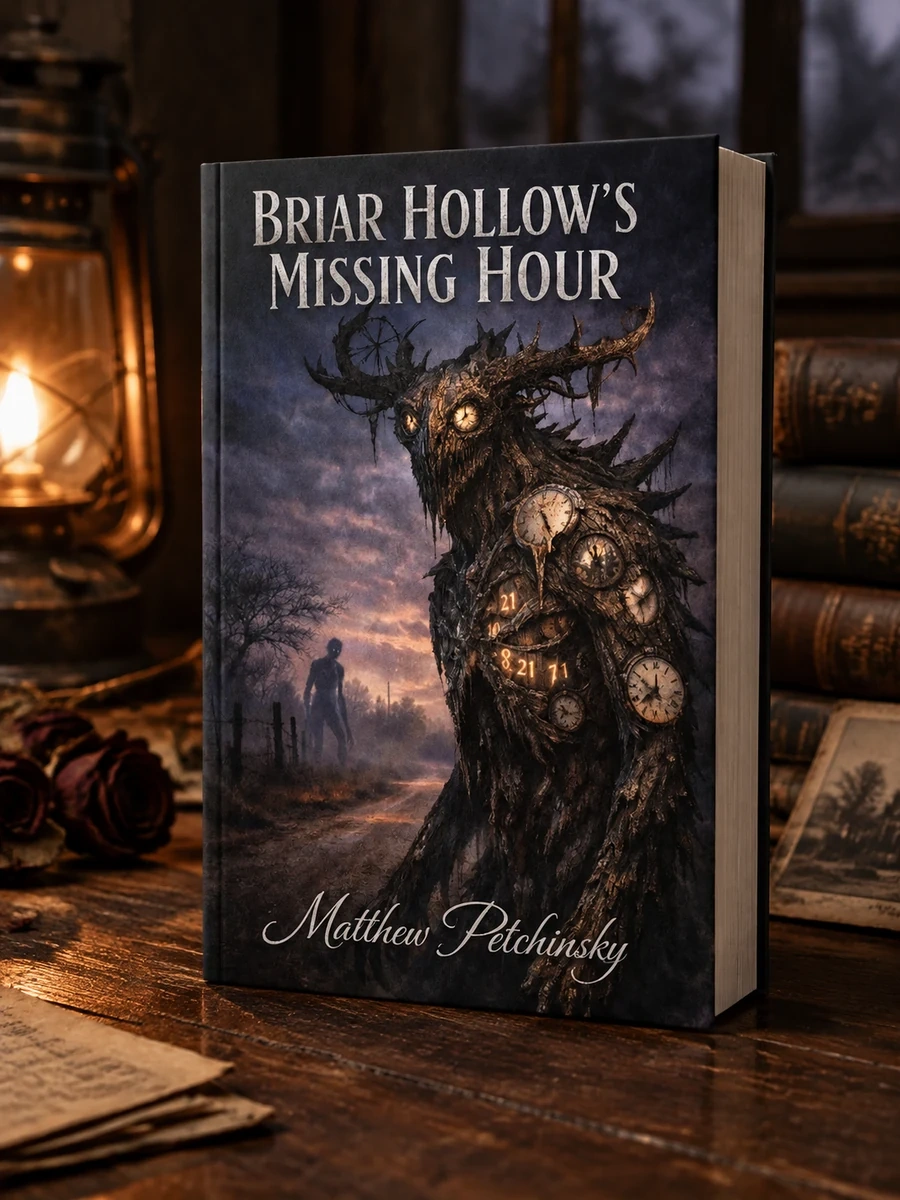
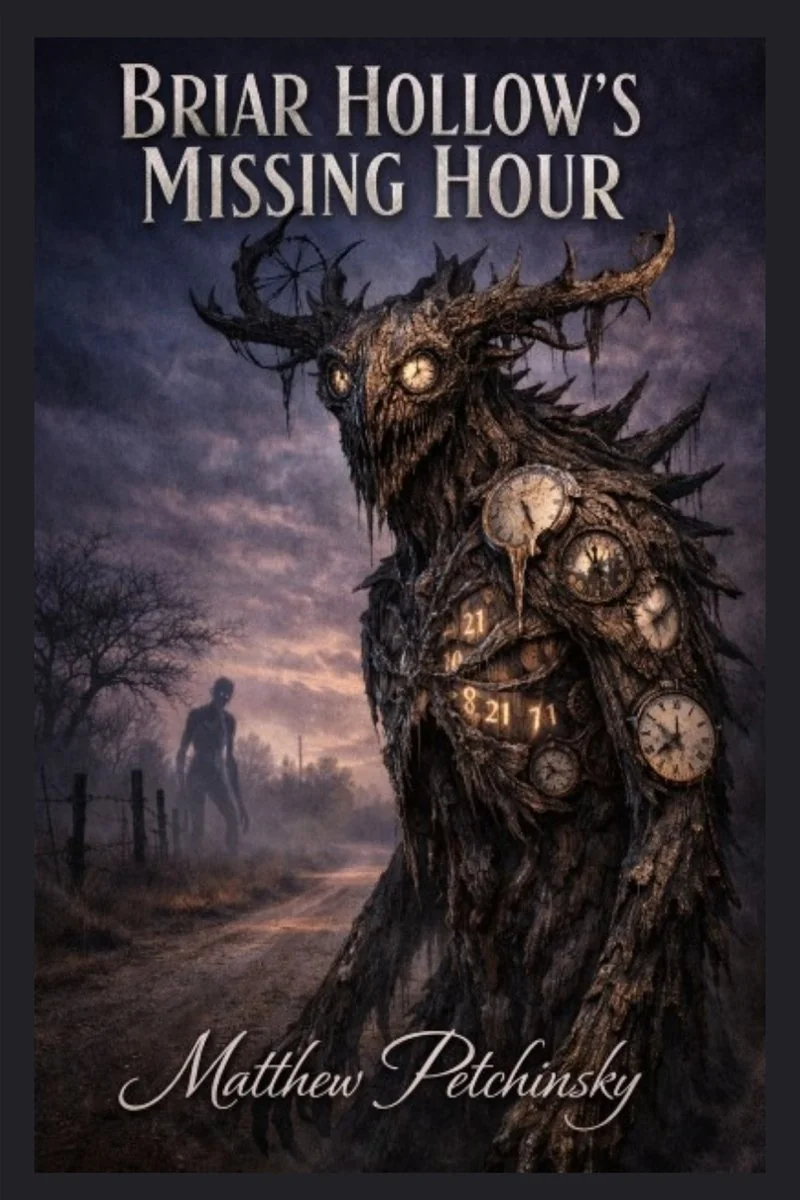
Briar Hollow's Missing Hour
A Texas town loses an hour that was purchased by an ancient entity.
The story centers on two investigators uncovering a transactional horror in Briar Hollow. Rowan Hale and Maeve Carter discover that time functions as currency for a powerful force. The missing hour leaves physical evidence like receipts and self-writing contracts. The entity behind the event uses calculation to dismantle reality. The narrative explores how ordinary people become part of a larger, apocalyptic financial system. The horror stems from the loss of agency and the bending of natural laws.
Set in Briar Hollow, Texas, the story draws on American small-town folklore and supernatural traditions. It examines the intersection of bureaucratic structures with occult forces. The narrative reflects anxieties about time and consent within a modern yet eerie setting.


📝 Description: Briar Hollow's Missing Hour
💎 Our verdict on Briar Hollow's Missing Hour
📖 Why choose it
Why this book is worth reading
Readers who appreciate the slow unraveling of reality and the terrifying bureaucracy of the occult will find this narrative deeply compelling. It offers a unique perspective on psychological horror where agency is stripped away through calculation rather than chaos. Those interested in supernatural mystery rooted in small-town settings will enjoy the intricate plot involving temporal anomalies and ancient entities. The book provides a chilling exploration of how ordinary people become variables in a vast, financial scheme that finances apocalypse in increments. It appeals to those who prefer atmospheric dread over fast-paced action or traditional jump scares, offering a thoughtful examination of witnessing as consent and refusal as resistance.
⭐ Reader reviews
Reader rating
Petchinsky crafts a compelling inquiry into the nature of time as currency, using the missing hour in Briar Hollow to expose a vast, ancient scheme. The narrative excels in its depiction of reality bending through mirrors and self-writing contracts, creating a sense of inescapable dread. By focusing on the duo’s attempt to collect testimonies, the author builds tension through psychological horror rather than gore. The entity operates through calculation, making the horror feel inevitable and systemic. This structure suits readers who enjoy supernatural mystery and dark fantasy. It avoids traditional jump scares, instead delivering a chilling atmosphere where witnessing becomes consent. The book is best for those willing to engage with a slow-burn unraveling of natural laws and the terrifying implications of a transactional apocalypse.