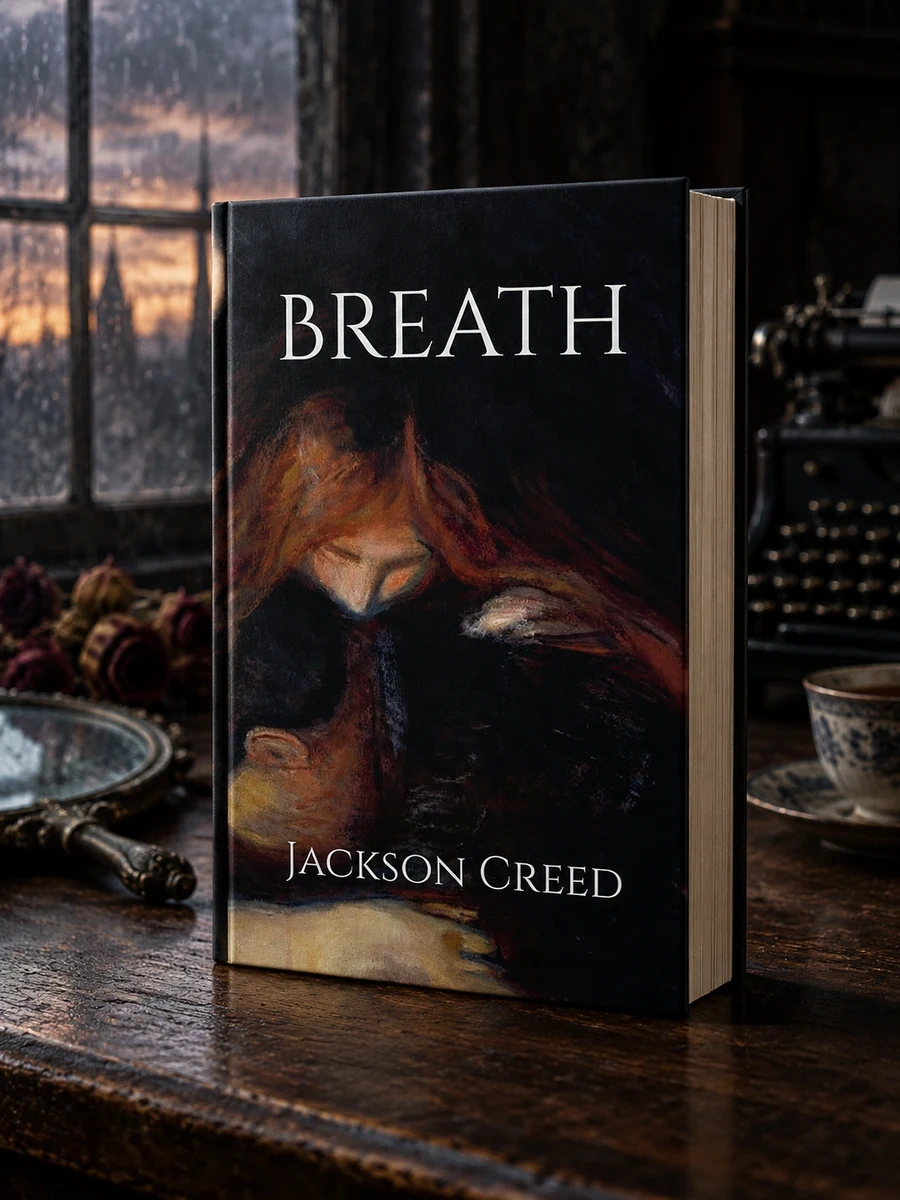
Breath
A man flees across Europe while controlled by an ancient demon named Lilith.
Avram’s life unravels after a child appears among temple ruins. He engages in a desperate flight across Europe, moving through ancient sites and forgotten cities. The narrative focuses on Lilitu, the pre-Christian desert-wind demon who stole children before biblical times. This is not a sanitized myth but a genuine folklore entity. Avram realizes the girl controls him, using every step to strengthen her hold. He must break this ancient thrall rooted in real tradition before losing his mind. The book presents horror grounded in actual pre-Christian myth rather than invented monsters.
The text draws on pre-Christian desert-wind demon traditions, specifically Lilitu, who stole children before biblical records. It utilizes genuine forgotten folklore from ancient sites and ruins across Europe to ground the supernatural elements in historical myth rather than modern invention.


📝 Description: Breath
💎 Our verdict on Breath
📖 Why choose it
Why this book is worth reading
Readers seeking literary horror anchored in genuine pre-Christian myth will find this work compelling. It appeals to those who appreciate supernatural fiction that avoids sanitized myths in favor of terrifying, ancient traditions. Avram’s desperate flight across Europe offers a gripping narrative of psychological unraveling and control by an entity like Lilitu. The book is ideal for fans of dark fantasy and ghost stories who value folkloric depth over modern psychological thrillers without historical grounding. It provides a unique experience where dread stems from real, forgotten lore rather than invented monsters, satisfying readers who enjoy horror with substantial cultural and historical underpinnings.
⭐ Reader reviews
Reader rating
Jackson Creed crafts a tense narrative by grounding supernatural horror in the authentic figure of Lilitu, a pre-Christian desert-wind demon. The story effectively portrays Avram’s psychological unraveling as he is controlled by a silent child across ancient European sites. Creed succeeds in creating dread through genuine folklore rather than relying on modern inventions, offering a fresh perspective for horror enthusiasts. This approach suits readers who appreciate supernatural fiction anchored in historical tradition and those interested in the darker aspects of ancient mythology. The work avoids lighthearted escapism, delivering a serious exploration of mental loss and ancient thralls. It is best appreciated by those who value literary depth and the terrifying reality of nameless spirits over conventional monster tropes.
📖 Read on the blog
✍️ More books by this author Jackson Creed


You might also like
See more →




Have a question about this item?
Ask about the edition, condition, delivery or anything else — we reply by email or phone, usually within a day.
