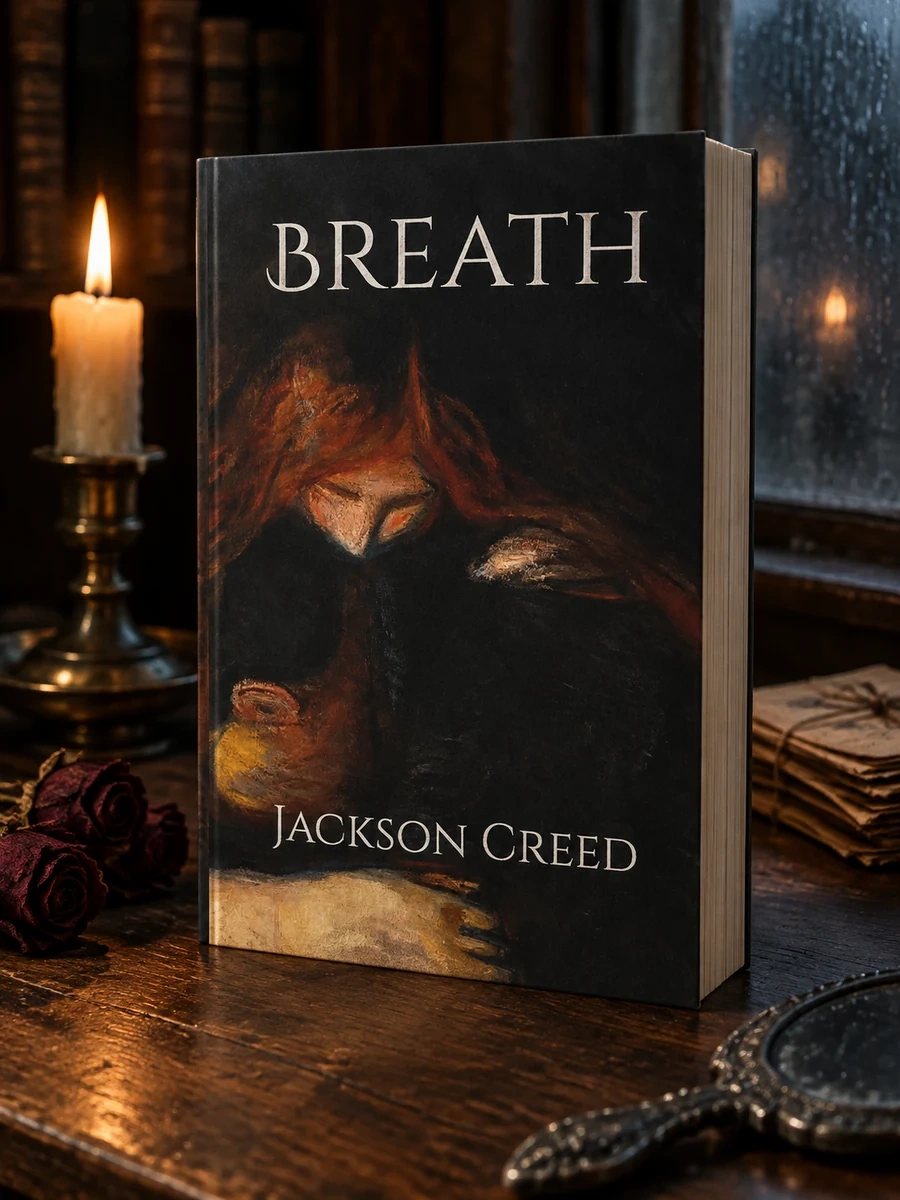
Breath
A man flees across Europe while controlled by an ancient demon named Lilith.
Jackson Creed presents a narrative where Avram’s escape becomes a flight from Lilitu, the pre-Christian desert-wind demon. The text focuses on her history as a child-stealer predating biblical names. Avram discovers he is being controlled rather than haunted. His path through ancient sites reveals a legacy older than memory. The story emphasizes breaking an ancient thrall rooted in genuine folklore. Creed grounds the terror in real myth rather than invented monsters. This approach creates dread without relying on modern supernatural cliches. The narrative structure follows Avram’s desperate attempts to regain control. Readers encounter a spirit and her growing army of children. The horror stems from the realization that the oldest myths are true. The book avoids sanitized versions of Lilith to present a raw, historical perspective on the entity.
The text draws on pre-Christian desert-wind demon lore and forgotten cities across Europe. It references traditions predating biblical records, specifically focusing on Lilitu as a child-stealer. The narrative is grounded in genuine folklore rather than modern invented curses or sanitized myths.


📝 Description: Breath
💎 Our verdict on Breath
📖 Why choose it
Why this book is worth reading
Readers who appreciate horror rooted in genuine folklore rather than sanitized myths will find this compelling. It suits those seeking psychological terror based on forgotten traditions, offering a raw, historical perspective on Lilith as Lilitu. Those who enjoy narratives where the protagonist fights for control against an ancient thrall will engage deeply with Avram’s desperate flight. The book appeals to fans of cosmic and psychological horror who prefer dread derived from real pre-Christian myths over generic scares. It is ideal for those who want to explore the legacy of child-stealing demons and the terror of losing one's mind to older, truer legends. Readers weary of modern supernatural clichés will find value in its focus on ancient entities and the unsettling reality that the oldest myths remain true.
⭐ Reader reviews
Reader rating
Jackson Creed delivers a compelling narrative by grounding terror in pre-Christian folklore rather than invented monsters. The story effectively explores Avram’s loss of control to Lilitu, creating dread through the realization that ancient myths are real. The focus on genuine history and the raw depiction of Lilith as a child-stealer offers a unique perspective distinct from sanitized versions. Readers seeking psychological horror based on forgotten traditions will find this engaging, while those expecting standard ghost stories may find the emphasis on non-biblical entities unsettling. The work succeeds in avoiding modern clichés, offering a literary approach to horror that respects its mythological roots. It is best suited for fans of dark fantasy and cosmic horror who appreciate nuanced, folklore-driven narratives over generic scares.
📖 Read on the blog
✍️ More books by this author Jackson Creed


🏛 Books from this publisher Independently Published






You might also like
See more →


Have a question about this item?
Ask about the edition, condition, delivery or anything else — we reply by email or phone, usually within a day.
