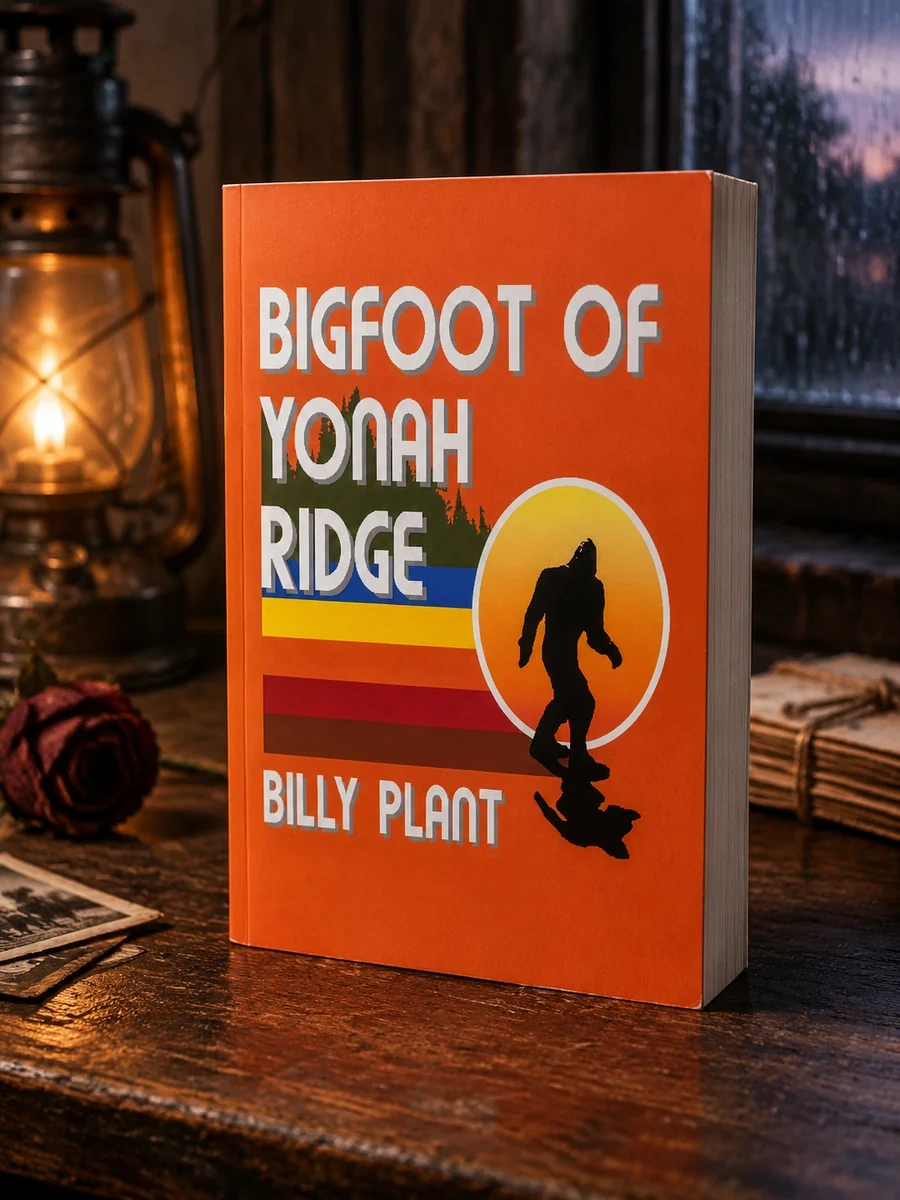
Bigfoot of Yonah Ridge
A tale of a cryptid caught between conservationists and developers in Yonah Ridge.
The narrative focuses on the plight of a misunderstood Bigfoot figure situated within the broader struggle over land rights and ecological integrity. Plant explores the friction between economic necessity and environmental stewardship, portraying the creature as a victim of this larger conflict. The story avoids typical horror tropes in favor of a more nuanced examination of how development impacts both natural habitats and mythical beings. By centering on the creature’s perspective, the book offers a fresh take on the genre that emphasizes empathy over fear. Readers will find a story that questions who bears the burden when progress clashes with preservation.
The book sits within the American horror and gothic fiction tradition, published in 2023 by Maze Dog Media. It engages with contemporary US debates on land use, reflecting current tensions between industrial growth and ecological preservation in rural settings.


📝 Description: Bigfoot of Yonah Ridge
💎 Our verdict on Bigfoot of Yonah Ridge
📖 Why choose it
Why this book is worth reading
This book is ideal for readers who seek horror fiction that transcends traditional monster hunting tropes to offer a nuanced examination of environmental stewardship versus economic necessity. It appeals to those interested in eco-horror and speculative fiction that engages with current ecological anxieties. By centering on the creature’s perspective, the narrative emphasizes empathy over fear, providing a fresh take on the genre. Readers will gain insight into the friction between conservationists and developers, questioning who bears the burden when progress clashes with preservation. It offers a grounded social commentary blended with mythic elements, resonating with modern concerns about nature and industry rather than providing pure fantasy escapism.
⭐ Reader reviews
Reader rating
Billy C Plant delivers a unique voice in horror by focusing on the plight of a misunderstood Bigfoot rather than its destruction. The narrative structures the tale to explore how mythical beings intersect with real-world human struggles over resources, avoiding typical horror clichés in favor of a nuanced examination of development's impact. This approach challenges readers to consider the cost of progress against natural preservation. While it may not suit those seeking pure fantasy escapism or traditional monster hunting tales, it strongly appeals to readers interested in eco-horror and speculative fiction with thematic depth. The work successfully blends mythic elements with grounded social commentary, creating a story that resonates deeply with contemporary environmental concerns.
You might also like
See more →







Have a question about this item?
Ask about the edition, condition, delivery or anything else — we reply by email or phone, usually within a day.
