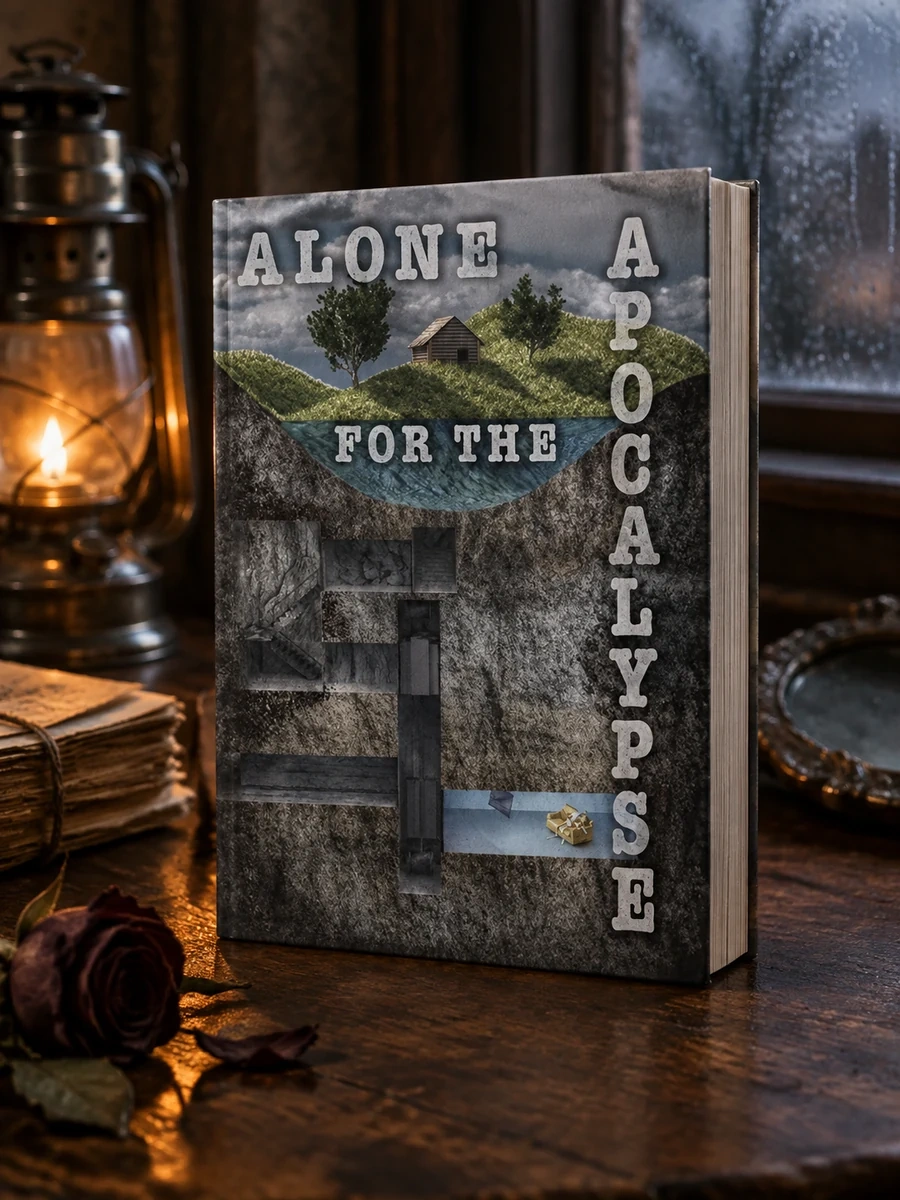

Alone for the Apocalypse
A gothic tale of survival and ghosts in a post-apocalyptic cabin setting.
The narrative centers on Madelyn’s retreat to her grandmother’s cabin as civilization collapses. She confronts both physical dangers like Roamers and the supernatural weight of her family’s history. The story examines how grief manifests as haunting spirits when one is isolated from society. Hamill uses the structure of three previous novels to build a cohesive account of a woman facing her mortality. The text emphasizes the emotional landscape over external plot points, focusing on memory and loss. Readers will encounter a protagonist who must learn to live with ghosts rather than escape them. The ending reflects on the difficulty of finding comfort in solitude when the world has ended.
This work sits within the tradition of American gothic horror, blending post-apocalyptic themes with supernatural elements. It draws on the genre’s focus on isolated settings and psychological dread. The narrative reflects a period where societal collapse forces individuals to confront their deepest fears alone.


📝 Description: Alone for the Apocalypse
💎 Our verdict on Alone for the Apocalypse
📖 Why choose it
Why this book is worth reading
Readers who prioritize atmospheric depth and psychological resonance over kinetic action will find this narrative rewarding. It appeals to those interested in the intersection of grief and survival, offering a quiet, introspective look at mortality rather than a loud battle for life. Those tired of standard zombie tropes may appreciate the focus on spiritual weight and memory. The book serves individuals who enjoy character-driven stories where the internal landscape is as dangerous as the external world. It is ideal for fans of slow-burn dread who want to explore how isolation amplifies personal history and loss in a collapsed society.
⭐ Reader reviews
Reader rating
Hamill delivers a poignant exploration of solitude by merging post-apocalyptic survival with gothic supernatural elements. The narrative effectively uses the cabin setting to amplify Madelyn’s internal monologue, creating a tense atmosphere where ghosts feel as tangible as physical threats. By focusing on emotional landscape rather than plot mechanics, the author crafts a cohesive account of facing mortality. This approach suits readers who appreciate literary horror and psychological depth. It avoids easy resolutions, opting instead for a contemplative tone that lingers long after reading. The work stands out for its refusal to offer traditional action, providing a unique, melancholic perspective on the end of the world.