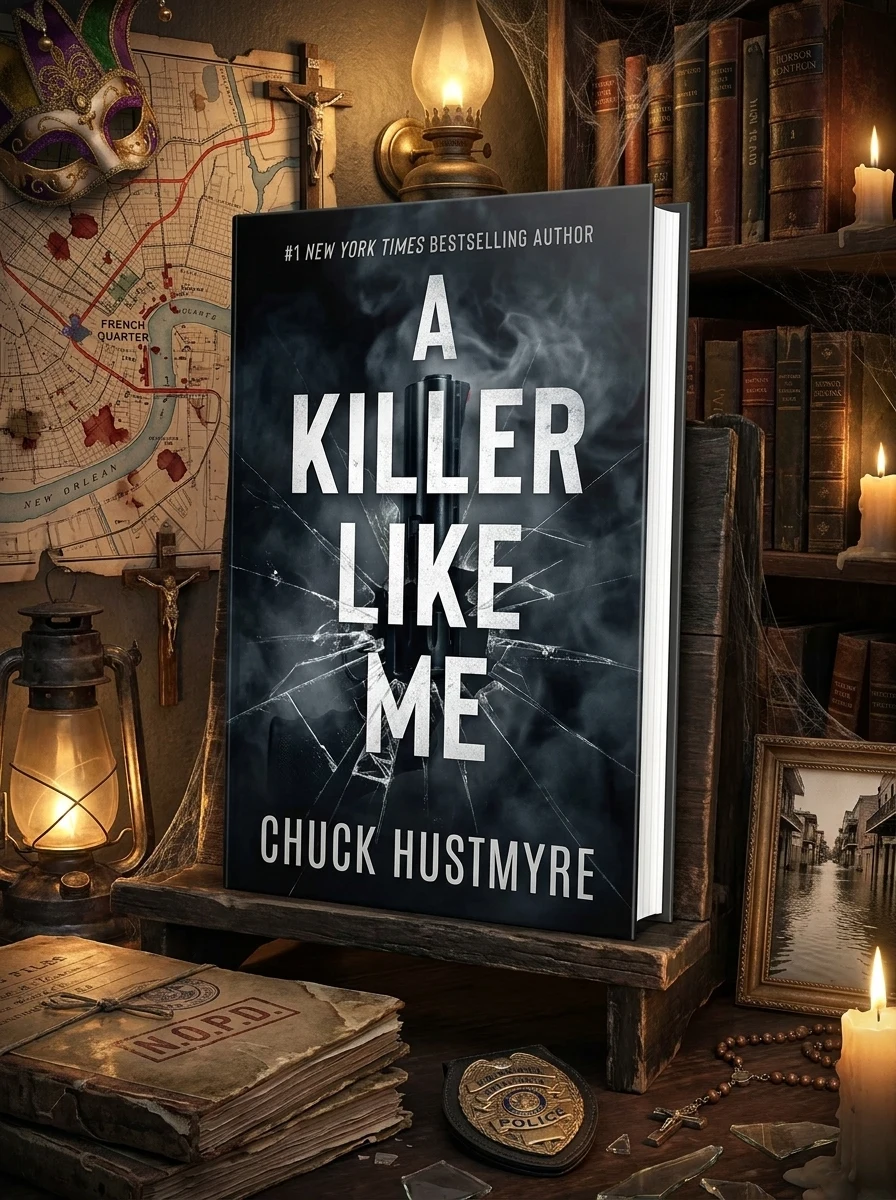

A Killer Like Me
A detective hunts a serial killer by adopting the predator's dangerous mindset.
The narrative centers on the strained relationship between law enforcement and city administration in New Orleans. Sean Murphy faces institutional resistance while pursuing the Lamb of God. The setting is crucial, with the aftermath of a hurricane influencing the city's response to the violence. Officials prioritize economic recovery over public safety, creating obstacles for the investigation. Murphy’s method involves deep psychological immersion into the killer’s perspective. This technique blurs the line between hunter and hunted. The story examines how proximity to madness affects the investigator’s sanity. Hustmyre constructs a tense atmosphere where bureaucratic indifference exacerbates the threat. The plot relies on the psychological duel rather than physical confrontation alone.
The story is set in New Orleans, a city known for its unique culture and history. The narrative takes place after a devastating hurricane, which impacts the tourism industry. This context shapes the official response to the crimes and influences the detective's methods.


📝 Description: A Killer Like Me
💎 Our verdict on A Killer Like Me
📖 Why choose it
Why this book is worth reading
Readers seeking a cerebral exploration of the detective’s psyche will find this narrative compelling. It appeals to those who appreciate procedural elements grounded in psychological depth rather than mere action. The book offers insight into the dangerous game of adopting a killer’s mindset, making it suitable for fans of intense character studies. Those interested in how institutional barriers complicate justice in crisis-stricken environments will also gain from this examination of professional strain and moral ambiguity.
⭐ Reader reviews
Reader rating
Hustmyre delivers a tense psychological duel that prioritizes mental immersion over physical confrontation. The setting of New Orleans, scarred by hurricane aftermath, effectively mirrors the internal chaos of Detective Sean Murphy. By focusing on the bureaucratic resistance to acknowledging the Lamb of God’s crimes, the narrative critiques institutional denial. This approach suits readers who enjoy police procedurals with heavy emotional weight. It avoids lighthearted supernatural tropes, offering instead a grim look at how proximity to madness affects sanity. The work is best for those who value atmospheric dread and complex character dynamics over fast-paced action sequences.
You might also like
See more →





Have a question about this item?
Ask about the edition, condition, delivery or anything else — we reply by email or phone, usually within a day.
