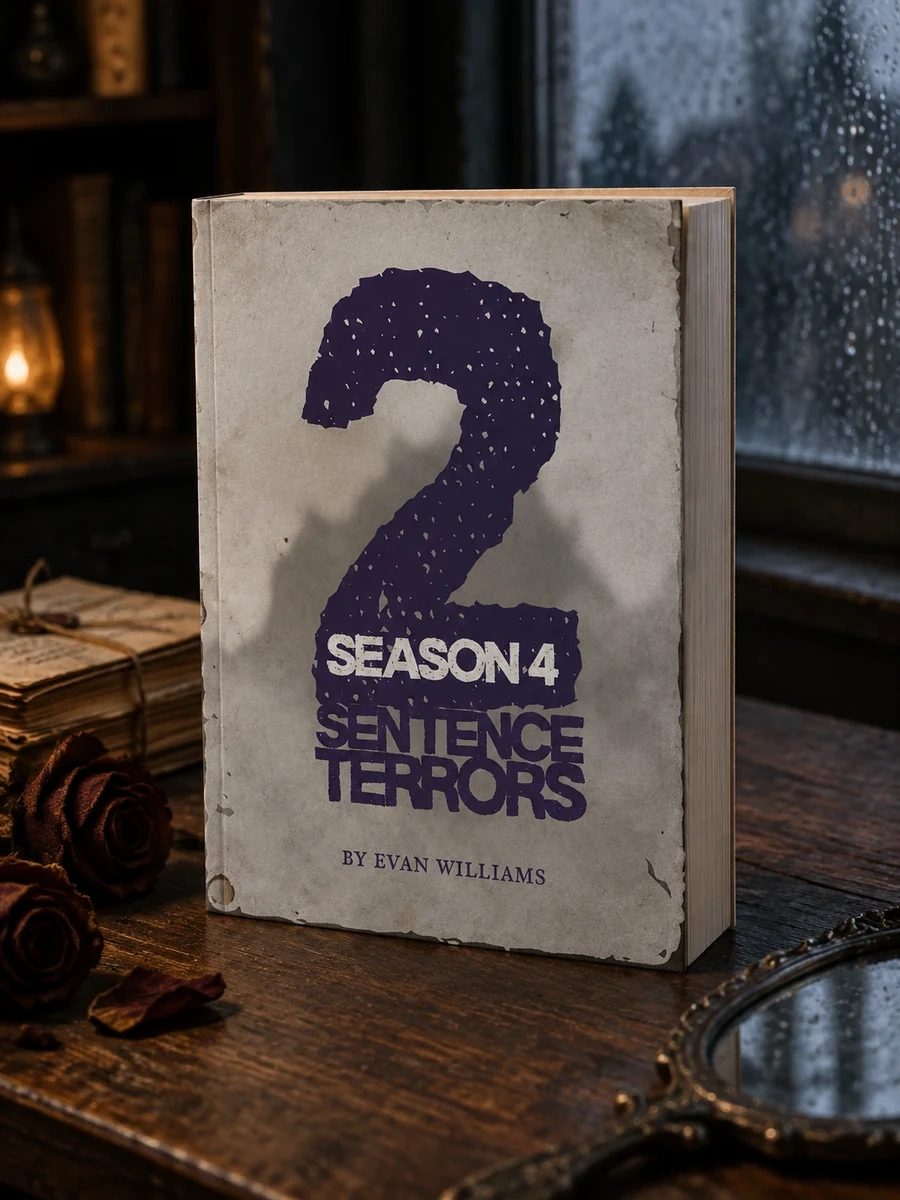
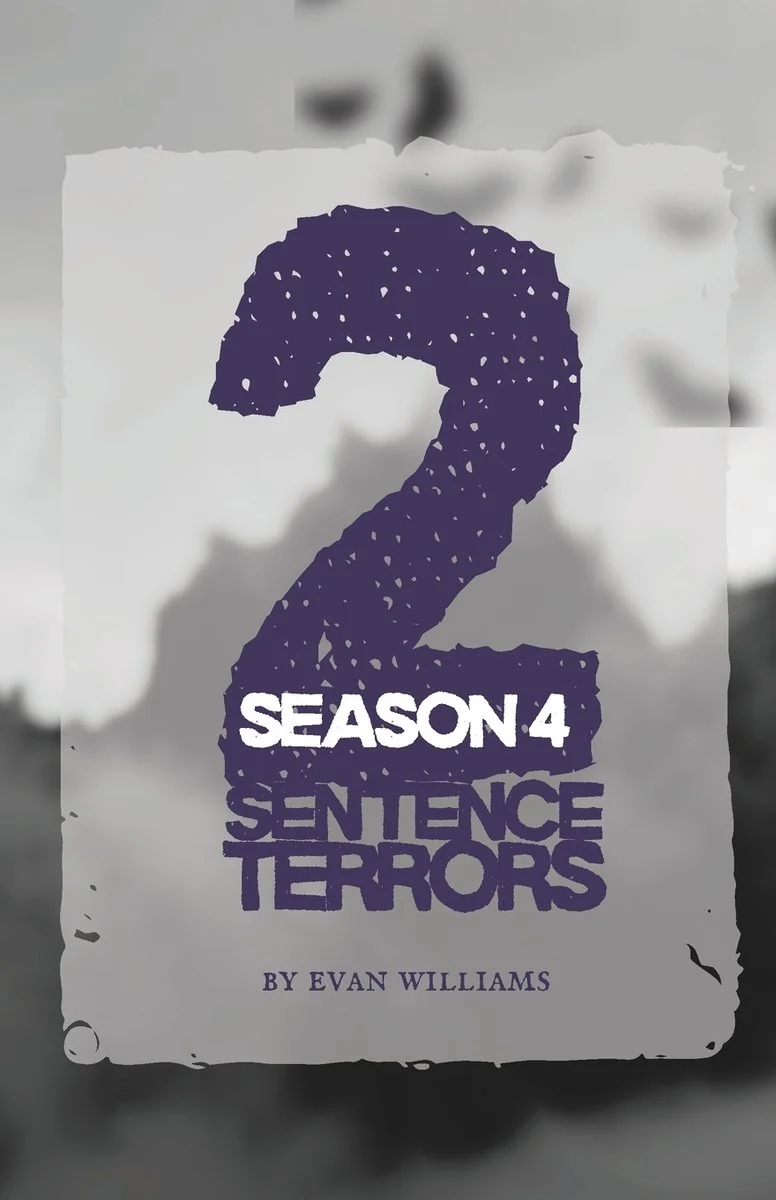
2 Sentence Terrors: Season 4
A collection of two-sentence horror stories inspired by mundane daily life and ordinary objects.
Williams shifts from traditional spooky settings to the horror found in the everyday. He examines news items, friend conversations, and common objects for hidden threats. The format relies on brevity, delivering fear through minimal text. This season represents a pivot point in his career, ending the use of photography before he began illustrating by hand. The stories do not rely on jump scares but on the realization that danger is already present in familiar places.
This book sits within the tradition of micro-fiction and short-form horror. It reflects a specific period in Evan Williams' career where he used photography and graphic design before switching to hand illustration for Inktober-related seasons.


📝 Description: 2 Sentence Terrors: Season 4
💎 Our verdict on 2 Sentence Terrors: Season 4
📖 Why choose it
Why this book is worth reading
Readers who appreciate concise horror and psychological unease derived from ordinary life will gain significantly from this collection. It appeals to those seeking fear through minimal text rather than long-form narratives or classic supernatural ghosts. The volume offers a unique perspective on how danger hides in familiar places, making it ideal for fans of micro-fiction format evolution. It is particularly suitable for individuals interested in the intersection of everyday objects and hidden threats, providing a fresh take on mundane sources like news items and friend conversations without relying on jump scares.
⭐ Reader reviews
Reader rating
Williams masterfully pivots from traditional spooky settings to examine the horror found in the everyday. By focusing on mundane sources such as ordinary objects and daily routines, he creates a sense of internal dread that feels immediate and relatable. The two-sentence format delivers fear efficiently, requiring readers to look directly at the wickedness already present in their surroundings. This volume serves as a crucial bridge between his photographic era and later illustrative period, offering insight into his creative process. It suits readers who prefer psychological unease over external monsters, though those seeking classic supernatural ghosts may find it lacking.