🩸Horror Tradition
Popobawa
A shape-shifting nocturnal spirit from the folklore of the Zanzibar archipelago in Tanzania, known for terrifying communities through sudden night assaults and forced dissemination of fear.
Etymology & Origin
Where the word comes from
From the Swahili words popo, meaning bat, and bawa, meaning wing.
Full Definition
In depth
Origins The legend of the Popobawa emerges from the coastal Islamic and traditional shetani beliefs of the Zanzibar archipelago in Tanzania, specifically rooted in the islands of Pemba and Unguja. While oral traditions concerning malevolent spirits have ancient roots along the Swahili coast, the specific figure of the Popobawa rose to widespread prominence during mid-century panics, culminating in massive, well-documented waves of mass hysteria and fear across the region in 1965, 1970, 1995, and subsequent years. The entity is often classified within local folklore as a type of shetani, a mischievous or malicious spirit that interacts unpredictably with human populations.
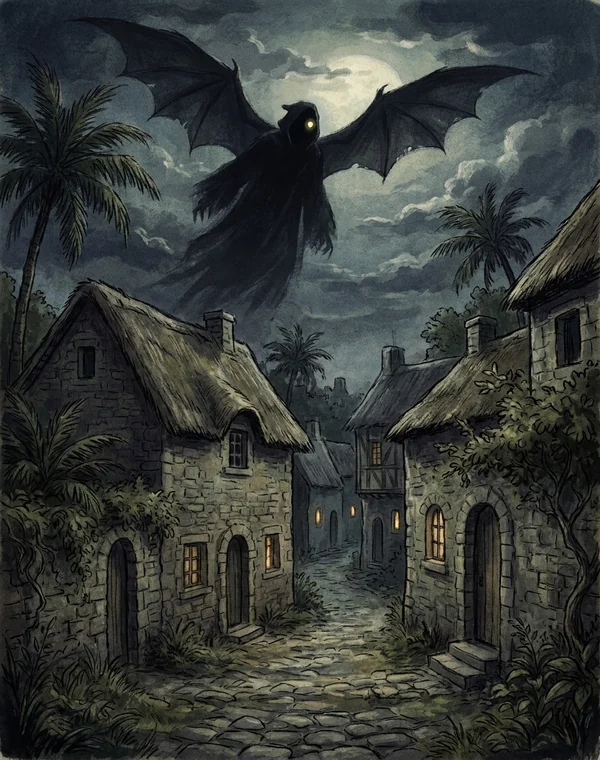
What It Is Said to Do Descriptions of the Popobawa vary widely because it is fundamentally understood as a shape-shifter, capable of taking animal or human forms, though it is most frequently described by the dark shadow or bat-like wings that give it its name. Its visitations typically occur at night, marked by an acrid, sulfurous stench and an oppressive atmosphere of dread. The spirit targets sleeping individuals, pinning them down and subjecting them to harrowing physical and psychological trauma. A defining element of the legend is its coercive rule: victims are commanded to broadcast their terrifying experience to their neighbors and communities. Keeping silent is believed to invite a brutal return visit, transforming every single encounter into a vector for communal panic.
In Horror Fiction Within horror fiction and dark literature, the Popobawa serves as a potent archetype of psychological contagion and airborne dread, embodying the terror of an invisible invader that weaponizes speech against a community. Rather than featuring prominently as a standard monster in mainstream Western commercial horror novels, it exists vividly in the realm of contemporary legends, anthropological studies, and dark folklore collections that examine how social anxiety materializes into supernatural terror.
Why It Still Frightens The entity endures as a terrifying concept because its power relies entirely on human communication, proving that fear is infectious and capable of shutting down an entire society overnight.
Connected Concepts
Related horror terms
Further Study