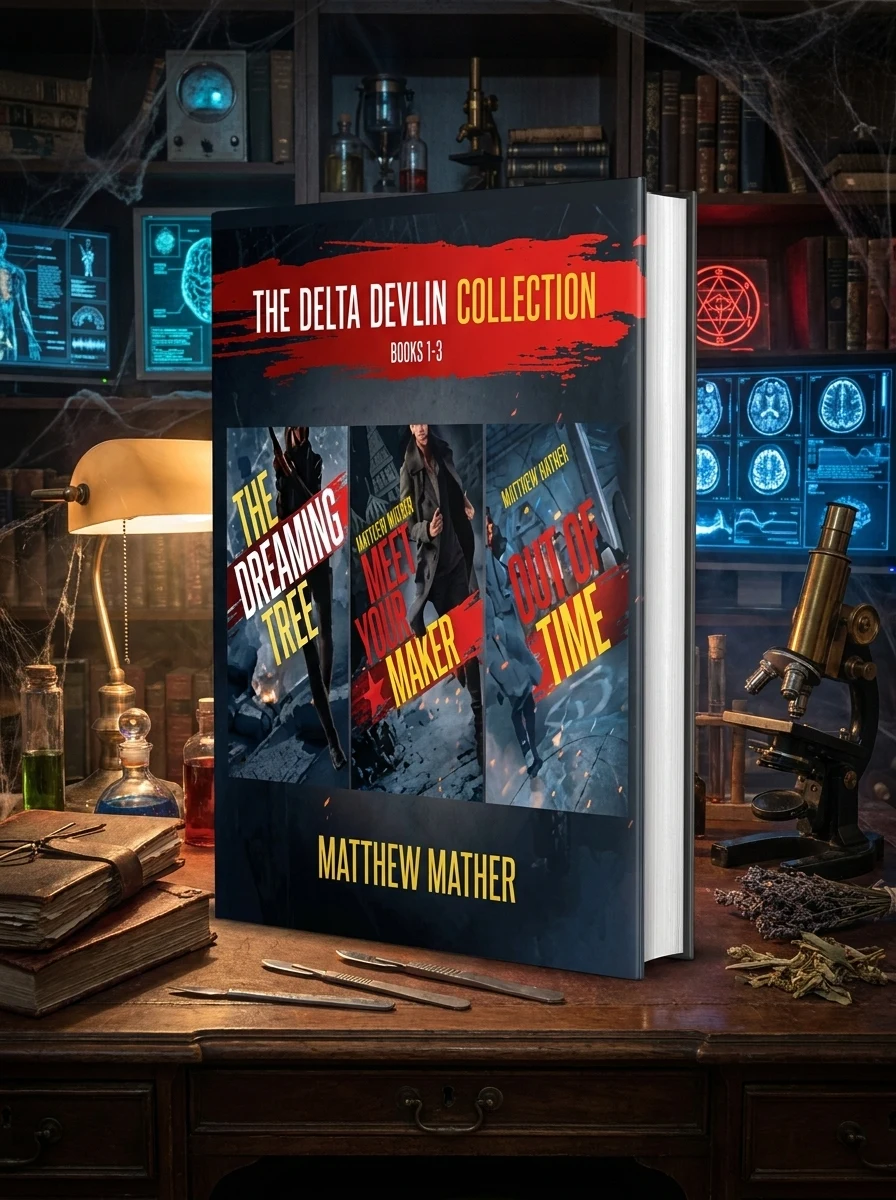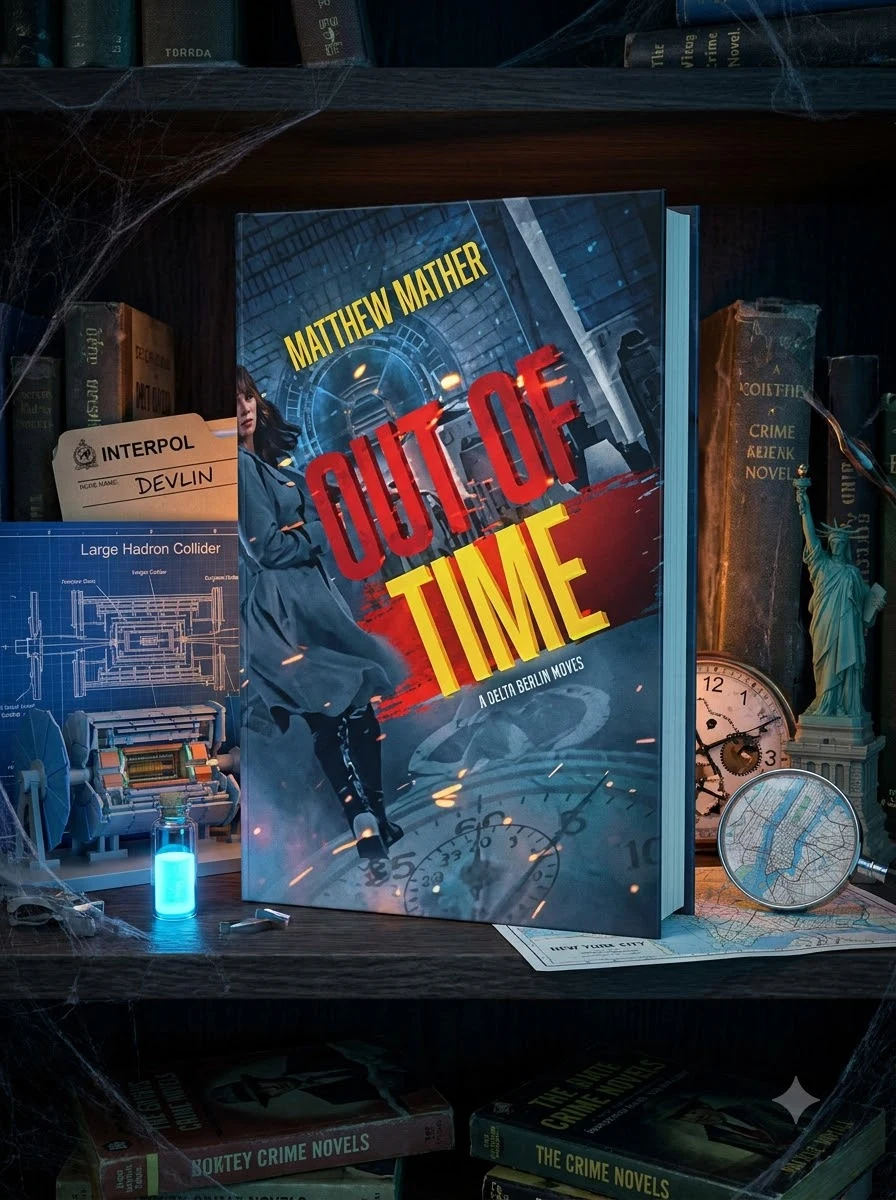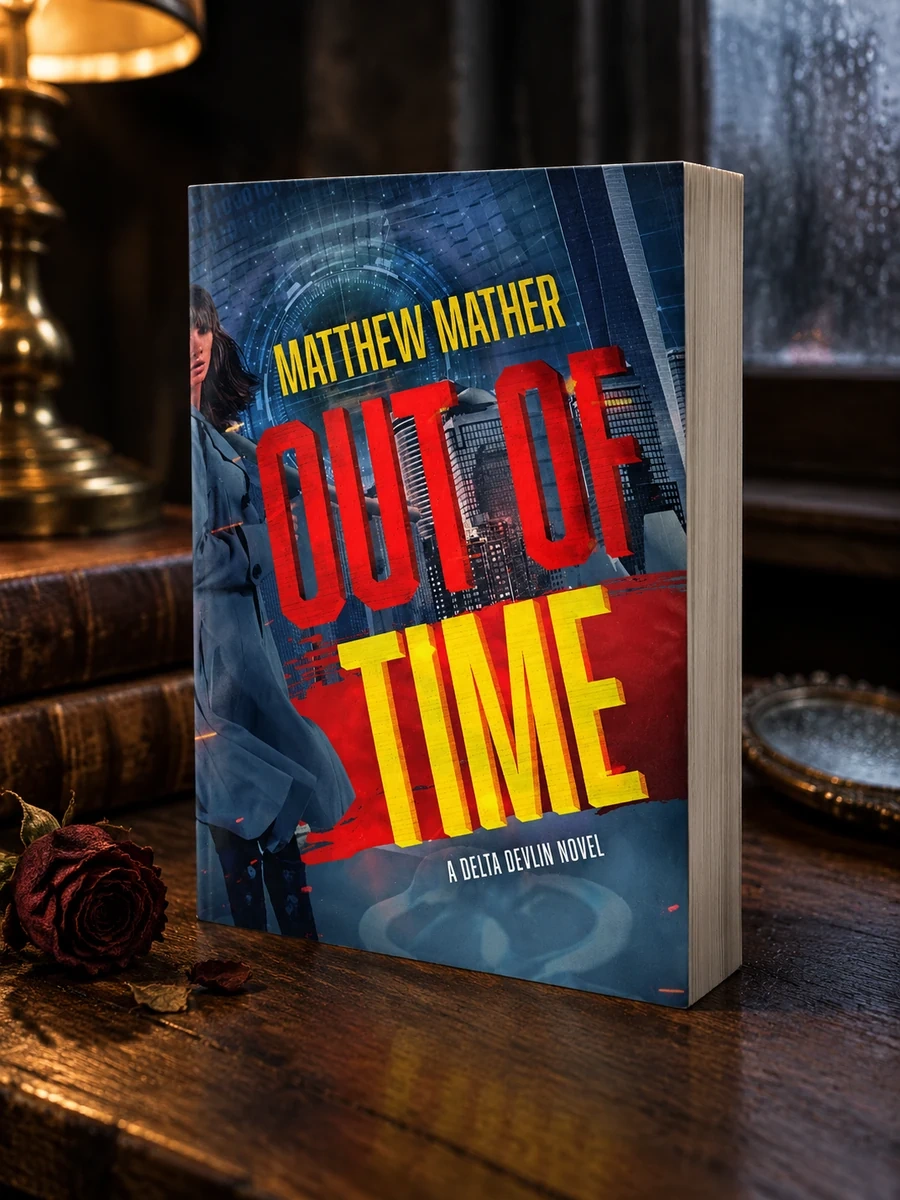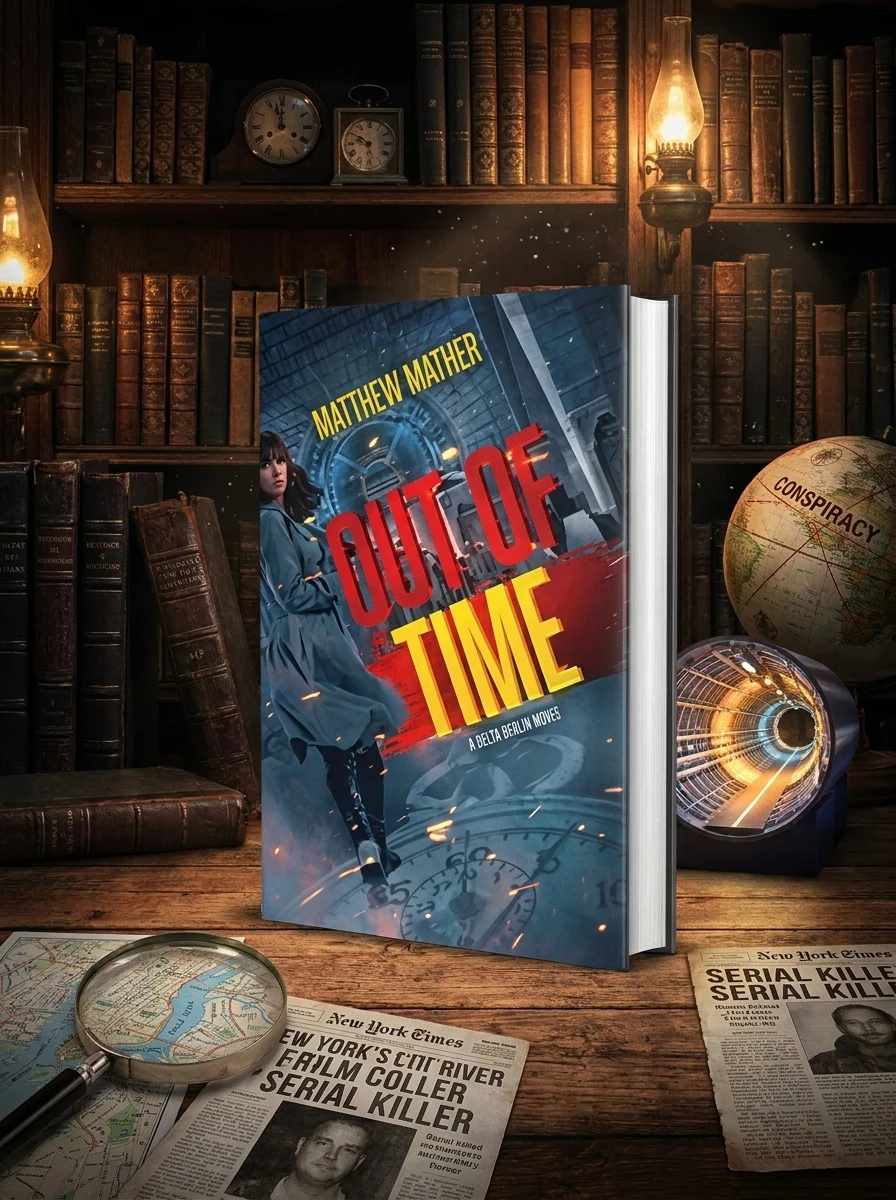
Out of Time
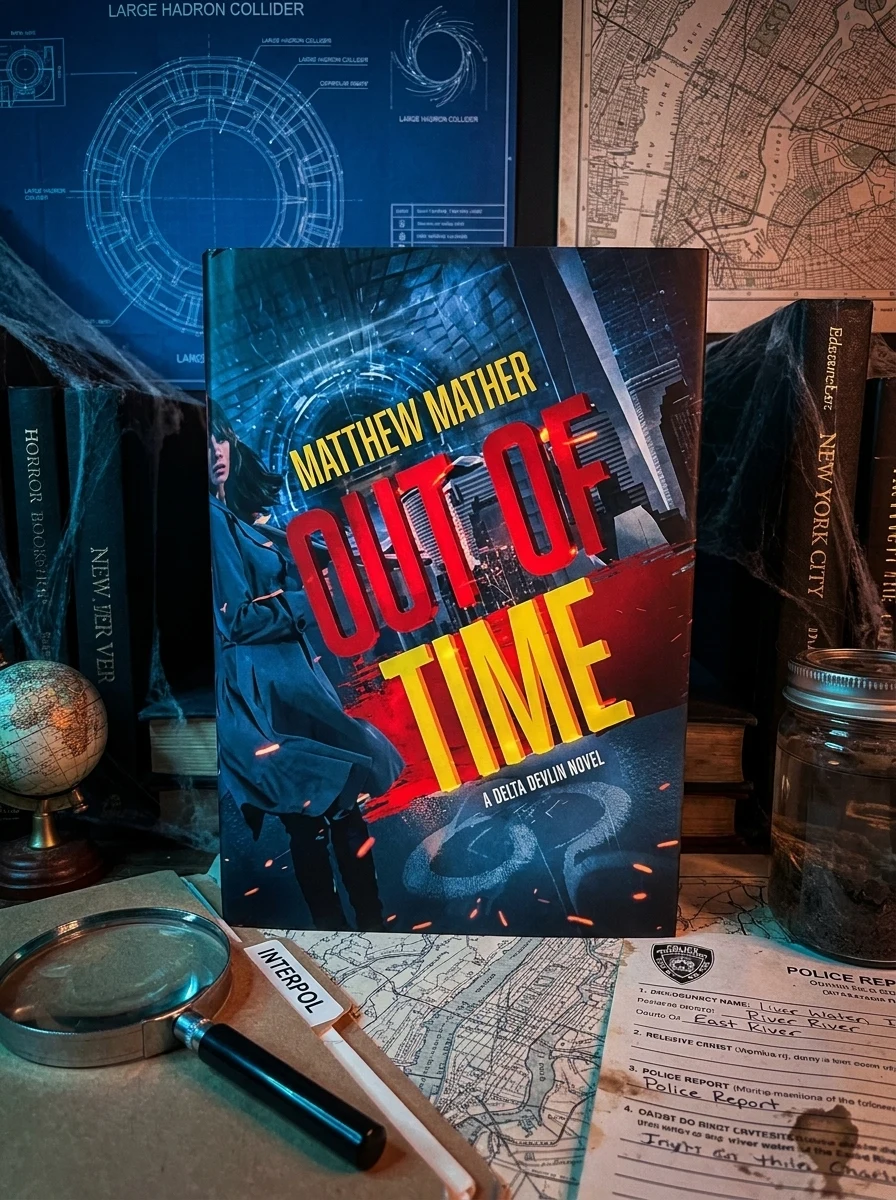
A marshal investigates a time-bending conspiracy involving stolen collider parts.
Devlin’s investigation reveals that the stolen Large Hadron Collider components are key to a plot stretching across decades. She encounters a corpse in New York with injuries matching an old case, suggesting a loop in time. As she digs deeper, she realizes her future and past are colliding. The conspiracy involves figures close to her, including family members. Devlin must identify the traitors within her circle to prevent global catastrophe. The narrative relies on the tension between scientific achievement and human betrayal.
The novel is published by Blackstone Publishing in 2021. It draws on the real-world Large Hadron Collider, described as the world's most powerful supercollider. The story is set in New York City and involves Interpol, reflecting contemporary concerns about international security and scientific ethics.


📝 Description: Out of Time
💎 Our verdict on Out of Time
📖 Why choose it
Why this book is worth reading
Readers who relish intricate puzzles and the intellectual rigor of science fiction will find this narrative compelling. It offers a unique blend of police procedural discipline with mind-bending temporal mechanics, appealing to those who enjoy tracking complex cause-and-effect relationships across decades. Those fascinated by the intersection of personal betrayal and global catastrophe will appreciate the high stakes involved. The book demands active engagement, rewarding attentive readers with a tightly woven conspiracy that defies linear logic. It is ideal for audiences seeking tension between scientific achievement and human treachery.
⭐ Reader reviews
Reader rating
Matthew Mather crafts a tense narrative where professional duty clashes with personal history in a time-bending conspiracy. The story effectively merges police procedural elements with science fiction, creating a web of cause and effect that challenges linear perception. By introducing temporal loops and family secrets, the plot maintains high stakes while exploring the fragility of reality. This approach suits readers who enjoy complex international espionage and scientific intrigue. However, the intricate temporal mechanics may confuse those preferring straightforward resolutions or historical settings. The narrative demands close attention to how past actions ripple into future outcomes, offering a rewarding but mentally demanding experience for fans of logical, high-concept thrillers.