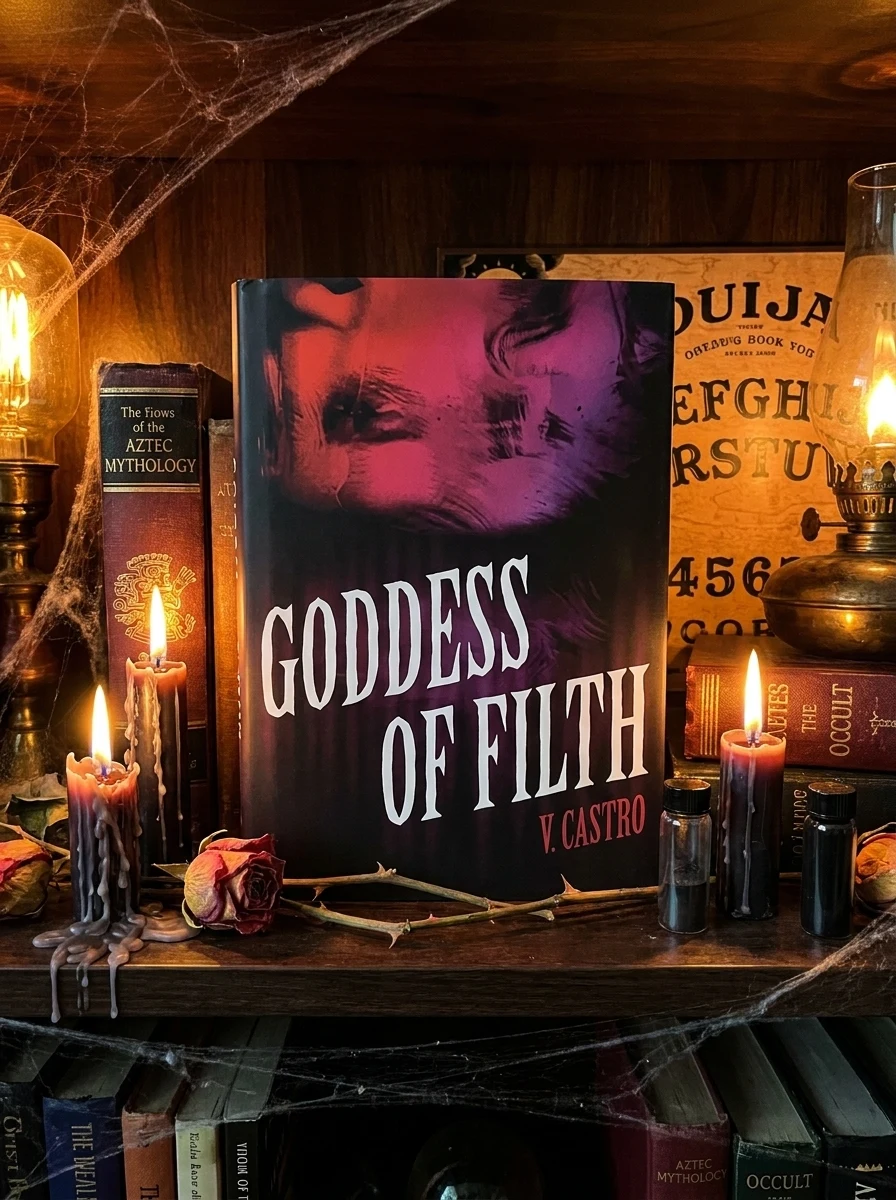
Goddess of Filth
Currently unavailable
This book is sold out right now. Leave your email — we'll let you know if it comes back, and you'll get 10% off any book today.
In stock now — readers of this book also loved:



A seance unleashes an ancient Aztec power through a possessed friend in this horror novel by V Castro.
The plot begins with a group of friends conducting a seance that goes wrong. Fernanda’s body becomes a vessel for something old and powerful. Lourdes realizes the priest’s methods are insufficient. She gathers her witch community and a professor to investigate. The story tracks their efforts to identify the entity affecting Fernanda. It highlights the tension between faith-based interventions and craft-based knowledge. The narrative does not offer easy answers or safe resolutions.
The story draws on Nahuatl, the language of Aztec ancestors, and integrates elements of the bruja Craft. It contrasts these indigenous and folk traditions with Catholic priesthood practices. The setting involves a modern urban environment where these spiritual conflicts play out during a hot summer.


📝 Description: Goddess of Filth
💎 Our verdict on Goddess of Filth
📖 Why choose it
Why this book is worth reading
Readers seeking a gritty, culturally specific exploration of possession will find this title compelling. It offers a unique perspective by juxtaposing Catholic exorcism traditions with indigenous spiritual practices and modern witchcraft. Those interested in psychological horror that defies standard categorization will appreciate the nuanced depiction of faith versus craft. The narrative appeals to audiences who enjoy stories where ancient powers emerge through contemporary settings, providing a fresh take on the genre without offering easy resolutions or safe endings.
⭐ Reader reviews
Reader rating
V Castro delivers a disturbing and atmospheric supernatural narrative that effectively blends Aztec heritage with urban fantasy elements. The story excels in portraying the psychological and physical deterioration of its characters while investigating an ancient power that resists simple explanation. By contrasting Father Moreno’s religious interventions with Lourdes’s bruja crew and academic inquiry, the book creates a tense dialogue between faith-based and craft-based knowledge. This approach suits readers who prefer horror grounded in specific cultural traditions rather than generic supernatural tropes. The lack of easy answers adds to the chilling effect, making it a strong choice for those who enjoy complex, identity-driven horror.