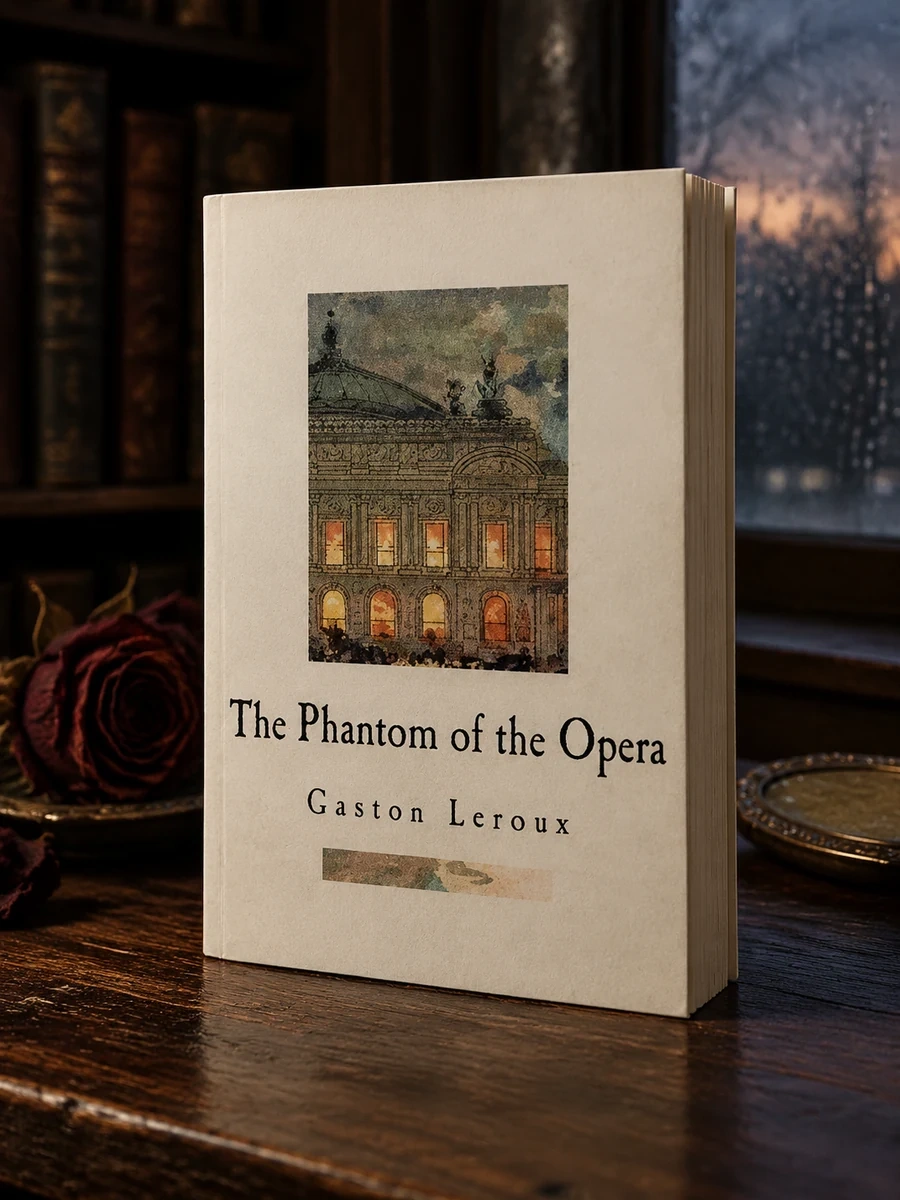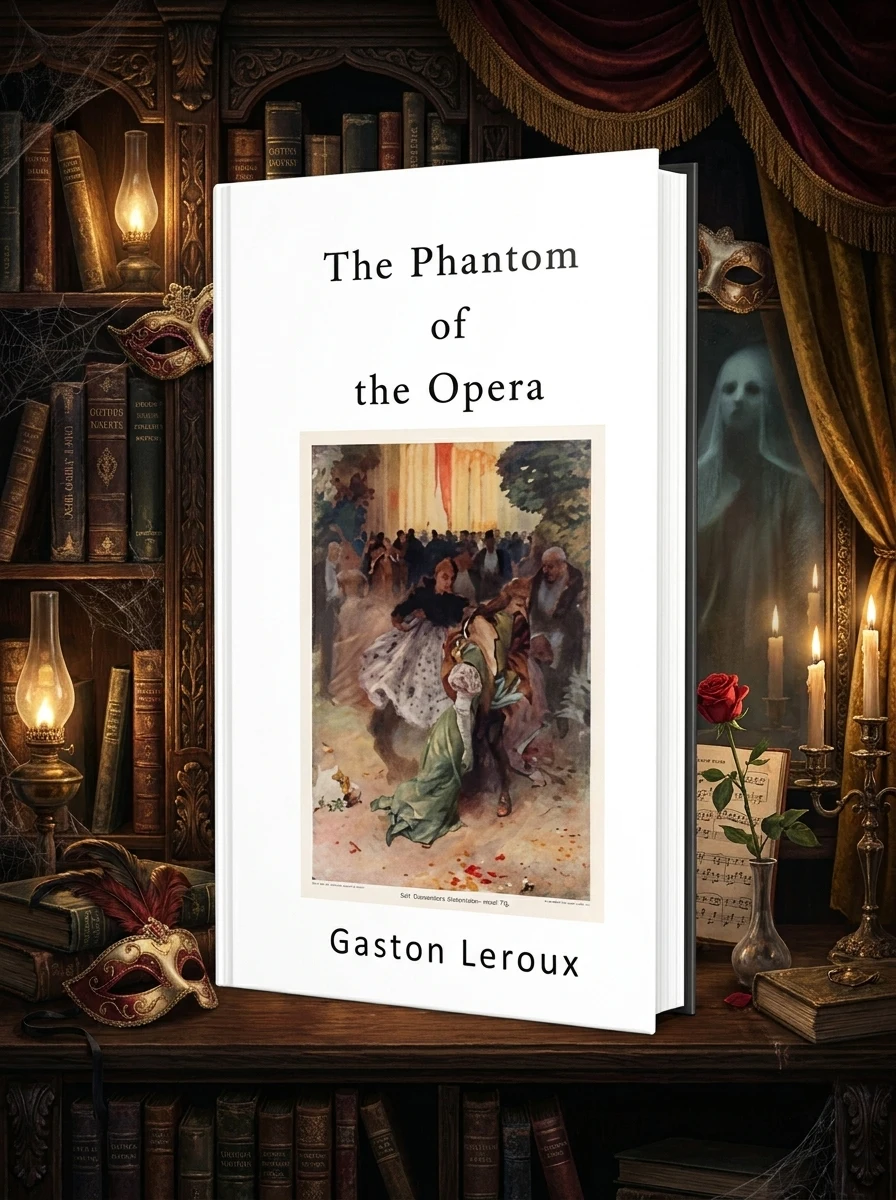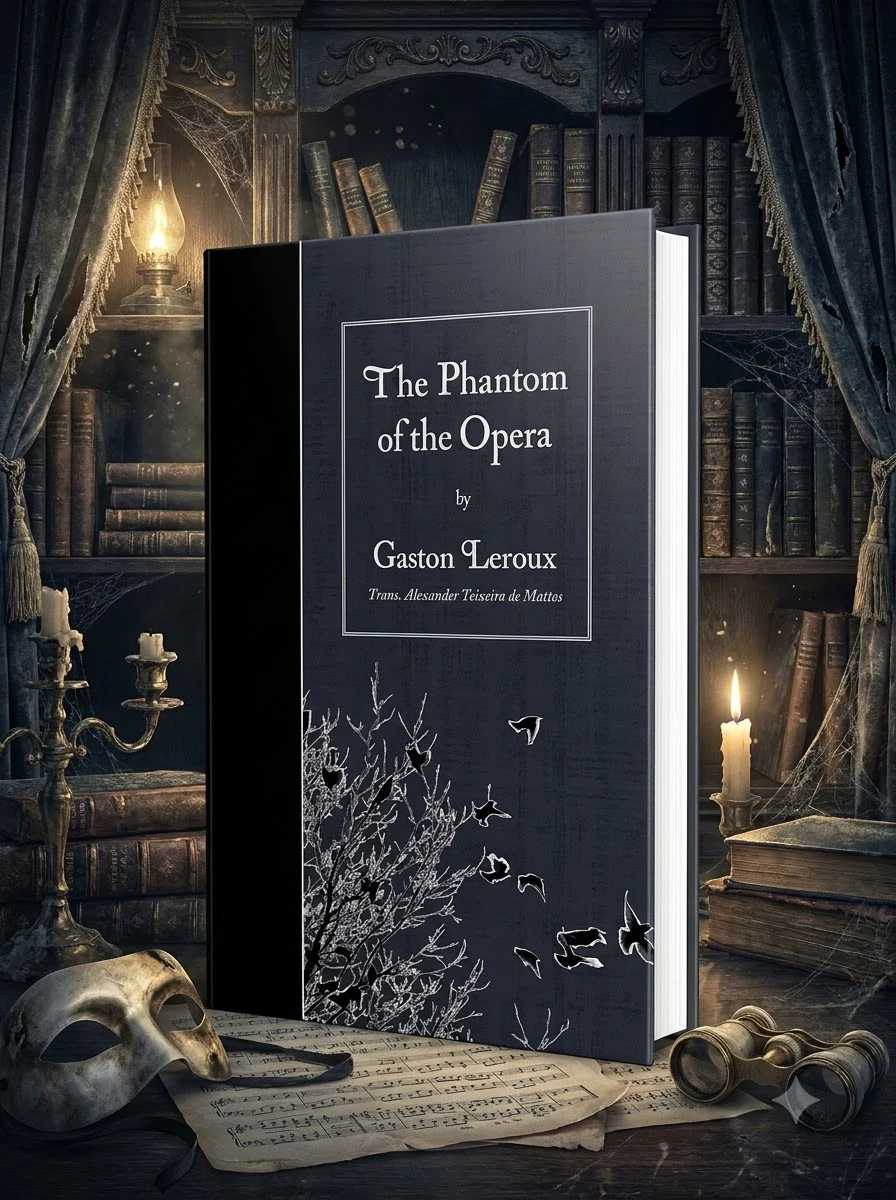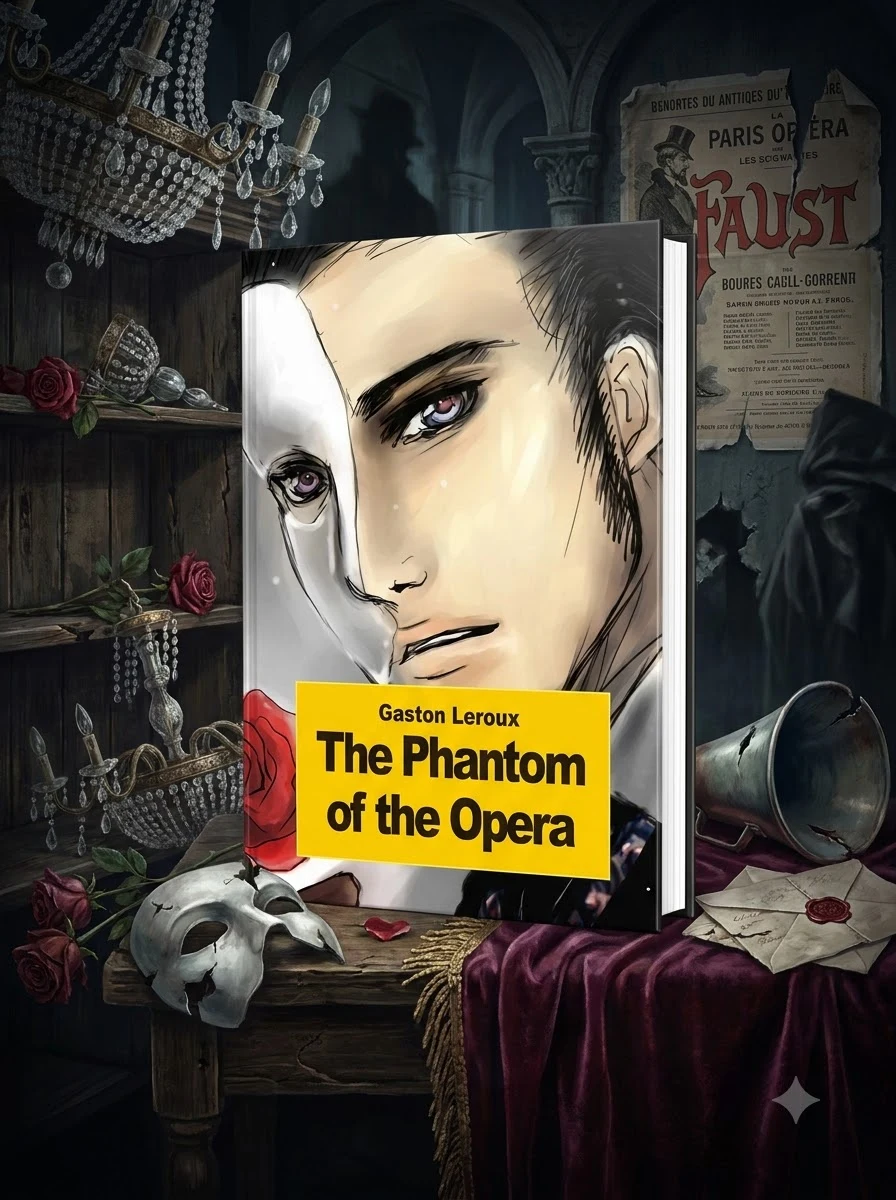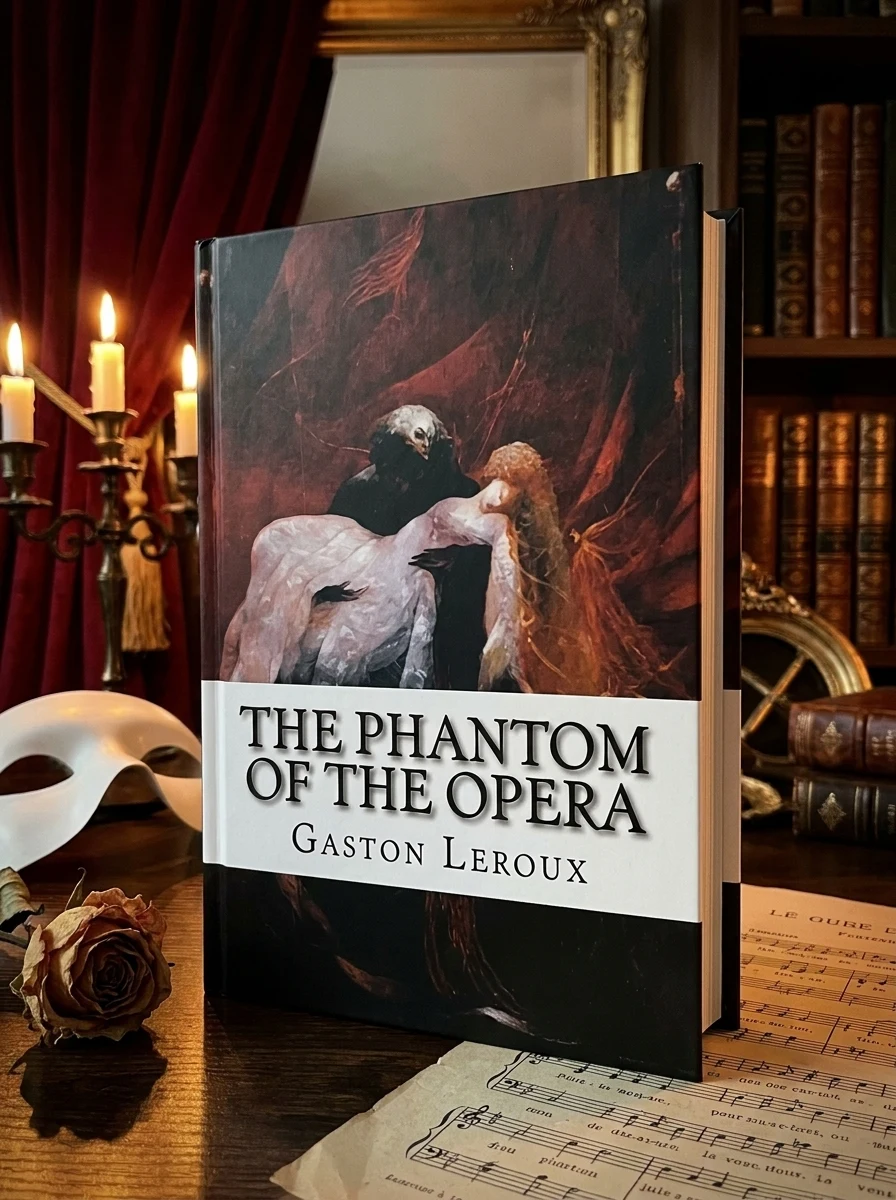
The Phantom of the Opera
An original Gothic horror text following a Paris Opera House phantom.
Following the death of a famous musician, young Christine Daae receives guidance from a voice inside the Paris Opera House before her childhood friend Raoul arrives. Erik, a murderous and deformed ghost obsessed with Christine, reacts with violent jealousy and causes her sudden disappearance. The publication features various characters, such as Carlotta and a mysterious Persian, capturing a dark Gothic horror atmosphere.
The work originates from a serial published in French during 1909. It draws on traditions of Gothic horror literature, retaining a deep and dark tone that predates any subsequent adaptations.


📝 Description: The Phantom of the Opera
💎 Our verdict on The Phantom of the Opera
📖 Why choose it
Why this book is worth reading
Readers seeking the unadulterated source material of the Phantom legend will find this volume essential. It offers a deeper, darker exploration of Gothic horror than subsequent lighter adaptations, preserving the original violent jealousy and mysterious atmosphere. Those interested in the evolution of vampire lore or deformed ghost stories will appreciate its raw intensity. The text provides a unique window into early twentieth-century serial fiction, appealing to scholars and fans who value the authentic tone over sanitized versions. It is ideal for those who prefer psychological depth and cosmic dread in their horror narratives.
⭐ Reader reviews
Reader rating
De Mattos delivers a potent Gothic horror experience rooted in the eerie atmosphere of the Paris Opera House. The narrative effectively builds tension through Christine Daae’s mysterious guidance and Erik’s obsessive nature, creating a chilling dynamic that defines the genre. While the plot follows familiar beats for those aware of later adaptations, the original execution retains a distinct, darker edge suitable for purists. The characterization of Carlotta and the Persian adds necessary depth to the supernatural elements. This work stands as a vital piece of horror history, offering readers a chance to engage with the unvarnished origins of a classic tale without the gloss of modern reinterpretations.