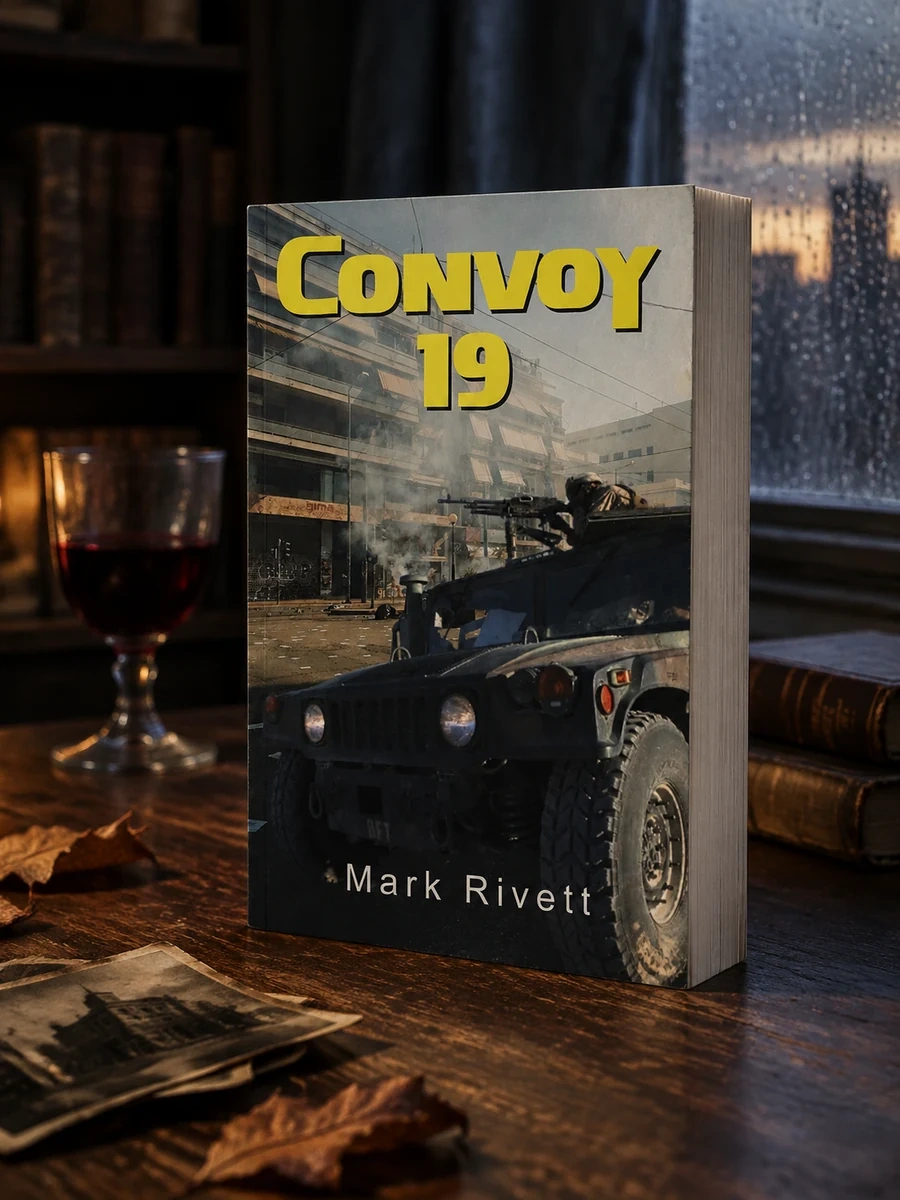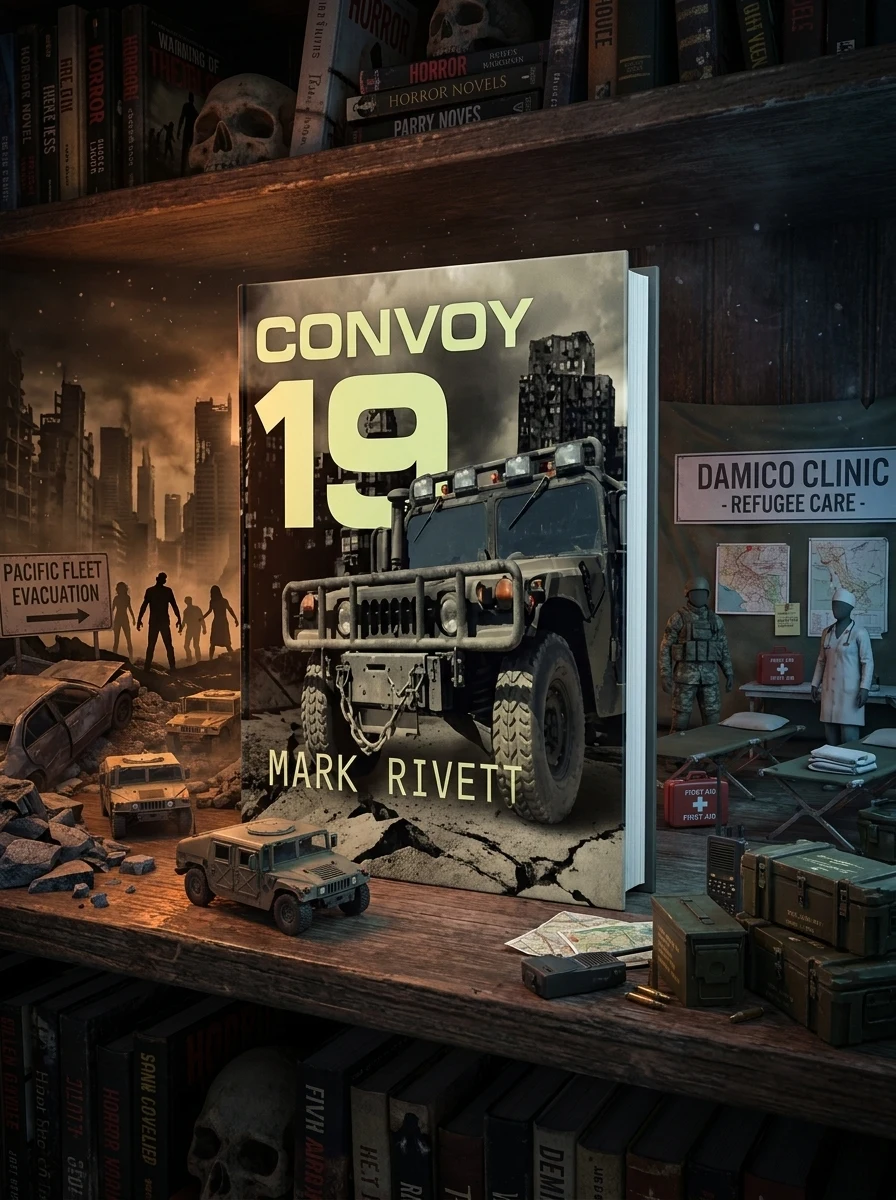
Convoy 19: A Zombie Novel
Currently unavailable
This book is sold out right now. Leave your email — we'll let you know if it comes back, and you'll get 10% off any book today.
In stock now — readers of this book also loved:
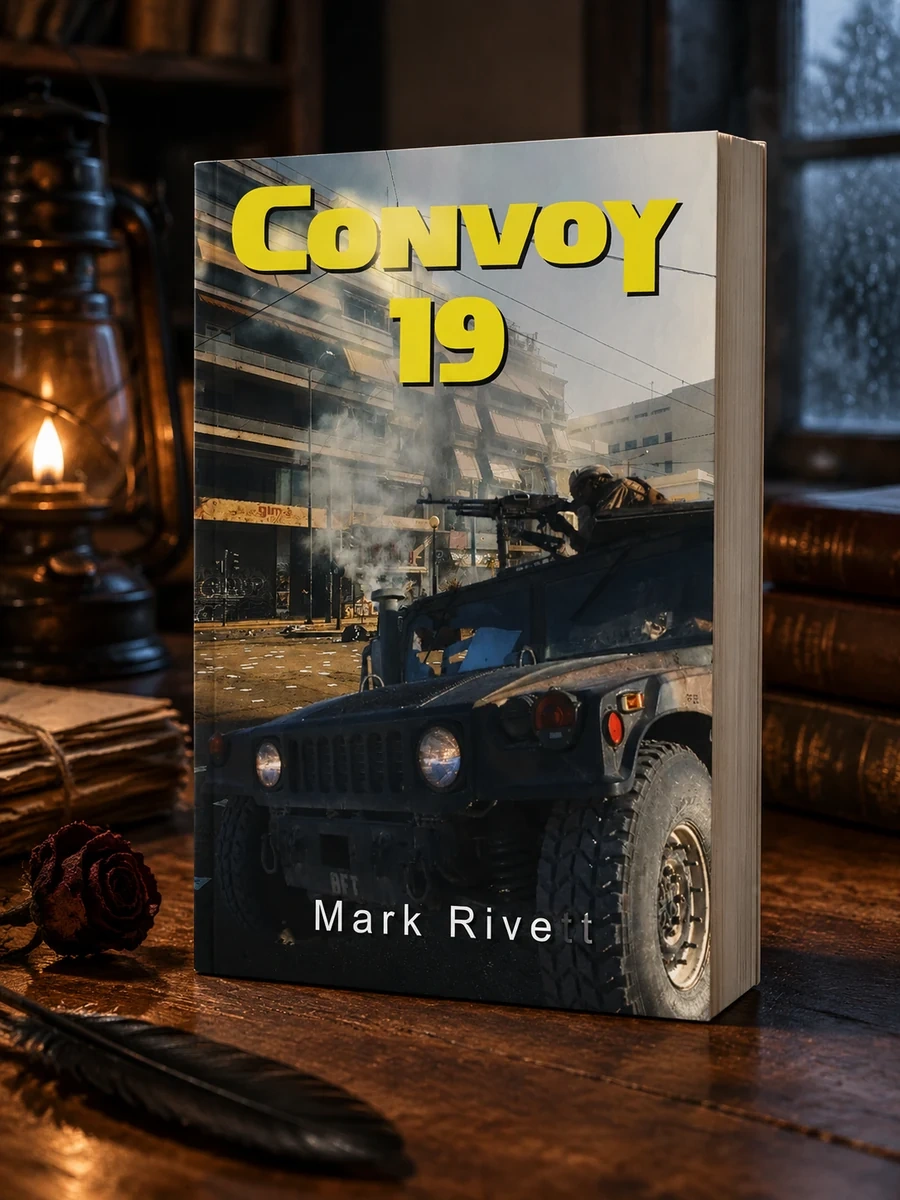


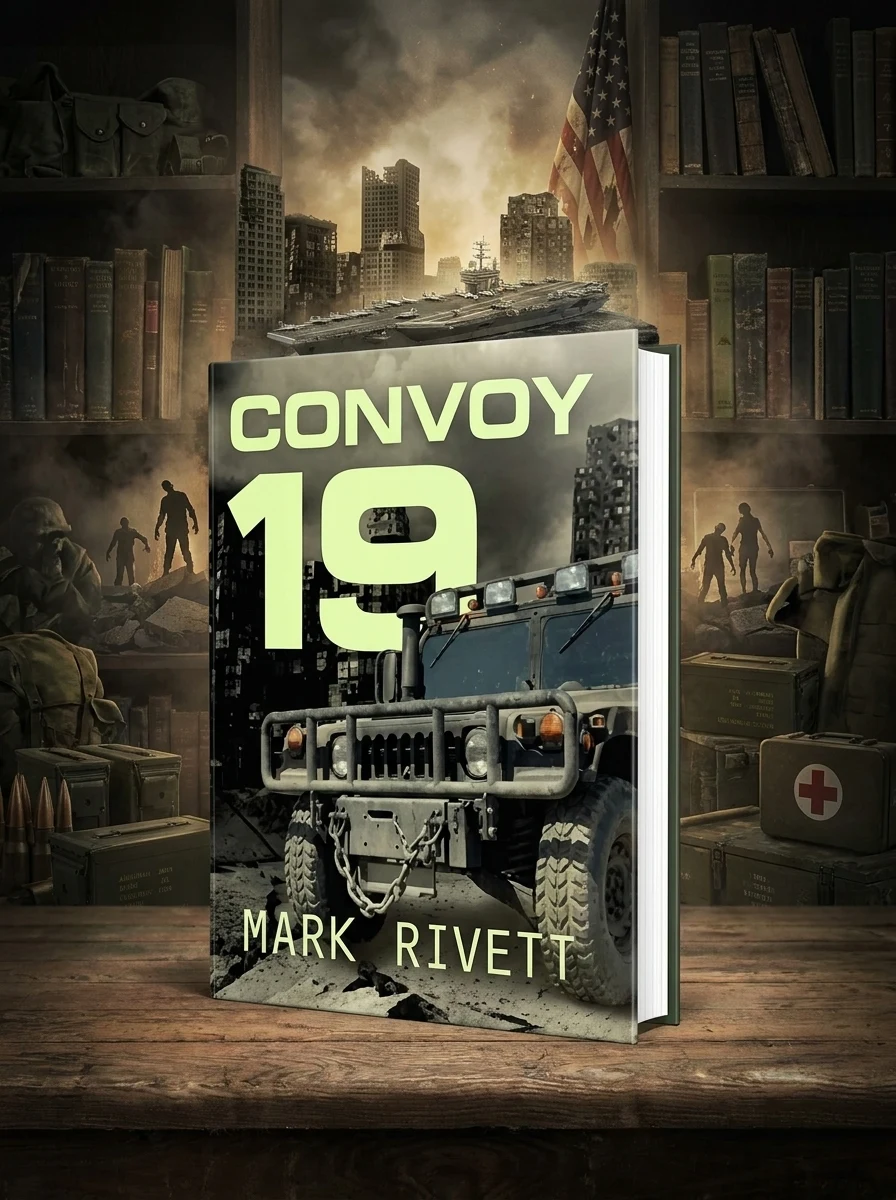
A military thriller about a final convoy into infected San Diego.
Rivett constructs a tense narrative centered on the breakdown of organized response to a zombie outbreak. The story alternates between the high-level decisions made by Dr. Henry Damico on the USS Ronald Reagan and the gritty reality faced by Sergeant First Class Carl Harvey and Kelly. Their efforts to manage the withdrawal of civilians and supplies become increasingly futile as the convoy system collapses. The book emphasizes the logistical nightmare of moving people through an overrun landscape. It captures the desperation of a society losing its infrastructure. The focus remains on the human cost of strategic failure rather than individual heroics.
This novel fits within the American military horror tradition, utilizing real-world institutions like the U.S. Pacific Fleet and the USS Ronald Reagan to ground its fictional catastrophe. It reflects anxieties about national security and the vulnerability of domestic infrastructure during a large-scale crisis.


📝 Description: Convoy 19: A Zombie Novel
💎 Our verdict on Convoy 19: A Zombie Novel
📖 Why choose it
Why this book is worth reading
Readers who prefer tactical military perspectives over supernatural explanations will find this narrative compelling. It suits those interested in the logistical nightmare of moving people through an overrun landscape and the human cost of strategic failure. The book appeals to fans of grim, grounded apocalyptic fiction that focuses on the breakdown of organized response rather than individual heroics. It is ideal for audiences seeking a tense exploration of societal collapse from a high-level command perspective down to gritty ground reality.
⭐ Reader reviews
Reader rating
Rivett constructs a tense narrative centered on the breakdown of organized response to a zombie outbreak, alternating between high-level decisions and gritty ground reality. The dual perspective highlights the disconnect between strategic planning and the actual experience of the infected. The book suits readers who prefer tactical military perspectives over supernatural explanations for the undead threat. It captures the desperation of a society losing its infrastructure with a grim tone focused on logistical failure. This approach avoids romantic subplots or lighthearted adventure, delivering a serious examination of institutional fragility.