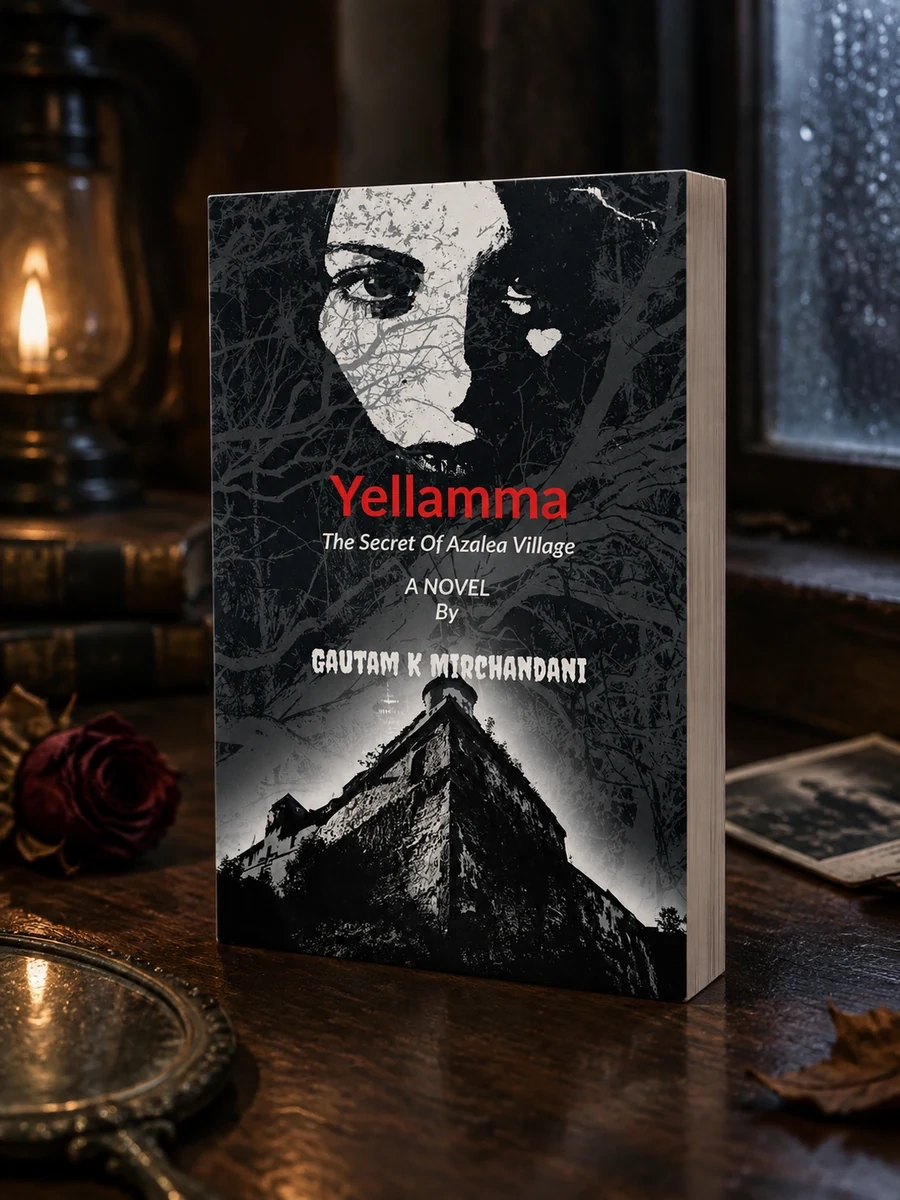

Yellamma
A short horror story about a woman facing a monstrous entity in her kitchen.
The narrative follows Mugda as she confronts a female figure who undergoes a grotesque metamorphosis. The entity’s eyes roll back, and her teeth transform into fangs while blood trickles from her mouth. She speaks with hostility, accusing Mugda of pity before initiating an attack. Mugda flees to the kitchen, only to find the exit sealed by automatic doors. Panic sets in as she looks for a way to defend herself against the approaching creature. The antagonist moves with a shaking gait, emitting animal-like howls and extending clawed hands. This scene captures the essence of sudden, inescapable danger. The story relies on sensory details of sound and sight to convey the protagonist’s terror. It avoids complex plot twists, focusing instead on the immediate visceral reaction to supernatural horror.
The work is published by Notion Press in 2019. It draws on Indian folklore traditions, specifically referencing the figure of Yellamma. The narrative style reflects regional storytelling methods that emphasize direct confrontation with mythological entities rather than abstract philosophical inquiry.


📝 Description: Yellamma
💎 Our verdict on Yellamma
📖 Why choose it
Why this book is worth reading
Readers seeking immediate, visceral thrills will find this short story compelling. It offers a concentrated burst of terror without the burden of complex plotting or extensive world-building. The narrative appeals to those who enjoy horror vignettes that rely on sensory details and sudden, inescapable danger rather than slow-burn psychological dread. By grounding supernatural elements in a familiar domestic setting, it heightens the sense of helplessness and raw fear. Fans of regional mythos will appreciate how traditional tropes are adapted to create a unique atmosphere of predatory violence and physical decay.
⭐ Reader reviews
Reader rating
Mirchandani delivers a potent slice of supernatural horror that prioritizes immediate physical threat over narrative complexity. The story excels in its use of sensory imagery, particularly the grotesque metamorphosis of the antagonist and the claustrophobic trap of the sealed kitchen. This focus on visceral reaction creates a palpable sense of panic for the reader. It is best suited for audiences who prefer short, intense encounters with the monstrous entity rather than extended psychological exploration. While it lacks deep character development, its strength lies in capturing the essence of sudden terror and the breakdown of safety within the home, making it a striking addition to collections focused on folk horror and domestic dread.
📖 Read on the blog
✍️ More books by this author Gautam K Mirchandani


🏛 Books from this publisher Notion Press

You might also like
See more →
Have a question about this item?
Ask about the edition, condition, delivery or anything else — we reply by email or phone, usually within a day.
