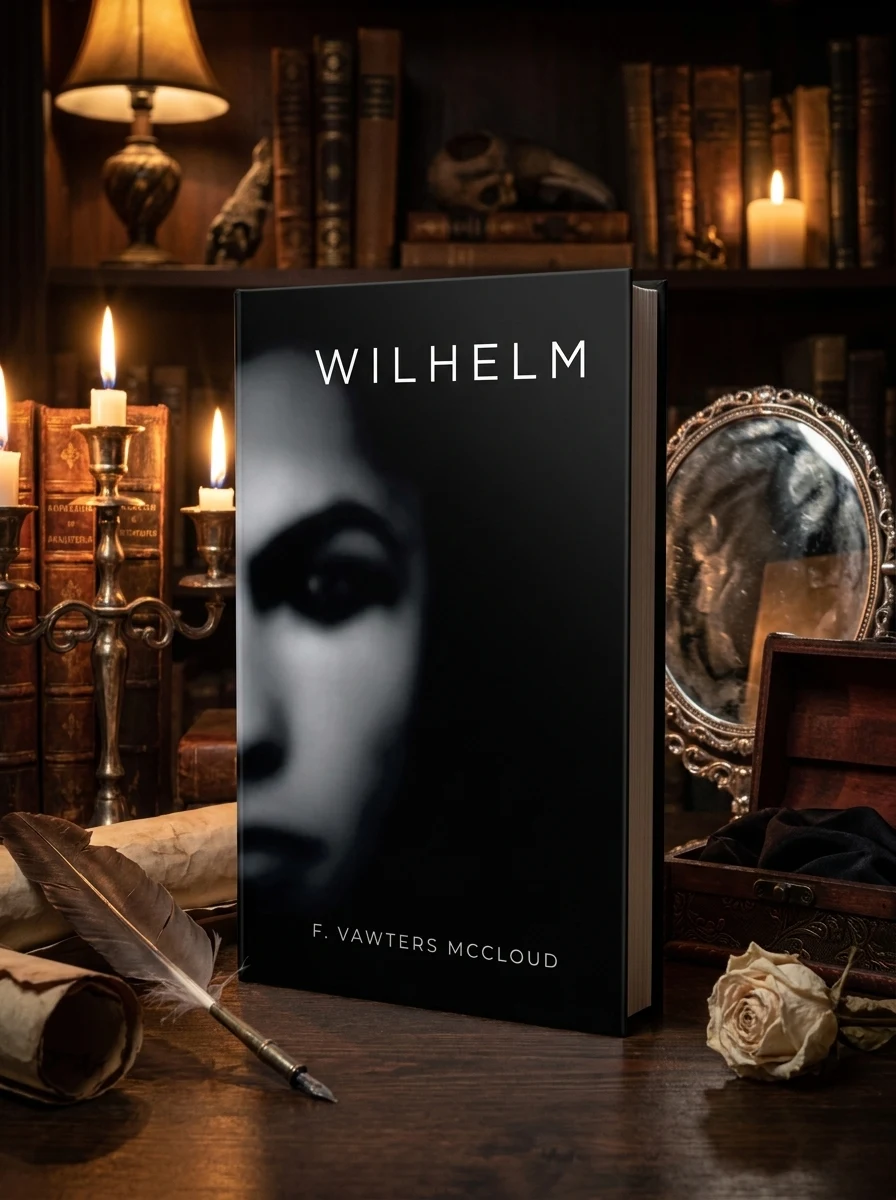
Wilhelm
A lord's selfish quest exposes the dark secrets of those around him.
Wilhelm York enjoys wealth and fame under Earl Alistair but feels empty. His encounter with Peyton at a New Year's Eve party changes everything. Hidden emotions and deeds of their circle become visible. This visibility twists perceptions of purity and holiness. Wilhelm pursues an evil goal while ignoring Peyton’s secret plans. The story focuses on the consequences of selfishness and the nature of truth. McCloud presents a world where reality is malleable based on perception. The narrative structure emphasizes the psychological impact of exposed secrets. It appeals to fans of supernatural fiction who enjoy complex character dynamics. The book avoids simple good versus evil tropes in favor of moral ambiguity.
Wilhelm emerges from the tradition of gothic horror, echoing the psychological unraveling found in late 19th-century supernatural fiction where moral ambiguity replaces clear-cut dichotomies. It aligns with works that explore the malleability of reality and the corruption of wholesome ideals through a modern lens.


📝 Description: Wilhelm
💎 Our verdict on Wilhelm
📖 Why choose it
Why this book is worth reading
Readers seeking psychological horror that prioritizes internal perception over external monsters will find Wilhelm compelling. It appeals to those who enjoy complex character dynamics and moral ambiguity rather than simple good versus evil tropes. Fans of supernatural fiction interested in how lies manifest as reality and the exposure of hidden social flaws will appreciate the narrative’s focus on the corruption of purity. The book offers a deep dive into the consequences of selfishness and the twisting of truth, providing a thought-provoking experience for audiences tired of traditional monster hunts.
⭐ Reader reviews
Reader rating
Wilhelm excels in its atmospheric exploration of moral ambiguity and the psychological impact of exposed secrets. McCloud successfully twists gothic traditions by presenting a world where reality shifts based on perception, forcing readers to question the nature of holiness and purity. The narrative structure effectively highlights the corruption of wholesome ideals through Wilhelm’s selfish quest. While it may disappoint those seeking traditional action or clear moral resolutions, it strongly suits lovers of supernatural fiction that deconstructs social identities. The focus on internal perception creates a tense, unsettling environment where hidden deeds become visible, offering a sophisticated critique of character flaws.
📖 Read on the blog
🏛 Books from this publisher iUniverse





You might also like
See more →



Have a question about this item?
Ask about the edition, condition, delivery or anything else — we reply by email or phone, usually within a day.
