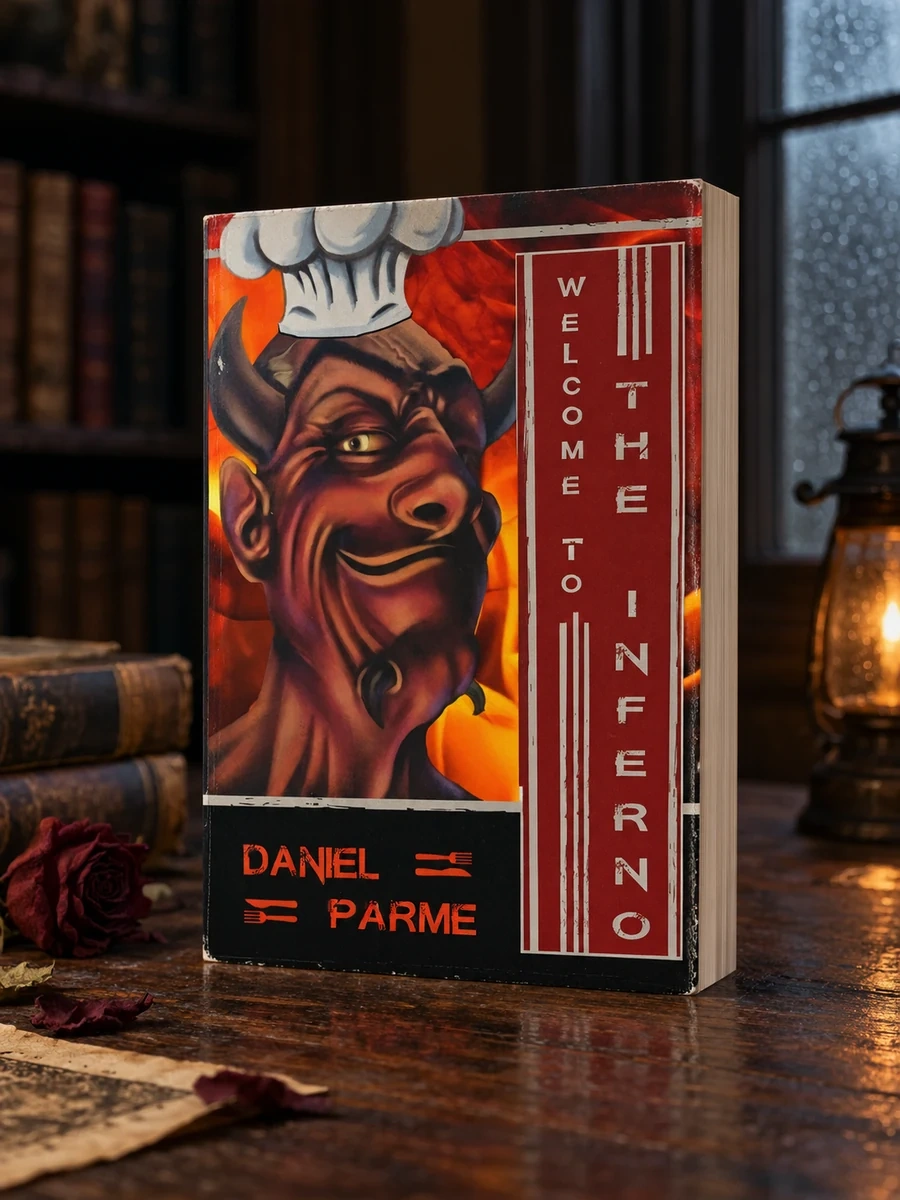
Welcome to The Inferno
A bartender serves eternal customers in a hellish restaurant run by demons.
The story centers on a bartender trapped in the netherworlds who works at The Inferno, a restaurant for damned souls. He is led through different dining rooms by a demon resembling a famous chef. The book examines how specific sins like pride and sloth result in ironic punishments. It features hell-beasts modeled after celebrity chefs. The narrative focuses on the daily operations of this eternal establishment and the interactions between staff and sinners.
This 2024 release from Last-Picked Books reimagines traditional religious concepts of sin within a modern hospitality framework. It draws on classic literary traditions of the underworld while incorporating contemporary humor through the lens of celebrity culture and fine dining.


📝 Description: Welcome to The Inferno
💎 Our verdict on Welcome to The Inferno
📖 Why choose it
Why this book is worth reading
Readers who appreciate supernatural fiction with a sharp satirical edge will find this narrative engaging. It appeals to those interested in gothic themes of punishment but prefer absurdity over grim severity. The book offers a unique perspective on classic sins like pride and sloth, framing them within a modern, infernal hospitality setting. Fans of dark comedy and ironic retribution will enjoy the creative reinterpretation of traditional damnation categories. It is ideal for those seeking entertainment through the lens of eternal consequences rather than serious theological study.
⭐ Reader reviews
Reader rating
Daniel Parme delivers a darkly comedic vision of the afterlife that stands apart from traditional horror. The narrative effectively utilizes the structure of a high-end restaurant to explore ironic punishments for specific sins, creating a surreal and engaging atmosphere. By featuring hell-beasts modeled after celebrity chefs, the text adds a layer of absurdity that enhances its satirical tone. This approach suits readers who enjoy supernatural fiction with a critical, humorous perspective on human transgressions. It is particularly well-suited for audiences familiar with gothic themes of punishment but seeking a lighter, more inventive execution than standard theological studies provide.
You might also like
See more →







Have a question about this item?
Ask about the edition, condition, delivery or anything else — we reply by email or phone, usually within a day.
